LGBTQ+ Travel Guide to Larnaca, Cyprus: Our Old Winter Base by the Sea
Larnaca was one of our first landing spots as full-time nomads. Here's our honest, firsthand guide to the Cypriot seaside city — the vibe, the practicalities, and what queer travelers should actually know before they go.
Larnaca was one of the first places we ever based ourselves as full-time nomads, and it holds a particular kind of affection for us because of that. It is not a glossy gay-travel destination, and you will not find a printed map of a “gayborhood” here. What you get instead is a low-key, warm, walkable seaside city that happens to be one of the easiest places we have ever lived as a couple — and a useful base for exploring the rest of the island. Here is our honest read on it.
The feel of the place
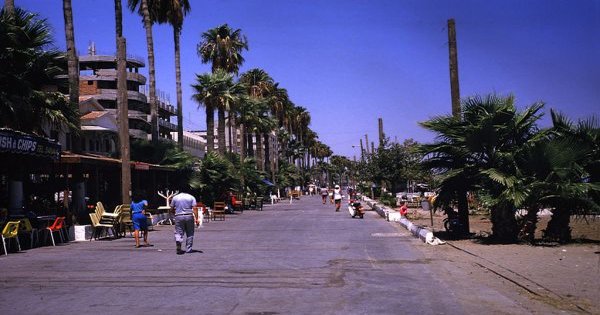
Larnaca is a small coastal city on the southern coast of Cyprus, built around a palm-lined seafront promenade called the Finikoudes that runs along the beach and fills up every evening with families, couples, and clusters of friends drifting between cafés. It is unhurried in a way that took us a few days to adjust to and then never wanted to leave. The pace is Mediterranean-slow, the sun is reliable for most of the year, and winters are mild enough that we treated it as an off-season base while much of Europe was cold and grey.
The city’s landmarks are close together and easy to reach on foot: the seafront and marina, the old Church of Saint Lazarus in the center, and, a short way out of town, the salt lake with Hala Sultan Tekke sitting at its edge — a place worth timing for late afternoon light. Larnaca’s airport is small and genuinely convenient, five minutes from the city, which is part of why it works so well as a landing pad.
What it’s like to be queer here
We want to be straight with you, because that is the whole point of these guides. Cyprus is not one of Europe’s leaders on LGBTQ+ rights, and it helps to know that going in.
On the legal side, Cyprus recognized civil unions in 2015, which was a real step, but it stops short of marriage equality and joint adoption. On ILGA-Europe’s 2026 Rainbow Map, the country ranks near the bottom of the EU pack — around 30th of 49 European countries — and a long-promised national LGBT strategy has been described as being “in its final stages” for years without landing. Earlier this year, while Cyprus held the rotating EU Council presidency, a coalition of 26 diplomatic missions publicly urged the government to finally adopt that strategy. So the legal scaffolding is thinner than the easy day-to-day life might suggest.
That day-to-day life, though, was genuinely comfortable for us. Larnaca is relaxed and unbothered, and in our experience nobody paid the two of us any particular attention beyond ordinary Cypriot friendliness. It is a socially conservative island in many respects, and public displays of affection draw more notice than they would in, say, Barcelona or Amsterdam — but we never felt unsafe or unwelcome. Our honest summary: easy to live in quietly, short on the visible, organized queer scene you would find in a bigger European capital.
Where the scene actually is
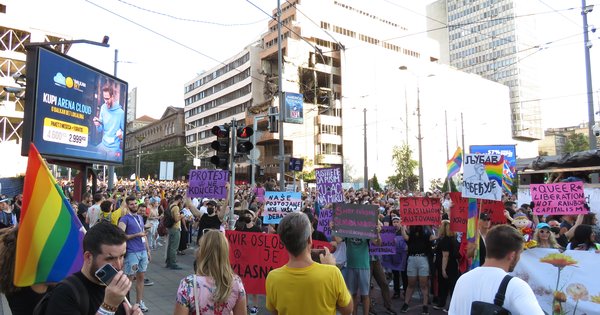
If you are looking for nightlife and community infrastructure, the center of gravity in Cyprus is not Larnaca — it is Nicosia, the capital, about a 45-minute drive inland, and to a lesser extent Limassol along the coast. Nicosia hosts the island’s main Cyprus Pride each spring and has the closest thing the country has to an established LGBTQ+ nightlife and organizing hub. We spent time in Nicosia too, and if a lively queer night out is high on your list, we would build a trip around the capital and treat Larnaca as the calmer coastal counterpoint.
That division is worth planning around. Larnaca is where we would go to slow down, work, swim, and eat well by the water. Nicosia is where the community events happen.
Practical notes for travelers
Getting there is simple: Larnaca International Airport is one of the two main gateways to Cyprus and is right on the edge of the city. English is very widely spoken, which makes settling in painless. The euro is the currency, and Cyprus is in the EU, though not in the Schengen area — a detail worth remembering if you are watching your Schengen days, because time in Cyprus does not count against them.
For getting around the island you will almost certainly want a rental car; public transport between cities is limited, and the drive to Nicosia or across to Limassol and Paphos is straightforward. Larnaca itself is compact enough to handle entirely on foot once you are based near the seafront.
The best months, in our experience, are the shoulder seasons and the mild winter. High summer is hot and busy; spring and autumn give you warm sea, quieter promenades, and — if you time it around Cyprus Pride in Nicosia — the chance to catch the island’s community at its most visible.
Would we send a friend here?
Yes — with the right expectations. Larnaca is not a party destination or a rights showcase. It is a gentle, affordable, sun-soaked base that is easy to live in as a queer couple, especially if you value quiet over scene. Pair it with a few days in Nicosia if you want community and nightlife, know the legal picture before you go, and let the Finikoudes at sunset do what it does. For us, it was one of the first places that made this whole nomad life feel sustainable, and we still think of it fondly every time Cyprus comes up in the news.
This is a firsthand guide based on our own time living in and around Larnaca. Rights data reflects ILGA-Europe’s 2026 Rainbow Map and reporting on Cyprus’s national LGBT strategy.