Colorado Rewrote Its Conversion Therapy Ban to Survive the Supreme Court
After the Supreme Court struck down Colorado's 2019 conversion therapy ban, state lawmakers passed a new bill that targets the practice through a different legal door — and it now awaits the governor's signature.
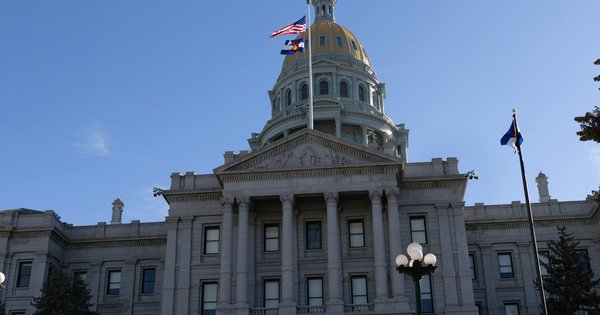
When the U.S. Supreme Court struck down Colorado’s conversion therapy ban earlier this year, the practical effect was grim: a discredited practice that had been illegal for licensed therapists in the state since 2019 was, suddenly, not. Colorado’s response has been to go back to the drafting table — and the bill that came out of it is a quietly clever piece of lawmaking.
What the Court did
The Supreme Court’s decision in Chiles v. Salazar, an 8–1 ruling, held that Colorado’s 2019 ban was unconstitutional. The reasoning turned on the First Amendment. Colorado’s original statute prohibited licensed mental health professionals from engaging in conversion therapy with minors, and the Court’s majority concluded that, as written, the ban regulated what therapists could say to a patient — that it restricted speech based on its viewpoint. A ban framed that way could not stand.
The ruling did not declare conversion therapy harmless. Every major medical and mental health association in the United States has rejected the practice for decades as ineffective and damaging, and the Court did not dispute that record. What the Court objected to was the legal mechanism. And because the mechanism was the problem, the mechanism is what Colorado set out to change.
What the new bill does
House Bill 26-1322, formally the Civil Actions for Conversion Therapy Survivors Act, cleared the Colorado General Assembly on May 7, 2026. As of this writing it sits on the desk of Governor Jared Polis, who signed the original 2019 ban and is widely expected to sign this one.
The new bill does not try to re-impose the old prohibition. Instead it changes two things.
First, it redefines conversion therapy. Where the 2019 law described the practice in terms of the topics a therapist discussed — the viewpoint problem the Supreme Court flagged — HB26-1322 defines it by the outcome a therapist is steering a patient toward: an effort to change a person’s sexual orientation or gender identity. The drafters’ bet is that a law aimed at conduct and intended results, rather than at the content of speech, sits on firmer constitutional ground after Chiles.
Second, it shifts enforcement from licensing rules to the courts. Rather than the state disciplining a therapist’s license, the bill creates a civil cause of action: a survivor of conversion therapy can sue the practitioner directly for damages. And it does so without a statute of limitations on those claims — a recognition that the harm of conversion therapy often surfaces years later, long after a traditional filing window would have closed.
The combined effect, supporters argue, is to make the practice financially untenable in Colorado without telling any therapist what they may or may not say. A practitioner who steers a minor toward changing their orientation or gender identity becomes exposed to open-ended civil liability. That is a different kind of deterrent than a licensing rule, and it is designed specifically to route around the Chiles reasoning.
Why it matters beyond Colorado
Chiles was a national decision. By striking down Colorado’s ban on First Amendment grounds, it cast doubt on similar bans in the roughly two dozen states that have them. Those laws were largely written the same way Colorado’s 2019 statute was, which means many of them now carry the same constitutional vulnerability.
That makes HB26-1322 something other states will study closely. If Colorado’s redrafted approach — define by outcome, enforce through civil suits, drop the statute of limitations — holds up, it becomes a template. States that want to keep conversion therapy effectively out of reach for minors, but can no longer do it the old way, now have a worked example to copy. The bill has not yet been tested in court, and it almost certainly will be. But it represents the first serious attempt to answer Chiles with legislation rather than dismay.
The honest caveat
A civil-liability regime is not the same thing as a ban, and it is worth being clear-eyed about the difference. A ban tells practitioners no. A liability regime tells them you may be sued, and leaves the deterrence to play out case by case, survivor by survivor, in a courtroom. For a young person whose parents are determined to find someone willing to take the risk, that is a thinner shield than the 2019 law was meant to be.
It is, however, the shield that is available after Chiles. Colorado’s lawmakers looked at the constitutional door the Supreme Court left open and walked through it. Whether the new bill holds — and whether other states follow — will be one of the defining LGBTQ+ rights questions in the U.S. over the next year.