It came down to five votes.
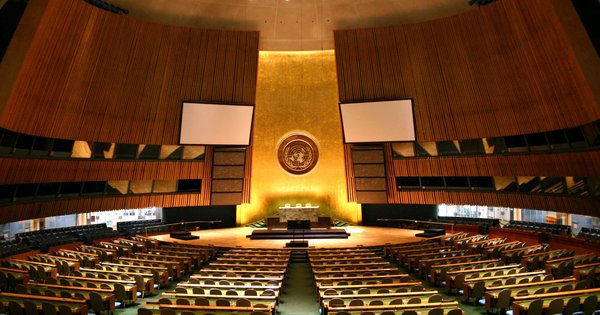
Late last week, the UN General Assembly’s Third Committee, the one that handles human rights, voted on whether people killed because of their sexual orientation or gender identity should keep being named in its resolution on extrajudicial, summary or arbitrary executions. They stay. Just.
And for the first time, the United States voted to take them out.
The short version
- The amendment: Egypt proposed replacing the explicit reference to “sexual orientation or gender identity” with broader wording about anyone at heightened risk.
- The result: It failed 69 in favour, 74 against, 24 abstentions, according to the UN News summary of the session.
- The US: Voted for the amendment, the first time it has backed removing this language from the resolution, MambaOnline reported, citing Outright International.
- The resolution itself: Approved 131 to 0, with 47 abstentions.
- Next: The full General Assembly votes in December, where another amendment could be tabled.
What this resolution actually does
This isn’t a new rights treaty. The resolution comes up every two years, led by the Nordic countries (Finland this time), and its job is narrow: it says governments must investigate unlawful killings, prosecute the people responsible and give victims’ families justice.
It also lists groups who are especially likely to be killed for who they are or what they do: journalists, human rights defenders, Indigenous Peoples, religious minorities, victims of so-called honour killings. Sexual orientation has been on that list since 2002, and gender identity since 2012.
As the rights groups’ joint letter put it before the vote, the text “creates no hierarchy among victims and no new rights.” It just refuses to pretend some killings don’t happen.
Why the margin matters
Two years ago, a similar amendment lost by 78 votes to 47, according to ISHR. This year it lost by five.
Outright International warned of “a sharp shift in the politics of the General Assembly,” MambaOnline reported. The US switch is a big part of that. It also backed a similar Egypt-led amendment that removed sexual orientation and gender identity language from a UN disability rights resolution in December 2025, the same report noted.
That’s a sharp turn from 2010, when sexual orientation was stripped out at committee stage and the US was among the countries that helped restore it in the full Assembly, as Gay Express recalled.
Egypt’s delegate, per the UN summary, called the existing wording controversial and non-consensual. Finland, for the Nordics, answered with the evidence: “Certain groups of individuals are more likely than others to become victims of illegal killings.”
Who voted how
Egypt tabled the amendment on behalf of most members of the Organisation of Islamic Cooperation. Alongside the US, China, Ghana, Nigeria and Uganda were among those backing it. South Africa voted against, MambaOnline reported. Another 26 countries didn’t vote at all, and those absences could decide December.
The numbers behind the wording
This isn’t abstract. Outright’s report documented 233 killings of LGBTIQ people between January 2020 and July 2026, and says the real figure is likely far higher because so many cases are never recorded or investigated.
“Behind every case in our report is a grieving family and community, often still waiting for an investigation or justice,” said Ohotuowo Ogbeche, a global researcher at Outright.
The joint letter also cited monitoring, referenced by the UN’s special rapporteur on extrajudicial executions, that recorded “over 5,300 killings of trans and gender-diverse people since 2009.” It’s a timely number: this is Transgender Awareness Week, and Transgender Day of Remembrance is Friday, November 20.
What happens in December
The resolution now goes to the full General Assembly. A second attempt to strip the language there is possible, so the 74 countries that held the line will be under pressure again. Outright’s executive director Maria Sjödin urged governments to “make clear that the right to life belongs to everyone.”
Before last week’s vote, 2,149 individuals and 127 organisations from 112 UN member states had signed on to the groups’ letter. If your country abstained or skipped the vote, December is your chance to ask why.
Sources: UN News via The European Times (Nov 14, 2026); MambaOnline (Nov 14, 2026); Gay Express (Nov 16, 2026); Human Rights Watch / joint letter (Nov 12, 2026); ISHR (2024); draft resolution A/C.3/81/L.37/Rev.1. Photo: Patrick Gruban / Wikimedia Commons, CC BY-SA 2.0.