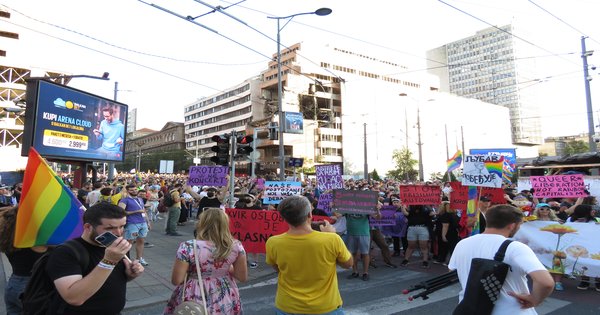
How American Evangelicals Are Fueling Africa's Anti-LGBTQ+ Crackdown
From Senegal's doubled penalties to Ghana's revived criminalization bill, a worsening climate for LGBTQ+ Africans has deep roots in US evangelical influence — now turbocharged by the Trump administration.
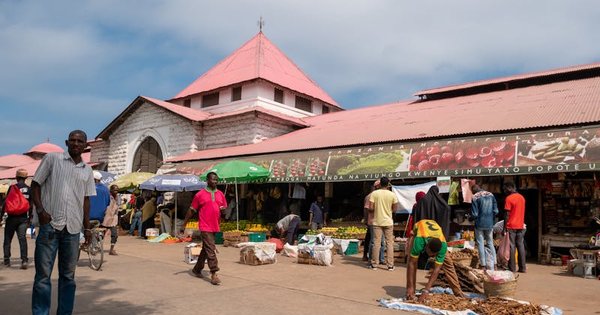
The majority of African nations criminalize same-sex relations. That’s not new. What is new — or at least newly intensifying — is the pace at which countries are tightening those laws, and the increasingly visible thread connecting those crackdowns to American money, American organizations, and American politics.
A March 2026 investigation by CNN laid out the pattern in stark detail: across Sub-Saharan Africa, LGBTQ+ people face a worsening legal and social climate, and much of the momentum behind it traces back to US-based evangelical groups that have spent decades cultivating anti-LGBTQ+ sentiment on the continent.
The recent wave
The numbers tell a grim story. In late February, Senegal’s parliament approved a bill doubling the penalty for same-sex relations — the maximum prison sentence jumped to ten years. The bill also introduced sentences of three to seven years for anyone who advocates for LGBTQ+ rights, effectively criminalizing allyship itself.
In Ghana, lawmakers are reviving a bill that would impose up to three years in prison for identifying as LGBTQ+, with organizers and advocates facing potential ten-year sentences. The bill first passed in 2024 but was never signed into law by the previous president. This time, its backers appear more confident.
These aren’t isolated incidents. They’re part of a continent-wide pattern. Uganda’s Anti-Homosexuality Act — which includes the death penalty for “aggravated homosexuality” — remains in force. In February, two Ugandan women were charged after sharing a Valentine’s Day kiss, a reminder that enforcement isn’t theoretical.
The American connection
The role of US evangelical organizations in shaping African anti-LGBTQ+ legislation has been documented for years, but the current moment feels different. The pipeline is more direct, the funding more substantial, and the political environment in the US more permissive than at any point in recent memory.
Critics point to organizations like the World Congress of Families, which has held conferences across Africa promoting what it calls “traditional family values.” A 2019 conference in Ghana is widely credited with accelerating the anti-LGBTQ+ legislative push there. American pastors and advocacy groups have provided model legislation, legal expertise, and rhetorical frameworks that local politicians have adopted wholesale.
The dynamic isn’t purely top-down — African anti-LGBTQ+ sentiment has domestic roots, and local political actors have their own motivations. But the American evangelical infrastructure provides resources, legitimacy, and strategic direction that amplifies what might otherwise remain scattered local hostility into coordinated legislative campaigns.
The Trump amplifier
The second Trump administration has added a new dimension. Cutting funding for global HIV/AIDS programs — which disproportionately served LGBTQ+ individuals in Africa — sent a signal that the US government no longer considers these communities worth protecting. The broader retreat from international human rights advocacy has emboldened governments that might have faced diplomatic consequences for anti-LGBTQ+ legislation under previous administrations.
It’s a one-two punch: American evangelical organizations push the laws, and the American government signals that it won’t push back.
What this means for LGBTQ+ Africans
For the people actually living under these laws, the consequences are immediate and severe. Criminalization doesn’t just mean prison — it means inability to access healthcare, loss of employment, family rejection, and vulnerability to extortion and violence. When advocating for LGBTQ+ rights itself becomes a crime, as in Senegal’s new law, even the organizations trying to provide support face existential legal risk.
The situation is not uniformly bleak. Botswana decriminalized homosexuality in 2019 and a same-sex couple is currently suing for the right to marry, with hearings ongoing. South Africa’s marriage equality law, enacted in 2006, remains intact. Mozambique quietly decriminalized in 2015. These examples prove that progress is possible on the continent — but they’re increasingly outnumbered by countries moving in the opposite direction.
The responsibility question
There’s a legitimate debate about how to talk about American influence on African anti-LGBTQ+ politics without stripping African actors of agency or reducing a complex continental picture to a simple narrative of foreign interference. That debate matters.
But so does accountability. When American organizations spend millions of dollars funding anti-LGBTQ+ campaigns abroad, when they draft model legislation that gets copy-pasted into foreign law, and when the American government provides diplomatic cover for the results — that’s a chain of cause and effect that deserves to be named clearly.
LGBTQ+ Africans are fighting for their lives and their freedom. The least the rest of us can do is be honest about who’s making that fight harder.