IDAHOT 2026 in Albania: A Country Quietly Outpacing Its Neighbors on LGBTQ+ Protections — While EU Membership Hangs in the Balance
As Albania prepares for the International Day Against Homophobia, Transphobia, and Biphobia on May 17, the country sits in a curious position: stronger legal protections than most of the Western Balkans, real political momentum tied to EU accession, and a queer community still navigating deep social conservatism.
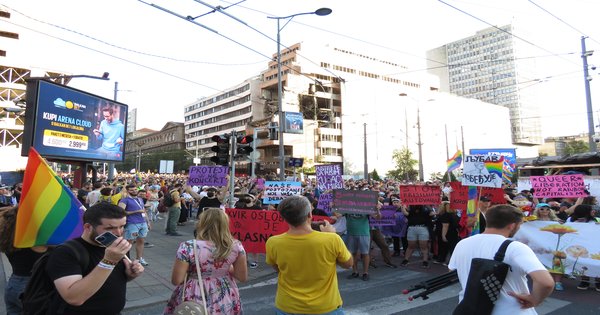
May 17 — the International Day Against Homophobia, Transphobia, and Biphobia, usually shortened to IDAHOT or IDAHOBIT — is roughly a month away. Across the Western Balkans, LGBTQ+ organizations are finalizing programs, negotiating with municipal authorities about visibility events, and bracing for the inevitable counter-protests that have become a fixture of public queer life in the region.
In Albania, the buildup looks different than it does in some neighboring countries. There’s no national crisis over whether IDAHOT events will be allowed to happen. There’s no equivalent of the Hungarian Pride ban hanging over the conversation. The Albanian state is, broadly speaking, on board.
That doesn’t mean LGBTQ+ life in Albania is easy. It does mean that the legal and political picture in 2026 looks meaningfully different from the picture even five years ago — and the engine driving most of that change is the country’s accelerating push for EU membership.
Where Albania actually stands legally
Albania has, on paper, one of the more comprehensive anti-discrimination frameworks in the Western Balkans. The Law on Protection from Discrimination, adopted in 2010 and amended several times since, explicitly prohibits discrimination based on sexual orientation, gender identity, and gender expression in employment, education, healthcare, housing, and goods and services. The criminal code includes hate-crime provisions covering bias-motivated offenses against LGBTQ+ people. The dissemination of homophobic hate speech is a criminal offense.
In recent years, Albania has also moved on broader gender-equality reform that incorporates LGBTQ+ protections more explicitly than earlier laws. The Commissioner for Protection from Discrimination, an independent state institution, accepts and investigates complaints, and has been increasingly vocal about LGBTQ+ cases.
What’s still not in place: same-sex marriage, civil partnerships of any kind, joint adoption rights, and clear administrative pathways for legal gender recognition. The 2024 symbolic ceremony in which a lesbian couple, Alba Ahmetaj and Edlira Mara, held what was described in the press as Albania’s “first same-sex marriage” on the roof of the Tirana mayor’s office had no legal effect — but the fact that it happened publicly, with municipal cooperation, said something about the political tone the city has set.
What the EU accession track is doing
Albania is in active EU accession negotiations, and the European Commission’s annual progress reports have repeatedly cited LGBTQ+ rights — both legal protections and their actual enforcement — as part of the rule-of-law and fundamental-rights chapters that Albania must satisfy before membership.
This has created a steady, unglamorous form of pressure that has produced real results. Government officials, prosecutors, and police have been trained on hate-crime investigation. The Commissioner for Protection from Discrimination has been resourced. Albanian LGBTQ+ organizations like Pink Embassy / LGBT Pro Albania, Aleanca LGBT, and Streha — which operates the country’s only shelter specifically for LGBTQ+ people in crisis — have received government cooperation that would have been unthinkable a decade ago.
This is the dynamic that distinguishes Albania from some of its neighbors. EU accession is treated by the Albanian political establishment as a strategic priority that overrides cultural-conservative resistance to LGBTQ+ inclusion. The same is broadly true in Montenegro and North Macedonia, but it stands in sharper contrast to Serbia, where accession has stalled and LGBTQ+ progress has stalled with it, or Kosovo, which is not yet a candidate country and where promised reforms (including civil unions) have languished for years.
What life is actually like
Legal frameworks and lived experience are not the same thing, and Albania remains a deeply socially conservative country in many respects. Surveys consistently show high levels of stigma toward LGBTQ+ people, particularly outside the major cities. Family rejection is common. Many queer Albanians migrate, either internally to Tirana or abroad — to Greece, Italy, Germany, and the UK — in part because of the difficulty of being openly LGBTQ+ in their hometowns.
In Tirana itself, the picture is more mixed. The capital has a small but visible queer scene clustered in a handful of bars and venues, mostly in the Blloku neighborhood. Tirana Pride has been held annually since 2012, organized primarily by Pink Embassy / LGBT Pro Albania, and has grown each year. The march is generally well-policed and uneventful — a low bar in regional terms but a meaningful one.
What advocates worry about is the gap between the law as written and the law as enforced. Hate-crime statistics in Albania remain low not because incidents are rare but because reporting is. LGBTQ+ Albanians, particularly trans people, often distrust the police and avoid making formal complaints. The Streha shelter has documented a steady caseload of LGBTQ+ youth fleeing family violence, and a 2026 study highlighted the elevated trafficking vulnerability faced by LGBTQ+ Albanians, especially those rejected by family and outside formal employment.
What to watch for IDAHOT 2026
The Council of Europe’s Horizontal Facility program, which works on rule-of-law and human-rights reform across the Western Balkans, has supported IDAHOT activities in Albania for several years. The 2026 programming, expected to be coordinated between Tirana municipality, the Commissioner for Protection from Discrimination, and Pink Embassy, is likely to include public visibility events in Skanderbeg Square, professional training sessions for police and judiciary, and community gatherings.
What’s worth watching specifically:
The Albanian government has signaled openness to advancing legal gender recognition reform — currently one of the country’s most glaring gaps. IDAHOT week has historically been when ministries make announcements of this kind. Civil unions have also been periodically floated, though no concrete legislation has reached parliament.
Police response to any counter-protest activity will be a meaningful indicator. In recent years, Tirana police have managed potential disruptions professionally; any retreat from that standard would be a worrying signal.
International attention from EU institutions — including any visits from Commission officials — is also a marker. EU accession remains the carrot Albania is reaching for, and high-profile European engagement with Albanian LGBTQ+ events strengthens the political case for continued reform.
The bigger picture
Albania is not a queer paradise. It’s a country with strong anti-discrimination laws, weak enforcement, a small but real LGBTQ+ civil society, a deeply socially conservative majority, and a political class that — for reasons rooted in EU accession strategy more than ideological commitment — has chosen to be on the right side of the legal arc. That combination makes Albania one of the more interesting case studies in the Western Balkans, and IDAHOT 2026 will be an opportunity to take stock of where things actually stand.
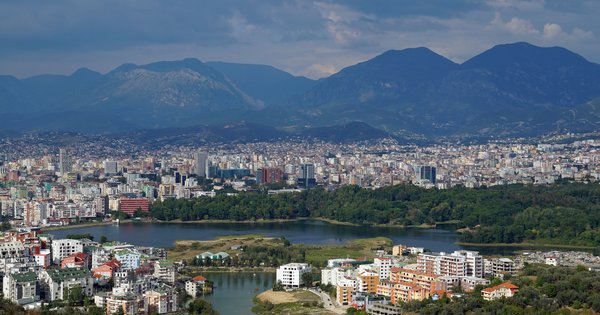
For LGBTQ+ travelers, expats, and digital nomads spending time in the country, May in Tirana is also a good moment. The city is beautiful at that time of year, the IDAHOT programming is real and worth attending, and the queer community — small as it is — is welcoming to international visitors.
Sources: Council of Europe Horizontal Facility program documentation; Albania Law on Protection from Discrimination (2010, amended); European Commission Albania Progress Reports; ILGA-Europe Annual Review 2026; Pink Embassy / LGBT Pro Albania public statements; Tirana Times.