Lesbian Visibility Week in the Balkans: Where Are the Voices of Queer Women Here?
Lesbian Visibility Week 2026 runs through April 26 with programming across the UK, North America, and Western Europe. In the Balkans, queer women's visibility is a quieter, more complicated project — and the absence is not accidental.
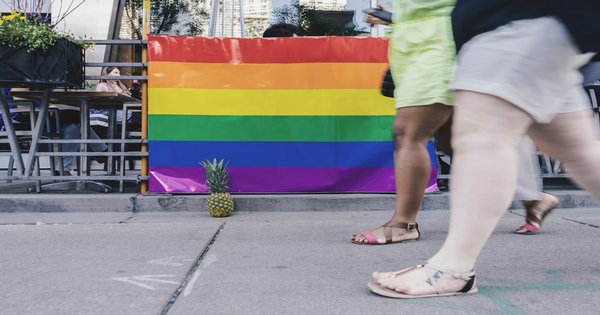
Lesbian Visibility Week 2026 — April 20 through April 26 this year, with the theme of Health and Wellbeing — is winding down. Our preview piece ran ten days ago; the week itself has delivered a solid stream of events and coverage out of London, New York, Sydney, and most of the queer media ecosystem in between. DIVA magazine has been publishing daily. Autostraddle ran a week of features. Coast-to-Coast Queereoke hit lesbian bars across North America on Wednesday.
Sitting in Tirana while the week unfolds, the thing we keep noticing is what is not there. Almost none of the coverage is coming from the part of the map where we actually live.
The geography of the visibility economy
Lesbian Visibility Week was founded by Linda Riley, the publisher of DIVA, in 2008. It built its infrastructure out of the institutions that already existed: DIVA’s subscriber base, Stonewall UK, GLAAD in the United States, UK Black Pride, the Peter Tatchell Foundation, the LGBT Foundation in Manchester. When the week expanded to North America in 2023, it partnered with existing queer women’s organizations in major coastal cities. The 100-plus official LVW events this year map almost perfectly onto the places where well-resourced queer women’s organizations already exist.
Look at the 2026 event calendar — and we did, front to back, earlier this week — and you find programming in Belfast, Dublin, Cardiff, Toronto, Winnipeg, New York, Los Angeles, San Francisco, Seattle, Auckland, Sydney, Johannesburg. You find no officially listed events in Belgrade, Sarajevo, Pristina, Skopje, Podgorica, or Tirana. Zagreb has one small library event. Athens has one queer bookshop reading.
This is not a criticism of LVW. The infrastructure is a consequence of where the money and the organizations historically congregated, and those organizations mostly didn’t congregate in the former Yugoslavia, in Albania, or in most of the Eastern European countries where we have spent the last four years. The point is that visibility is geographic. The week makes visible whatever it reaches. What it does not reach stays invisible.
What’s actually happening on the ground
We asked around this week — quietly, as we usually do, because these conversations are still careful ones in most of the region — about what queer women’s organizing actually looks like in the Balkans in 2026.
In Albania, the main LGBTQ+ organization, Aleanca LGBT, runs a specific program for lesbian and bisexual women called GETO that has been active since 2019. It is small, deliberately so, and much of its work happens in group-chat spaces and private gatherings rather than public events. The reason is not shyness. It’s that public lesbian visibility in Albania often means becoming identifiable to extended family networks that are still, for many women, a source of real risk — economic, social, and occasionally physical. The groups that serve queer women here are making a conscious tradeoff between visibility and safety, and they are choosing safety.
In Serbia, Labris, the long-running lesbian human rights organization in Belgrade, is wrapping up a project on the mental-health impacts of a hostile political environment on queer women. Their programming this spring has been overwhelmingly internal — support groups, legal clinics, a small film screening last weekend — rather than the kind of public-facing celebration that LVW frames as the default. One Labris staffer publicly said earlier this year that she stopped going to national pride events in 2024 because “being seen by the cameras is not what I need anymore.” That is a very different relationship with visibility than the one the big campaigns are built on.
In North Macedonia, Coalition Margins documented 255 cases of institutional violence against LGBTQ+ people between 2021 and 2023 — in healthcare, education, policing, and the judiciary. The gendered breakdown of that data is telling: lesbians and bisexual women appear disproportionately in cases involving forced “conversion” practices through families, and in cases involving medical gatekeeping around reproductive care. Those are stories that don’t easily translate into a Queereoke night.
In Kosovo, activists have described a small monthly gathering in Pristina that rotates between private flats because there is no bar space they are willing to use publicly. Those gatherings are not on anyone’s LVW calendar. The women running them have no interest in making them public. They are doing visibility their own way.
The stories we’re not telling ourselves
The Western queer press covers the Balkans, when it covers us at all, through a particular lens: the bad-news Pride parade story (attacks, counter-protests, police dispersal) or the occasional “surprising progress” piece when a law passes. Queer women in the region are almost entirely absent from either frame. It is not that nothing is happening. It is that what is happening doesn’t fit either template.
Consider a few stories from the last six months that got, to our knowledge, almost no coverage outside the region:
The Montenegrin Ombudsperson finally forced the Ministry of Health to stop blocking lesbian and bisexual women from accessing medically assisted insemination — a win that took five years of sustained pressure from a handful of women and LGBT civic groups. Outside Montenegrin LGBT media and one mention in the ILGA-Europe review, we couldn’t find English-language coverage anywhere.
In Sarajevo, a small lesbian couple who have been foster parents to two boys for seven years went public in February with their family story in a local magazine — the first openly queer foster family in Bosnia. They received a wave of online abuse and, a week later, a wave of quiet supportive messages from other queer women across the country. It was one of the most significant cultural moments for Bosnian queer women in years. We haven’t seen a single English-language article about it.
The Belgrade Pride organizing collective has been run primarily by lesbian and bisexual women since 2022 — a shift from the earlier, more gay-male-led Pride organizing structure. That change alone has reshaped what the week looks like on the ground, what topics get foregrounded, and whose safety gets prioritized in negotiations with police. It is the kind of quiet structural story that almost never gets told at the international level.
What visibility could actually mean here
We are not writing this to scold LVW, or to suggest the week should be something other than what it is. It is a successful campaign, built in a particular place, that has done real good for queer women who can access it. The ask is narrower and, we hope, more useful: that the Western queer press treat visibility as something other than a bar-night in a coastal city.
For queer women in the Balkans, visibility looks like: a foster family that risks the local tabloid to tell their story. An NGO that chooses a private group chat over a Pride float because the risk calculus in their city is still different. An Ombudsperson’s report that finally gets published. A monthly gathering in a Pristina flat that will never be a hashtag. A Labris staffer who decides, deliberately and with reason, that she is done being photographed.
None of those are failures of visibility. They are different shapes of it — the shapes that actually fit the lives of the women living them.
LVW26 is almost done. Lesbian Visibility Day itself is Saturday. If you are reading this from a place with bars, fundraisers, karaoke, and feature coverage, enjoy it. If you are reading this from a place where most of what we just described sounds familiar — Tirana, Sarajevo, Belgrade, Pristina, Podgorica, Skopje — we see you. So do the women doing the quieter work next to you.
They are the story, even if the cameras are elsewhere.
If you want to support queer women’s organizing in the Balkans, direct donations to Labris, Aleanca LGBT, or ERA – LGBTI Equal Rights Association reach the organizations doing the work. All three accept international transfers.