The Queer Loneliness Epidemic Isn't What You Think It Is
You can be out, visible, and surrounded by community and still feel profoundly alone. The loneliness crisis hitting LGBTQ+ people goes deeper than dating apps and disappearing gay bars.
We’ve been traveling full-time as a couple for over four years now. We have each other, we have a community of friends scattered across Europe, we have the kind of freedom that most people would call enviable. And there are still stretches — sometimes days, sometimes weeks — where we feel deeply, inexplicably lonely.
We mention this because every conversation about LGBTQ+ loneliness seems to start with the assumption that it’s a problem of access. Not enough gay bars. Not enough community centers. Not enough matches on the apps. Fix the infrastructure, fix the isolation.
But that’s not really what’s happening. The loneliness crisis hitting queer people in 2026 is stranger and more stubborn than a shortage of spaces. And the data is starting to catch up with what many of us have felt for a long time.
The numbers are worse than you’d guess
Research consistently shows that sexual minorities report roughly 35% higher loneliness scores than heterosexual peers. One in three LGBTQ+ adults currently experience mental illness, compared to one in five straight adults. A 2026 Taimi survey found that 61% of LGBTQ+ singles have actively chosen to stay single because dating felt “emotionally draining” — not because they couldn’t find partners, but because the process itself was exhausting.
That last statistic is revealing. It’s not a story about scarcity. It’s a story about the quality of connection available.
The paradox of visibility without intimacy
Here’s the thing nobody tells you about the era of maximum queer visibility: you can be out, celebrated, and socially active and still feel like nobody actually knows you.
Part of this is structural. The traditional third places where queer community was built — gay bars, bookstores, community centers — have been declining for over a decade. What’s replaced them is mostly digital: apps, group chats, Instagram communities. These spaces are wide but shallow. You can have 500 followers and no one to call when you’re having a bad day.
Part of it is emotional. Many LGBTQ+ people spent formative years hiding, performing, or carefully curating which parts of themselves to reveal. Those habits don’t disappear when you come out. They become the invisible architecture of your social life — the feeling that you’re always slightly performing, even among people who accept you.
And part of it is specific to this political moment. When your rights are being actively debated, when legislation is being passed to restrict your healthcare or erase your identity from public life, there’s a particular kind of loneliness that comes from feeling like the world is having a conversation about you without you.
What it looks like as digital nomads
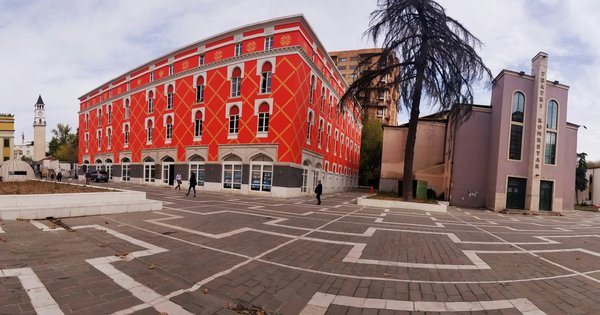
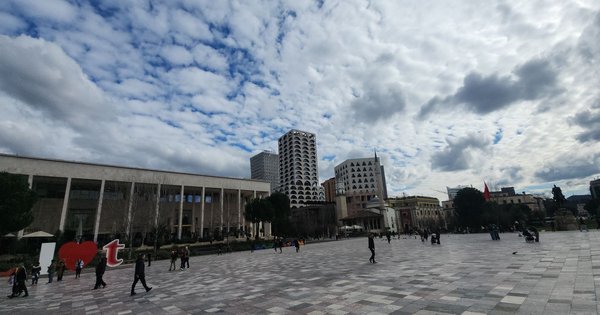
We can speak directly to this one. Being queer digital nomads means arriving in a new city every few months and starting from zero. The gay scene in Tirana is not the gay scene in Barcelona is not the gay scene in Lisbon. Every move requires rebuilding — finding the right café, the right bar, the right WhatsApp group, the right people who understand your specific flavor of queerness.
About 13% of digital nomads identify as LGBTQ+, according to a Nomads.com survey. That’s higher than the general population, which suggests that the nomad lifestyle attracts queer people — maybe because we’re already practiced at building identity outside of fixed structures. But it also means we’re particularly susceptible to the loneliness trap: we chose freedom and mobility, and the price is that deep, rooted connection is always something we have to actively construct.
We’ve found that the most meaningful connections come not from apps or expat Facebook groups but from showing up repeatedly in the same physical space. The Albanian café where the barista remembers our order. The Belgrade bookshop that hosts a monthly queer reading group. The Lisbon coworking space where we kept running into the same people until acquaintance became friendship.
Repetition is the secret ingredient of belonging, and it’s the one thing that modern queer life — especially nomadic queer life — makes hardest.
What actually helps
We’re not going to pretend to have this figured out. But a few things have made a real difference for us, and the research backs some of them up.
Shrink the circle. The loneliness research is clear that the number of connections matters less than the depth. Three people who really know you is worth more than thirty who kind of do.
Make the first move, every time. Queer people are conditioned to wait for signals of safety before opening up. This is reasonable and also self-defeating. Someone has to go first. Let it be you.
Find the boring rituals. The most connective thing we do isn’t travel or adventures — it’s the weekly video call with the same four friends, the same Tuesday morning coffee at the same café, the same walk around the same lake. Loneliness thrives on novelty. Connection thrives on repetition.
Get off the apps — or at least, stop expecting them to fix this. Dating apps are designed to generate matches, not intimacy. They’re useful for what they are, but they are not a substitute for community.
Talk about it. The loneliness epidemic persists partly because admitting to loneliness feels like admitting to failure, especially in a community that fought so hard for the right to exist in public. But silence is the loneliness multiplier. The moment you say “I’m lonely” to someone you trust, you’re already less alone.
We don’t think there’s a structural fix for this. No number of new gay bars or better algorithms will solve a problem that’s fundamentally about the difficulty of being known. But naming it honestly is where it starts — and we think our community is getting better at that, slowly, imperfectly, together.