Four Years as Gay Digital Nomads: What We've Actually Learned
We tested it in 2014, did a full year in 2015, got married, bought a house, ran vacation rentals through COVID, sold everything, and left in January 2022. Four years later, here's the honest accounting.

It didn’t start in January 2022. That’s when we left for good — but the idea had been tested years earlier.
In October 2014, Jeff had client meetings in London for a portfolio CEO. He was already fully remote. Zachary flew out afterward, and for a week we fell into a rhythm: tour London in the mornings, work in the afternoons and evenings. It was a proof of concept. If work could happen from London, it could happen from anywhere.
Three months later, in January 2015, fresh off a Christmas Caribbean cruise with family, we flew to Malaga, Spain — the first stop on a planned year-long trip across twelve European countries, thirty days each. We got tired of packing every month. Thirty-day stays became sixty, then ninety. By year’s end, we were missing family and came home.
But we’d proven it was possible. That changed everything that followed.
The In-Between Years
We got married in 2016 — the Supreme Court ruling had come down in the summer of 2015, and we weren’t waiting. We bought a five-bedroom house in Southern California and started renting rooms on vacation rental platforms, leveraging everything we’d learned about short-term rentals from a year of being guests in them across Europe. Zachary managed the property with help from Jeff’s mom.
Then COVID hit. The government shut down short-term rentals — anything under ninety days. We pivoted fast: issued ninety-day leases at lower nightly rates. Within thirty days we were at 100% occupancy on rolling ninety-day windows. It worked. But we were restless.
As restrictions lifted, the conversation shifted from if we’d leave again to when. By October 2021, we’d sold the house for twice what we paid, the car for 1.1x its purchase price, and most of the furniture at a loss. Everything we wanted to keep went into a storage unit. Everything else was gone.
We spent the last quarter of 2021 in a Residence Inn, planning our 2022 Europe itinerary.
The Departure
We celebrated New Year’s Eve somewhere over the Atlantic, flying to Madrid for an overnight before continuing to Porto, Portugal. The plan was beautiful. The execution, less so.
Portugal required a negative COVID test on entry. We tested at our Madrid hotel room — both positive. No symptoms, but confined to the room for seven days before we could continue. Our grand departure began with a week staring at the walls of a Madrid hotel. It felt about right.
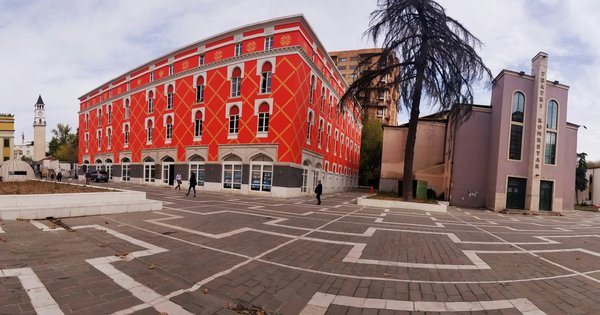
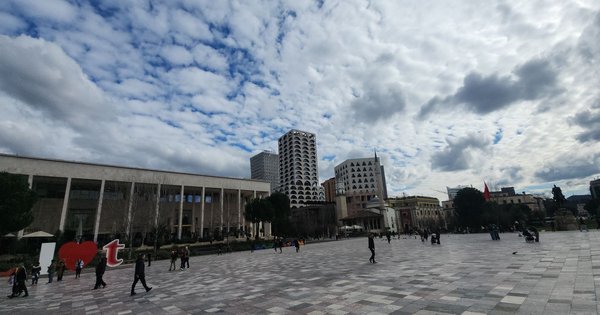
Four years later, we haven’t been back to the United States. We’ve lived in Albania, Portugal, Greece, Bulgaria, Austria, Italy, Romania, Latvia, the Netherlands, Spain, Denmark, and more. We spend four to six months of every year in Albania — Tirana, Sarande, Durres, rotating between neighborhoods and cities. We have a lek-to-euro conversion permanently running in the back of our heads.
Here’s what we actually know now.
The Financial Reality
Let’s start with the question everyone wants to ask.
Digital nomad life is significantly cheaper than life in California — even accounting for travel costs — but only if you’re thoughtful about where you go and how you structure your time.
We spend four to six months per year in Albania. Our monthly costs there for two people: rent runs about €600-900 for a comfortable apartment, eating out, coffee, and groceries add another €800-900, and utilities including 1Gbps internet come to about €150. Total: roughly €1,550-1,950 per month for two people. In California, our mortgage payment alone was more than that.
The rest of the year costs more. But we’ve found a rhythm: anchor in a low-cost base for the productive months, travel more freely when work allows.
The tools that make this work financially: we use Chase Sapphire Reserve and Chase Ink Business Preferred for almost every purchase — the points accumulate into free flights, which meaningfully reduce what looks like high travel spending. Monarch Money lets us see exactly what we’re spending across all accounts and multiple currencies. Both are indispensable.
Instead of flying back to the US to visit family, we fly them out to us using credit card points. It saves money, gives family an international travel experience, and we get quality time together without the cost and hassle of returning. It’s one of the better decisions we’ve made.
Getting Around
All the cities we live in are walkable — walking is our primary daily transport. We chose these places partly for that reason.
For city-to-city travel within Albania, we rent a car. There are bus options but no train network yet. We occasionally use the Patoko app for taxis — Albania’s answer to Uber, pay through the app, no cash hassle. In other European countries, we use public transport: trains and metro systems, which are generally excellent.
For mobile data, we use Holafly with their monthly unlimited data plan. It’s not the cheapest option, but it eliminated the headache of buying local eSIMs in every country — researching providers, reading terms, dealing with early cancellation fees, coverage gaps between borders. For digital nomads who consume a lot of mobile data (especially running AI tools), the convenience is worth the premium. We keep our US phone numbers on Google Fi, limiting data roaming but keeping the numbers active for banking, two-factor authentication, and staying reachable by family.
The LGBTQ+ Reality
This is what people rarely write honestly about.
The experience of being gay and location-independent is not uniformly positive. It requires constant assessment. We’re lucky to be two married men who read as relatively conventional — we’re not navigating the additional layers of visibility that trans travelers or gender-nonconforming people face, and we’re aware of that privilege.
Even so: every new country requires recalibrating how visible to be. In Tirana, we’re comfortable being ourselves in almost every context. In some other places we’ve stayed for extended periods, we’ve been more careful — not from explicit hostility, but from ambient awareness of where we are.
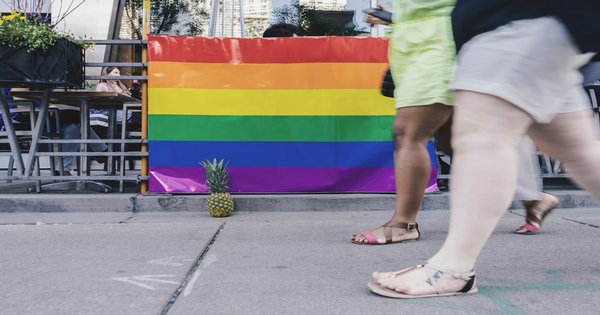
What we’ve found: LGBTQ+ friendliness doesn’t correlate as neatly with geography as the travel guides suggest. We’ve felt more at ease in Tirana than in some nominally liberal Eastern European capitals. Small cities in “friendly” countries can be more hostile than small cities in “unfriendly” ones. Urban centers almost everywhere are more comfortable than rural areas. Reading the local context carefully matters more than consulting a rainbow ranking.
The thing that’s most changed our experience abroad: connection with local LGBTQ+ communities. The queer Albanian people we know in Tirana are some of the most generous, funny, thoughtful humans we’ve met anywhere. When you stop being a visitor and start being a neighbor, even temporarily, the experience changes entirely.
What We Got Wrong
We underestimated how much we’d miss community stability. We had a community in California — people who knew us, who we could call, who shared our history. You can rebuild parts of that abroad, but it takes years, and the transience of digital nomad life works against it. This is the real cost that doesn’t appear on the spreadsheets.
We overestimated how much work flexibility we’d gain. The freedom is real, but so is the reality that good work requires focus, and focus requires some stability. We were more productive after we started anchoring in one place for several months at a time rather than moving every few weeks.
We underestimated the administrative complexity. Banking, taxes, health insurance, visas — none of this is simple when you’re not a resident of anywhere specific. We’ve figured it out, but “figure it out” required time, money, and occasional anxiety.
What We Got Right
We left when we said we were going to leave.
That sounds simple. It was the hardest part. We had reasons to delay. We had objections from family. We had uncertainty about whether we could actually make it work. But we’d already done it once in 2015 — that first year proved it was possible, even if we came home at the end of it. The second time, we didn’t set a return date.
If you’re considering something like this: the information you need is available. The tools exist. The main variable is whether you’re willing to accept some genuine uncertainty and live with it.
On Building TrueQueer From the Road
TrueQueer came out of being outside. When you’re living in Albania and following LGBTQ+ news from the US, you see both how bad things have gotten and how much of the coverage is written for an audience that hasn’t left. The gaps in LGBTQ+ media — geographic, topical, tonal — are visible from a distance.
We also saw the gap in Balkans coverage. There is almost no quality LGBTQ+ coverage of this region in English. We’re here. We know people. We can do that.
That’s the honest version of why this site exists.
We keep getting emails from people planning similar moves. The most useful thing we can say: do the math honestly, pick somewhere with a real LGBTQ+ community (not just rankings), and start. The rest is logistics.