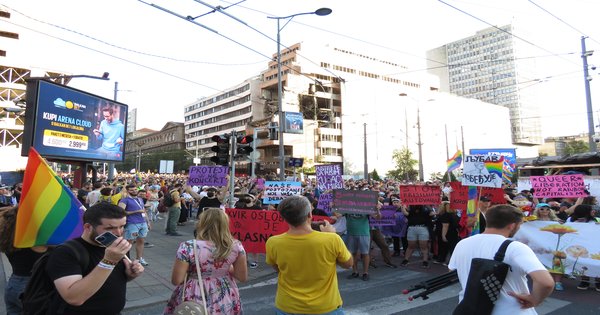
Idaho Banned Pride Flags. Boise Wrapped the Flagpoles in Rainbow Instead.
After Governor Brad Little signed a bill fining cities for flying Pride flags, Boise responded by wrapping its City Hall flagpoles in rainbow vinyl, lighting windows in trans flag colors, and putting up signs reading 'A city for everyone.' The flag ban says nothing about flagpoles.

There is a specific kind of joy in watching a government outsmart itself. Idaho just provided a textbook example.
On March 31, 2026 — the International Transgender Day of Visibility — Governor Brad Little signed House Bill 561 into law. The bill targets Boise specifically, imposing fines of $2,000 per day for any city that flies a non-approved flag on public property. It was designed to kill a workaround: in 2025, after the legislature first passed a flag restriction law without enforcement teeth, Boise’s City Council voted to designate the Pride flag as an official city flag. HB 561 closed that loophole by requiring that any official city flag must have been established before January 1, 2023.
Mayor Lauren McLean complied. The Pride flag came down from the outdoor plaza flagpole that same day.
A week later, it didn’t matter.
The Flagpole Is Not a Flag
On April 8, city workers wrapped the flagpoles themselves in rainbow-colored vinyl. Not a flag. A pole wrap. The distinction matters — legally, at least. City Council President Meredith Stead put it plainly: “The law was based on the flag and we are using rainbows, so it’s not at all a flag. I would say we are in full compliance of the law.”
But Boise didn’t stop at flagpoles. The city hung a large rainbow-striped banner in a City Hall window reading “Creating a city for everyone.” Other windows got heart-shaped rainbow stickers with the words “A city for everyone means for everyone.” At night, the building’s exterior lights up in the colors of the transgender Pride flag — pink, white, and blue.
None of this is a flag. All of it is louder than one.
A Law That Targeted One City
HB 561’s backstory makes the defiance sweeter. The original 2025 flag ban passed without any way to punish cities that ignored it. When Boise did exactly that — flying the Pride flag under its newly designated “official” status — state legislators went back and wrote a bill specifically to target the city. State Rep. Ted Hill, the bill’s sponsor, didn’t try hard to disguise the intent. The bill prohibits any “governmental entity” from displaying non-approved flags and retroactively invalidated Boise’s designation.
The signing date was not accidental either. Choosing the Trans Day of Visibility to sign an anti-LGBTQ+ bill is the kind of cruelty that has become routine in state legislatures across the country. Governor Little has signed multiple anti-LGBTQ+ bills, including a law criminalizing gender-affirming care for trans minors and, more recently, legislation making it a criminal offense for trans people to use bathrooms matching their gender identity.
Why This Matters Beyond Idaho
The Boise response is getting attention for the same reason the original flag ban did: it’s a proxy fight. Pride flags on government buildings aren’t about fabric. They’re a signal — from a city to its residents — about who belongs and who doesn’t.
Idaho’s legislature decided that signal was too dangerous to allow. Boise decided the signal was too important to lose.
What makes the flagpole wraps effective isn’t just the legal cleverness. It’s that they escalated. The city didn’t retreat to a compromise position. They replaced one Pride flag with dozens of rainbow surfaces, trans flag lighting, and public signage that made the message even more explicit than a flag ever could.
There’s a lesson in that for other cities watching. When state legislatures come after symbols, the response doesn’t have to be smaller. It can be bigger, more creative, and entirely within the letter of the law they wrote.
What Comes Next
It would be naive to think the Idaho legislature will let this stand. Another bill targeting Boise — perhaps banning “decorative displays” or “colored wraps” on public property — is almost certainly in the pipeline for next session. The escalation cycle is predictable.
But for now, Boise’s City Hall stands wrapped in rainbow, lit in trans colors, and covered in signs that say what the state would rather stay quiet. The flag is gone. The message is not.