Trump DOJ Opens Civil Rights Probe Into 36 Illinois School Districts Over LGBTQ+ Curriculum
The Justice Department announced on May 1 that it is investigating whether dozens of Illinois public school districts taught what it calls 'sexual orientation and gender ideology' content without parental opt-outs. Governor JB Pritzker called it a 'sham investigation.'

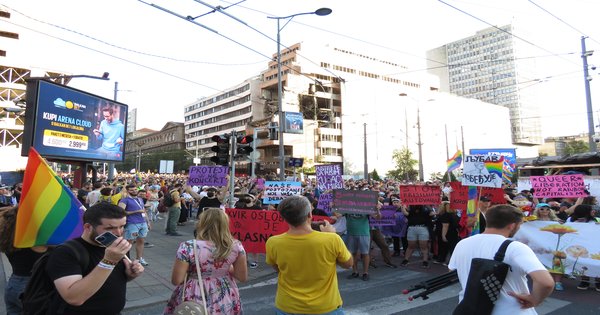
The U.S. Department of Justice announced on Friday, May 1 that it has opened a sweeping civil rights investigation into 36 Illinois public school districts over their handling of LGBTQ+-inclusive curriculum and trans-affirming policies. The probe — described by the agency as a review of “sexual orientation and gender ideology content” in pre-K through 12th-grade classrooms — is one of the largest single-day federal actions targeting school districts since the Trump administration returned to office.
Illinois Governor JB Pritzker, a Democrat and one of the loudest gubernatorial voices opposing the administration’s LGBTQ+ agenda, dismissed the inquiry within hours as a “sham investigation,” accusing the federal government of using civil rights enforcement to “punish states the president does not like.”
What the DOJ says it is looking for
According to the Justice Department’s announcement, investigators will examine three things in each of the targeted districts. First, whether classrooms have included LGBTQ+-inclusive content — described in the announcement as “sexual orientation and gender ideology,” or SOGI, content. Second, whether districts notified parents that they had a right to opt their children out of any such instruction. And third, whether the districts allowed transgender students access to bathrooms, locker rooms, and sports teams matching their gender identity rather than their sex assigned at birth.
The agency framed the probe as an enforcement action grounded in two recent court decisions: the U.S. Supreme Court’s June 2025 ruling in Mahmoud v. Taylor, which held that school districts must allow parents to opt their children out of LGBTQ+-inclusive lesson content on religious grounds, and a March 2026 federal ruling that struck down a California policy permitting schools to keep a student’s gender transition private from their parents.
More than half of the 36 districts named in the announcement are in the Chicago metropolitan area. The list, according to Capitol News Illinois, conspicuously does not include several large suburban Cook County districts that have been the subject of high-profile litigation in recent years over trans students’ bathroom access — a curious omission that some Illinois education attorneys have read as a signal that the DOJ is fishing for new cases rather than building on existing ones.
”Patently unlawful,” and a familiar playbook
Pritzker’s office issued a written response describing the investigation as “patently unlawful” and noting that Illinois state law requires public schools to teach the contributions of LGBTQ+ people in history and civics curricula — a requirement that predates the current administration by nearly a decade. The Illinois State Board of Education said it would cooperate with any lawful federal inquiry but flatly rejected the framing of LGBTQ+ representation as something children need to be protected from.
Civil rights attorneys have warned that the announcement appears designed less to produce findings of fact than to chill school district behavior. A federal investigation, even one that ultimately produces no enforceable conclusion, can soak up months of legal staff time, generate news cycles that pressure school boards, and quietly push administrators toward removing LGBTQ+-inclusive material rather than fighting. That pattern — investigation as deterrent — is one we have already seen this term in DOJ probes of state Title IX coordinators, blue-state attorneys general, and university administrators.
What this means for trans and queer students in Illinois
For trans students currently enrolled in the targeted districts, the immediate concern is whether their schools will pre-emptively roll back protections to avoid federal scrutiny. School districts are not required to change a single policy in response to the announcement — an investigation is not a finding — but the political pressure created by being on the list is real, and it is intentional.
Illinois passed comprehensive trans-protective legislation in 2023, and the state’s Human Rights Act prohibits gender-identity discrimination in schools. Those state-level protections do not vanish because a federal agency disapproves of them. But the gap between what state law guarantees and what individual school administrators are willing to risk has widened significantly since January, and that gap is where the harm lives.
The bigger pattern
Illinois is not the first state to be targeted. Similar DOJ probes have been opened in California, Maine, Massachusetts, and Minnesota over the past four months, each focused on some combination of trans athletes’ eligibility, bathroom access, and curriculum. Critics inside the federal civil rights bar have pointed out that the same DOJ has dramatically scaled back enforcement of civil rights statutes protecting LGBTQ+ people from discrimination in employment, housing, and healthcare — a reorientation in which civil rights law is wielded as a tool against LGBTQ+ inclusion rather than for it.
The investigation is expected to take at least a year. We will keep covering it.