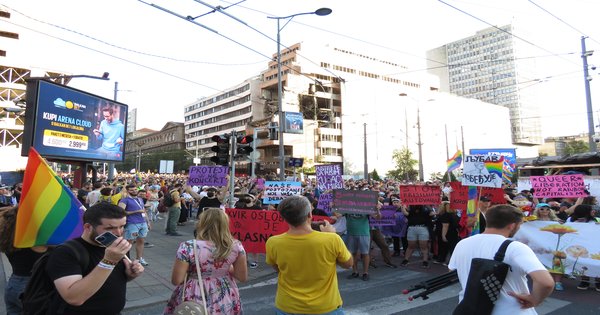
As Governments Backslide, EU Courts Are Becoming the Last Line of Defense for LGBTQ+ Rights
From forcing Poland to recognize same-sex marriages to challenging Hungary's anti-LGBTQ law, the European Court of Justice is stepping in where elected officials won't.

Something significant is happening in European courtrooms that deserves more attention than it’s getting. While populist governments across the continent pass laws restricting LGBTQ+ visibility and rights, EU courts are increasingly stepping in as the last institutional check — and they’re winning.
The pattern is now unmistakable. In 2025, the European Court of Justice delivered a landmark ruling requiring all EU Member States to recognize same-sex marriages performed in other member states, grounding its decision in the fundamental right to free movement and family life. The practical impact was immediate: a same-sex couple married in the Netherlands must now be recognized as married in every EU country, regardless of that country’s domestic laws on the subject.
Poland’s quiet reversal
Perhaps the most dramatic shift has been in Poland. The country spent years as a symbol of anti-LGBTQ+ regression in Europe — remember the “LGBTI-free zones” that municipalities declared starting in 2019? Those have now been repealed. Polish courts are recognizing same-sex marriages performed elsewhere in the EU, aligning with the ECJ ruling.
This didn’t happen because Polish public opinion suddenly shifted, though attitudes have been evolving. It happened because EU legal frameworks created obligations that domestic courts couldn’t ignore. The mechanism is unglamorous — preliminary references, infringement proceedings, judicial harmonization — but the results are concrete. Same-sex couples in Poland who had no legal recognition now have it, at least for marriages performed abroad.
Hungary: the big case still pending
The highest-stakes battle is still unfolding. The European Commission brought infringement proceedings against Hungary over its 2021 anti-LGBTQ law, which banned the “portrayal and promotion” of homosexuality and gender transition to people under 18 — effectively restricting LGBTQ+ content in schools, media, and advertising.
The case went before an extraordinary formation of the CJEU’s Full Court in November 2024, signaling the justices view it as exceptionally important. In June 2025, Advocate General Juliane Kokott issued an advisory opinion finding that Hungary had breached fundamental EU values. While advisory opinions aren’t binding, the final judgment aligns with them in the vast majority of cases.
That final ruling is expected sometime this year, and the implications reach far beyond Hungary. A definitive judgment that anti-LGBTQ+ content laws violate EU fundamental rights would set a precedent that affects every member state — and every candidate country watching from the accession queue.
Meanwhile, Hungary has doubled down. The Orbán government has banned Pride events and introduced surveillance measures including facial recognition technology to monitor participants in LGBTQ+ gatherings. The gap between what EU law demands and what Budapest practices continues to widen.
Beyond the EU’s borders
The EU’s judicial assertiveness on LGBTQ+ rights creates ripple effects in non-member states too. Georgia recently tightened civil society controls through foreign agent legislation that followed earlier anti-LGBTQ+ laws. Slovakia has constitutionally recognized only two sexes and restricted legal gender recognition. Turkey continues restricting LGBTQ+ activism and journalism.
For countries in the EU accession process — Albania, Serbia, North Macedonia, Montenegro, Bosnia and Herzegovina — these court rulings establish the legal floor they’ll eventually need to meet. The message from Luxembourg is clear: you cannot join this club while actively discriminating against LGBTQ+ people.
The limits of judicial protection
EU courts are doing important work, but courts alone can’t create social acceptance. Civil society groups including ILGA-Europe have pointed out that EU-level action remains inconsistent. Funding mechanisms and legal pressure have discouraged some discriminatory policies, but enforcement gaps persist, particularly around protections for intersex and transgender people.
And the United Kingdom offers a cautionary tale about judicial approaches to these issues. The UK Supreme Court’s recent interpretation of sex in equality law has restricted trans women’s access to certain public spaces and organizations, creating legal uncertainty rather than resolving it.
Still, in a political landscape where elected leaders in multiple European countries are actively campaigning against LGBTQ+ rights, the courts are providing something essential: a floor below which rights cannot fall, no matter what the current government wants. For the millions of LGBTQ+ Europeans whose daily lives depend on legal recognition, that floor matters enormously.