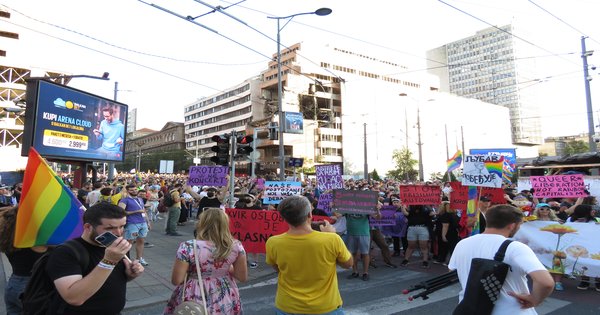
The EU's New LGBTIQ+ Blueprint: What the 2026–2030 Strategy Means for Queer Europe
The European Commission has launched its second LGBTIQ+ Equality Strategy, a five-year roadmap targeting hate speech, conversion practices, employment discrimination, and legal gender recognition across all 27 member states.

In October 2025, the European Commission quietly made one of its most significant commitments to LGBTIQ+ equality in years: it adopted the LGBTIQ+ Equality Strategy 2026–2030, a five-year policy roadmap titled “Free to love, free to be.” For queer people living in Europe — or watching Europe’s direction from the outside — it’s worth understanding what this strategy actually commits to, and what it doesn’t.
What the Strategy Is
The 2026–2030 strategy is the successor to the EU’s first LGBTIQ+ equality strategy (2020–2025), which established the baseline: mutual recognition of same-sex family status across member states, an EU-level LGBTQ+ focal point, and more systematic anti-discrimination enforcement. The new strategy builds on that foundation and, according to the Commission, goes further.
The headline framework is “protect, empower, engage” — three pillars that organize specific commitments across the strategy period.
Key Commitments
Tackling hate and violence. The data behind this priority is stark: a 2024 FRA (EU Agency for Fundamental Rights) survey found that 55% of LGBTIQ+ people in the EU had experienced hate-motivated harassment in the previous five years — up 18 percentage points from 2019. The strategy commits to a new EU action plan against cyberbullying, a knowledge hub to collect and share intelligence on online hate speech, and strengthened law enforcement training on hate crime reporting.
Ending conversion practices. The Commission will support member states in banning conversion practices — the discredited and harmful pseudotherapy that attempts to change a person’s sexual orientation or gender identity. This is significant: while countries like France, Germany, Greece, and Spain have bans in place, many EU member states do not. The strategy doesn’t mandate bans (EU competence in healthcare is limited), but it signals strong political will and provides a coordination framework.
Employment equality. The Commission committed to publishing a report in 2026 on the implementation of employment equality rules across the EU, with new guidance on inclusive hiring practices. This matters because employment discrimination against LGBTIQ+ workers remains widespread even where laws prohibit it.
Legal gender recognition. The strategy includes facilitating exchanges of best practices on legal gender recognition procedures — specifically those based on self-determination, free from age restrictions or medical requirements. This pushes toward the gold standard that Spain, Ireland, and Portugal have already adopted, and puts diplomatic pressure on countries where bureaucratic or medical gatekeeping remains the norm.
Civil society and the LGBTIQ+ Policy Forum. One concrete structural commitment: a new LGBTIQ+ Policy Forum that creates a direct channel between LGBTQ+ civil society organizations and the European Commission. Given how much implementation depends on civil society advocacy and monitoring, this institutionalized access matters.
The Real Test: Central and Eastern Europe
The honest caveat about any EU LGBTIQ+ equality strategy is that it operates through political persuasion and coordination, not direct mandate. And that limitation is most visible in Central and Eastern Europe.
Researchers at the Edinburgh Europa Institute, analyzing the 2026–2030 strategy, noted that the employment equality gap between Western and Eastern EU member states is significant and structural — driven by differences in political culture, judicial independence, and the strength of domestic LGBTQ+ advocacy organizations, not just the texts of laws. Hungary and Poland have spent years actively rolling back protections even as EU pressure mounts.
The strategy’s strongest enforcement lever is the EU’s non-discrimination framework: the Equal Treatment Directive and anti-discrimination rules are legally binding. The Commission has shown more willingness recently to use infringement proceedings against member states that violate those rules.
What It Means for EU Accession Countries
For LGBTIQ+ people in the Western Balkans — including Albania, Serbia, Montenegro, Bosnia, North Macedonia, and Kosovo, all of which are EU accession candidates — the strategy’s direction matters as external pressure.
EU accession negotiations require candidates to align with EU standards on fundamental rights, including anti-discrimination protections. The more specific and enforceable the EU’s own strategy becomes, the clearer the benchmarks candidates must meet. Montenegro already passed its life partnerships law in 2020 partly under accession pressure. Albania’s civil unions framework — repeatedly delayed despite government commitments — remains explicitly tied to its EU roadmap.
The 2026–2030 strategy doesn’t lower those bars. If anything, the emphasis on self-determination-based gender recognition and conversion practice bans raises them.
What the Strategy Doesn’t Do
It’s worth being clear about what this strategy cannot do. It cannot require member states to adopt marriage equality (EU family law is a member state competence). It cannot directly override national legislation that discriminates against LGBTIQ+ people. It cannot instantly change the lived experience of queer people in countries where social hostility or political backlash is intense.
What it can do is establish political norms, provide coordination mechanisms, fund civil society, create monitoring pressure, and give the Commission tools to act when member states violate binding equality directives.
For queer people in Western Europe, the strategy represents continued institutional support and incremental progress. For those in Central and Eastern Europe, it’s a framework that creates useful leverage — but leverage that still requires political will and civic effort to activate.
For those of us watching from the Balkans, the signal is clear: the EU’s direction is unambiguous. Whether the candidate countries follow at the pace required is, as always, a different question.
Sources: European Commission LGBTIQ+ Equality Strategy 2026–2030; HRW EU Strategy Analysis, October 2025; Edinburgh Europa Institute briefing, January 2026; FRA LGBTIQ+ Survey 2024; ILGA-Europe.