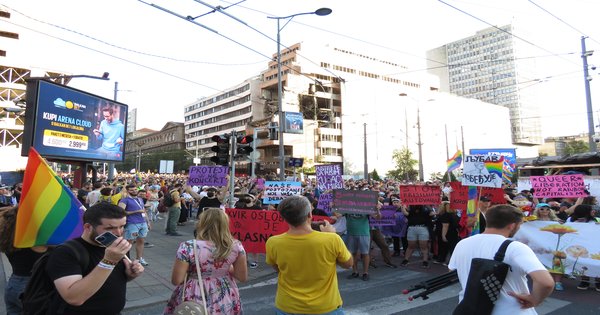
Far-Right Mayors in France Pull Down Pride Flags and Cancel Marches After March Elections
Two newly elected French mayors removed rainbow flags and shut down planned Pride celebrations, including one set for April 25 in a Lille suburb. Organizers call it 'an attack on a symbol of unity.'
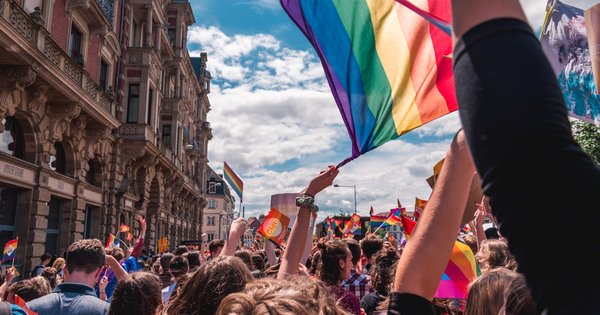
France’s late-March municipal elections are starting to translate into visible policy — not in Paris, where Pride season is still on the calendar, but in two smaller towns where new right-wing mayors have spent April pulling down rainbow flags, repainting crosswalks, and canceling Pride events that had been on the books for months.
The most immediate fallout landed yesterday in Faches-Thumesnil, a suburb of Lille near the Belgian border. The town’s Pride celebration had been scheduled for Saturday, April 25. Brice Lauret, the newly elected right-wing mayor, called it off. Lauret took office after defeating Patrick Proisy of La France Insoumise, the left-wing party that had governed the town. He told local media the cancellation was “temporary” and cited “organizational issues.” Local organizers do not believe him. On April 16, Lauret had already ordered the rainbow flag removed from the town hall, citing what he called “respect for neutrality.”
A few hundred kilometers south, in Elne — a small commune outside Perpignan near the Spanish border — far-right mayor Steve Fortel made the same set of moves. The town hall’s rainbow flag came down. A rainbow crosswalk was repainted plain white. “Public spaces should remain neutral,” Fortel said, “and it’s for that that I made this decision.”
Both mayors took office in the wake of the late-March municipal elections, which delivered the strongest rural and small-town performance the French far-right has had in a generation. Rassemblement National and other right-wing parties picked up dozens of mid-sized towns across the south and the Hauts-de-France region. The Pride flag fights are early, visible signals of what the next six years of local governance will look like in those places.
The argument over “neutrality”
Both Lauret and Fortel have leaned hard on the word neutralité — the French Republic’s principle that the state should not favor any particular group, religion, or worldview. It’s a real and serious idea in French law, but it has historically applied to religious symbols and state employees, not to expressions of solidarity with marginalized communities. Pride flags on French town halls have flown for years without anyone treating them as a constitutional crisis. The pivot to neutrality language is not a legal innovation — it’s a political reframing.
The reframing matters because it’s portable. If a rainbow flag on a town hall is “non-neutral,” then anti-discrimination posters in a school hallway are non-neutral. So is a Holocaust memorial plaque, or an anti-gender-based-violence campaign in a public library. The argument doesn’t stop at flags. That’s the part Pride organizers in France are watching most closely.
Organizer response
Collectif Lille Pride, the regional umbrella group, condemned both decisions. “These decisions only feed a national and international increase in violence against LGBTQIA+ people,” the group said in a statement. “This clearly shows hostility towards the community at a moment when our rights are in danger everywhere.”
Organizers in Faches-Thumesnil say they intend to hold an unsanctioned gathering anyway, and that several Lille-based LGBTQ+ groups will travel down to support it. SOS Homophobie, France’s largest anti-LGBTQ-violence reporting organization, has urged residents in both towns to document any anti-LGBTQ+ incidents directly to the group, given that local police now report to mayors who have publicly aligned themselves against community symbols.
The bigger French picture
The two cancellations are not — yet — part of a national pattern. Paris Pride is still scheduled for late June. Marseille, Lyon, Bordeaux, Nantes, and Toulouse all have Pride events on the calendar. France has not become Hungary in the four weeks since the elections.
But the small-town flag wars are how the slide tends to start. The 2026 municipal results were not a referendum on LGBTQ+ rights — voters were responding to inflation, immigration anxiety, and a generalized exhaustion with the centrist coalition. The mayors who won, however, have arrived in office with their own priorities, and a rainbow flag is the cheapest, most visible target available. It costs nothing to pull a flag off a pole. It generates a national news cycle. It signals to a base. And it puts every other local LGBTQ+-friendly policy — school programs, anti-discrimination training, support for trans youth — quietly up for review.
What to watch
A few things will tell us whether this April becomes a one-off or a trend. First, do other newly elected mayors follow Lauret and Fortel’s example in May? Second, do French national LGBTQ+ organizations — SOS Homophobie, l’Inter-LGBT, FLAG! — get a meeting with the Macron government, and does that government say anything substantive in defense of local Pride events? And third, does the 2026 Paris Pride, which falls on June 27, look notably bigger or notably more political than the 2025 edition? Pride numbers tend to climb when rights look threatened.
For now, the people in Faches-Thumesnil and Elne who would have gathered yesterday under a rainbow flag at their town hall did not get to. That’s the story this weekend, and it’s worth saying clearly.