Ghana's Anti-LGBTQ Bill Is Back in Parliament This Week — Here's What's Actually Happening
Ghana's parliamentary committee held two days of public hearings on April 23 and 24 on the Human Sexual Rights and Family Values Bill — the legislation that would criminalize LGBTQ+ identity itself. Here's the state of play, with President Mahama now publicly ambivalent.
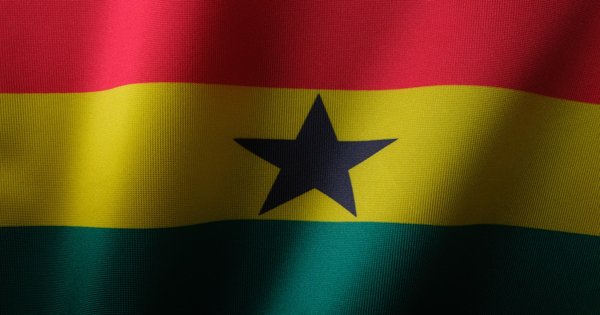
Ghana’s Parliamentary Committee on Constitutional and Legal Affairs spent Thursday and Friday of this week holding public hearings on the Human Sexual Rights and Family Values Bill — the same piece of legislation that, in slightly revised form, has been working its way through Ghana’s parliament since 2021. The April 23–24 hearings, held in Accra, brought civil society groups, religious leaders, legal practitioners, and members of the public in front of MPs for formal input before the bill returns to the floor when Parliament resumes sitting in May.
We covered the substance of the bill earlier this month. Nothing in the text has moved in a more humane direction since then. What has changed is the political choreography around it — and that’s the real story this week.
What the bill still does
For readers catching up: the Human Sexual Rights and Family Values Bill would do something that, even by the standards of Africa’s growing list of anti-LGBTQ+ laws, is unusually expansive. It criminalizes identity itself. Identifying as lesbian, gay, bisexual, transgender, queer, pansexual, non-binary, or intersex would carry a prison term of up to three years. “Promoting” or “advocating” LGBTQ+ rights — which in practice means running an NGO, writing a sympathetic news article, or publicly defending a queer family member — could draw up to ten years.
Funders, donors, and employers that support LGBTQ+ work face criminal liability. Attending a same-sex wedding abroad, as a Ghanaian citizen, would be a crime upon return. Intersex infants are not spared — the bill permits non-consensual “corrective” surgeries on minors whose bodies don’t fit the state’s definition of male or female.
None of that is hypothetical interpretation. It’s in the draft.
What the hearings revealed
Two days of hearings don’t change the legal substance of a bill. They change its political weather.
The Constitutional and Legal Affairs Committee used the hearings to give the bill a second coat of legitimacy — a narrative that says, look, we listened to everyone, and we’re still moving forward. That matters because the first iteration of this bill, passed by Parliament in February 2024, died when then-President Nana Akufo-Addo declined to sign it before leaving office. One of the political criticisms of that version was that it had been rushed and under-consulted. The current committee is trying not to repeat that.
The witnesses who appeared largely mirrored the coalition that produced the bill in the first place: the Christian Council of Ghana, the Ghana Pentecostal and Charismatic Council, the National Coalition for Proper Human Sexual Rights and Family Values (the NGO that essentially drafted the legislation), and a smaller number of lawyers and human rights voices urging restraint. As Human Rights Watch noted last month when the bill was reintroduced, the process has been weighted from the start toward the coalition that wants the bill passed.
The Mahama problem
President John Dramani Mahama returned to office in January 2025 on a platform that emphasized the economy, education, and health care — the usual kitchen-table issues in a country struggling with inflation and a debt restructuring. He made general sympathetic noises about the anti-LGBTQ+ bill during the campaign and Speaker Alban Bagbin has publicly said that Mahama privately assured him he would sign the bill when it lands on his desk.
But in the past two weeks something shifted. At a public event, Mahama told reporters that passing the bill is “not a priority” for his administration, pointing to the real challenges of schools, hospitals, and jobs. That remark — which was not a repudiation of the bill, just a deprioritization — set off a small firestorm among the bill’s religious backers. Bishop Gyamfi, a prominent Pentecostal voice, warned publicly that Mahama’s framing could be read by MPs as permission to slow-walk the legislation.
Mahama’s team has not clarified the contradiction. The most generous read is that the president wants the bill to move through Parliament without him being publicly associated with pushing it, which lets him claim different positions to different audiences. The less generous read is that he will sign whatever Parliament sends him and would simply prefer the story not define his first year.
What happens now
Parliament’s committee stage wraps after this week’s hearings. The bill is expected to return to the full chamber for clause-by-clause consideration when sitting resumes in May. The ruling National Democratic Congress has the votes. Unless the president vetoes — something he has not signaled he will do — the bill is on track for passage before summer recess.
If it passes in anything close to its current form, the consequences are predictable. Ghana’s already-fragile LGBTQ+ organizations will be forced underground or overseas. International donors and NGOs that support youth, health, and gender equality work across West Africa will face impossible legal exposure if they fund anything that touches LGBTQ+ people. Ghanaians living abroad with same-sex partners will face criminal risk on returning home to visit family.
There is also a serious economic dimension the Ghanaian government has been reluctant to publicly engage with. The World Bank paused new lending to Uganda in 2023 after that country passed a comparable law. The IMF, currently mid-program with Ghana, has so far avoided public comment, but the US State Department has already reduced visa eligibility for Ghanaian officials associated with the earlier version of the bill. If Ghana enacts this law while simultaneously asking Western donors to help it exit a debt crisis, those conversations will not stay polite for long.
The human question
It is easy, writing from Europe, to treat these bills as abstract fights over national sovereignty and religious freedom versus human rights. That is not how it feels on the ground. Ghanaian LGBTQ+ people have described something closer to a slow suffocation: rented flats quietly declined, private WhatsApp groups infiltrated by police informants, parents newly afraid to be seen with queer children, donors disappearing from civil society organizations that once gave them a little room to breathe.
The hearings in Accra this week are a procedural step. The human cost is not procedural. We will continue covering this story as the bill moves, and we will keep amplifying the voices of the Ghanaian activists who — at real personal risk — are still showing up to testify, to organize, and to refuse to disappear.
If you’re a Ghanaian reader in need of support, Rightify Ghana maintains confidential legal and mental-health resources. International readers who want to support: direct donations to verified on-the-ground groups go further than petitions.