Orbán Is Out. What Does That Actually Mean for LGBTQ+ Hungarians?
Péter Magyar's landslide victory ends 16 years of Fidesz rule and Europe's most aggressive anti-LGBTQ+ government. But the new prime minister's record on queer rights is cautious at best.

On Saturday, Hungarians did something that had seemed almost structurally impossible: they voted Viktor Orbán out of power.
Péter Magyar’s Tisza party won 138 of 199 parliamentary seats — a two-thirds supermajority — on 53.6 percent of the vote. Fidesz, the party that had controlled Hungary since 2010 and reshaped its constitution, courts, media, and civil society along the way, took just 55 seats. Orbán conceded on election night.
For LGBTQ+ Hungarians, this is the most significant political shift in a generation. But what it actually changes — and how quickly — is more complicated than the celebration suggests.
What Orbán Built
To understand what Magyar inherits, you have to understand what Orbán constructed. Over his final years in power, Hungary became the EU’s most hostile environment for LGBTQ+ people by design, not neglect.
In 2021, Hungary passed a law banning the “portrayal and promotion” of homosexuality and gender transition to anyone under 18 — modeled directly on Russia’s 2013 “gay propaganda” law. It affected schools, media, advertising, and public life. A children’s book featuring same-sex families was shrink-wrapped and labeled as inappropriate for minors.
In 2023, Hungary’s constitutional court effectively froze all legal gender recognition, making it one of only three EU member states where trans people cannot change their legal documents under any circumstances.
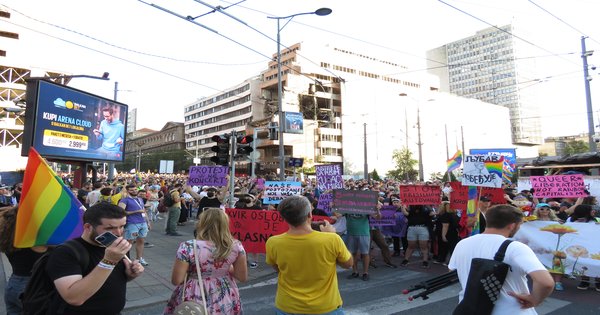
In March 2025, the Hungarian Parliament went further: it banned Pride marches and other LGBTQ+ assemblies outright, with fines for participants and up to a year in prison for organizers. Budapest Pride went ahead anyway in June 2025, drawing an estimated 200,000 people. The government responded by filing criminal charges against Budapest Mayor Gergely Karácsony for co-organizing the march, and began deploying facial recognition technology to identify attendees.
That is the legal architecture Magyar now has the power to dismantle.
What Magyar Has Said
Here is where optimism runs into reality. Magyar’s campaign was built on anti-corruption, economic reform, and EU reintegration — not social policy. His platform did not mention LGBTQ+ rights explicitly.
When the Pride ban passed in 2025, Magyar called it a distraction from real issues facing Hungarians and said his government would protect freedom of assembly. He stopped short of expressing direct support for Pride itself. During his victory speech on Saturday night, he struck a more inclusive tone: Hungary should be a country “where no one is stigmatized for loving someone differently than the majority.”
It was a carefully chosen sentence — warm enough to signal intent, vague enough to avoid political cost.
What Will Likely Change
The practical implications of a two-thirds majority are significant. Magyar’s Tisza party has the votes to amend the constitution if it chooses to. Here is what LGBTQ+ advocates in Hungary expect:
The 2025 assembly ban will almost certainly be repealed or allowed to lapse. Magyar committed to protecting freedom of assembly, and the ban was internationally condemned. Budapest Pride 2026, scheduled for June, is expected to proceed without state interference — and without facial recognition cameras.
The criminal case against Mayor Karácsony will likely be dropped or deprioritized once the new government takes office. Prosecutorial independence in Hungary was heavily eroded under Fidesz, and the new government will have leverage over appointments.
The 2021 “propaganda law” is a bigger question. Repealing it requires political will Magyar hasn’t clearly signaled. The law is broadly popular among older and rural voters — exactly the constituencies Magyar needs to hold.
Legal gender recognition is the hardest lift. It would require reversing a constitutional court ruling, and Magyar’s coalition includes socially conservative voices who may resist.
What Hasn’t Changed
Hungary’s LGBTQ+ civil society was gutted over the past decade. Organizations lost funding, staff left the country, and public discourse shifted so far that basic visibility became an act of defiance. That damage doesn’t reverse with an election.
The constitutional provisions Fidesz enshrined — defining marriage as between a man and a woman, defining sex as biological sex assigned at birth — require a two-thirds vote to change. Magyar has the numbers, but whether he has the appetite for that fight is unknown.
And Europe’s broader trajectory gives reason for caution. Slovakia passed similar constitutional restrictions last year. Poland’s reform government has moved slowly on LGBTQ+ issues despite campaign promises. The pattern across Central Europe is that governments elected to fix corruption and restore rule of law tend to deprioritize social rights in favor of economic stability and EU alignment.
Why It Still Matters
None of that erases what happened on Saturday. The most aggressively anti-LGBTQ+ government in the European Union was voted out of power in a free and fair election. The man who banned Pride marches and deployed surveillance against their attendees is no longer in charge.
For LGBTQ+ Hungarians — many of whom have spent years organizing under increasing threat — that fact alone matters. The legal changes may come slowly. The cultural shift will take longer. But the direction has changed, and in a country where the previous direction was toward Russia’s model of state-enforced invisibility, that is not nothing.
Budapest Pride will march in June. This time, nobody is getting arrested for organizing it.