On the Eve of IDAHOBIT: The Numbers That Should Quiet the Triumphal Speeches
One LGBTQ+ Colombian killed every 32 hours in 2025. A Kenyan rights group documents systematic police violence. Sixty-four countries still criminalize same-sex relations. As IDAHOBIT lands Sunday, the global picture is harder than the headlines.
Sunday is May 17 — the International Day Against Homophobia, Biphobia, and Transphobia, marking 36 years since the World Health Organization removed homosexuality from its list of mental disorders. The 2026 theme, set by the IDAHOBIT Advisory Committee in November and endorsed by ILGA World and 18 partner organizations, is “At the Heart of Democracy.” Events are expected in more than 60 countries.
The theme is well-chosen. It is also, in places, a hard sell. In the weeks leading up to the day, several of the organizations that contribute most directly to the global LGBTQ+ rights picture have released reports that complicate any narrative of forward progress. Three numbers are worth sitting with before Sunday’s vigils.
Colombia: one killing every 32 hours
Caribe Afirmativo, a Colombian advocacy organization that has tracked anti-LGBTQ+ violence in the country for two decades, released its 2025 report on May 8. The headline finding: at least one LGBTQ+ Colombian was reported murdered in the country every 32 hours last year. The full count, drawn from media monitoring, police records where available, and direct community reporting, comes to 275 documented killings — likely a significant undercount, given that many homicides of LGBTQ+ people are never recorded as such by Colombian authorities.
Colombia has, on paper, some of the strongest LGBTQ+ legal protections in the Americas: marriage equality since 2016, adoption rights, military service, hate crime statutes that explicitly cover sexual orientation and gender identity. The Caribe Afirmativo report is a study in the gap between law and life. The killings are concentrated in regions of the country with weak state presence and active armed groups — the Caribbean coast, parts of Antioquia, Cauca — where trans women in particular face violence from paramilitary successor groups, narco-linked actors, and, in a smaller but persistent share of cases, family members and partners.
The report calls on the Petro government, currently in the last full year of its term, to implement the long-promised national plan against anti-LGBTQ+ violence. That plan has been drafted, redrafted, and announced more than once since 2023. Implementation, the report notes, has been “incipient.”
Kenya: a pattern of police violence
The Initiative for Equality and Discrimination — INEND, a Nairobi-based rights group — released a report this month documenting what it describes as “a widespread pattern of arbitrary arrests, extortion, and both physical and sexual violence” perpetrated by Kenyan law enforcement against LGBTQ+ and intersex Kenyans. The report covers a multi-year period and draws on more than 200 first-person testimonies collected across Nairobi, Mombasa, Kisumu, and several smaller cities.
The dynamic INEND describes will be familiar to anyone who has read similar reports from other African countries where same-sex acts remain criminalized: police use the threat of arrest under Section 162 of the Kenyan Penal Code (the colonial-era “carnal knowledge against the order of nature” provision) as leverage for bribes, sexual assault, and the extraction of information about other community members. Convictions under the statute are rare. The use of the statute as an instrument of harassment is constant.
The Kenyan Supreme Court ruled in 2023 that LGBTQ+ rights groups have the right to register as civil society organizations. That ruling did not decriminalize same-sex relations, and the High Court declined to do so in a 2019 case that is still cited by activists as the next legal frontier. Until the underlying statute is struck down, INEND argues, every legal protection layered on top of it is a polite fiction.
Sixty-four countries
As of early 2026, same-sex sexual acts remain criminalized in approximately 64 countries, according to ILGA World’s most recent State-Sponsored Homophobia report. Penalties range from short prison sentences to life imprisonment. In a handful of jurisdictions — Iran, Saudi Arabia, parts of northern Nigeria under Sharia law, Yemen, parts of Somalia, Uganda under the 2023 Anti-Homosexuality Act in its most extreme provisions — the maximum penalty is death.
The headline number has been moving — slowly — in the right direction over the past decade. Mauritius decriminalized in 2023. The Cook Islands decriminalized in 2023. Namibia’s High Court struck down its colonial-era sodomy laws in 2024. Trinidad and Tobago’s Court of Appeal, in a 2025 ruling that the country’s Privy Council is currently reviewing, reinstated parts of the law that a lower court had struck down — a reminder that progress is not unidirectional. Uganda passed one of the harshest LGBTQ+ laws in the world in 2023. Senegal doubled its penalties earlier this year and recorded its first conviction under the strengthened statute. Belarus is on track to follow the Russian model of “extremism” designations.
The aggregate effect over the past three years: a handful of decriminalizations, a similar handful of new criminalizations, and a much larger middle group of countries where the law has not changed but enforcement has either intensified or relaxed depending on political winds. The number of countries where it is dangerous to be openly LGBTQ+ has not meaningfully fallen.
What the day is for
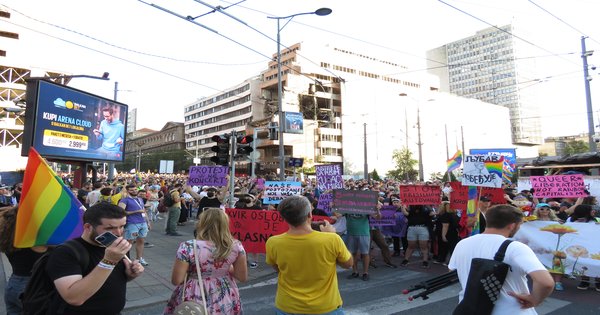
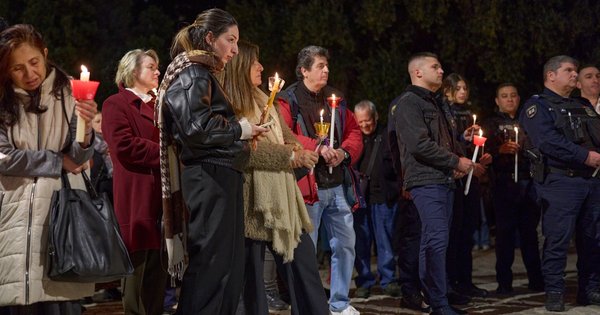
None of this is an argument against marking IDAHOBIT. The reverse: the day exists because the underlying problem is exactly this distributed, this persistent, and this difficult to dent through any single national campaign. The 60-plus countries that hold events on or around May 17 do so for a reason. The candles outside the Ministry of Justice in Tirana, the small gathering in Pristina, the Brighton & Hove flag raising, the Caribe Afirmativo march planned in Bogotá this Sunday, the school programs in Lithuania and Latvia, the academic panels in Cape Town — they are not the same event. They share a date and a premise. The premise is that visibility, in the aggregate and over time, changes things.
It does. It also does not change them quickly, and the work between Sundays is what the numbers above describe.
For anyone planning to attend an event on Sunday, may17.org maintains a global registry. For anyone planning to read instead, the Caribe Afirmativo, INEND, and ILGA World reports cited here are all freely available and considerably more detailed than this piece can be. The 2026 theme is “At the Heart of Democracy.” The numbers are part of what makes that phrase mean something.