ILGA-Europe's Annual Review Warns That Criminalisation of LGBTQ+ People Is Returning to Europe
The 2026 report documents a continent-wide rollback: 'propaganda' laws, Pride bans, forced closures of NGOs, and constitutional amendments designed to erase trans people from public life.

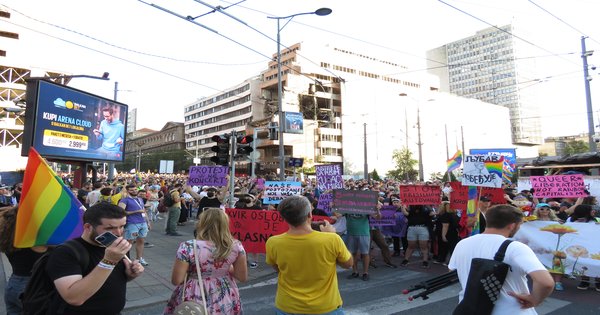
For the first time in modern European history, an EU member state has enacted legislation banning Pride marches, with fines for organizers and participants and surveillance tools deployed to identify attendees. That sentence alone should be enough to make you read this report.
ILGA-Europe’s Annual Review 2026, released in February, paints the most alarming picture of LGBTQ+ rights on the continent in decades. The 15th edition of the report covers legal and policy developments across Europe and Central Asia, and its central finding is blunt: the criminalisation of LGBTQ+ people is returning to Europe’s doorstep.
The toolkit of repression
What makes the current moment distinctive isn’t any single law or ruling. It’s the convergence of tactics across very different political systems — all arriving at the same destination.
The report identifies several key mechanisms being used to roll back rights. “Propaganda” and “anti-promotion” laws, modeled on Russia’s 2013 legislation and now spreading westward, criminalize positive representation of LGBTQ+ people under the guise of child protection. Constitutional amendments in countries like Slovakia now define sex in strictly biological binary terms, effectively erasing trans and non-binary people from legal recognition. Administrative powers are being weaponized to force LGBTQ+ organizations to close. And assembly rights are being restricted through bans on Pride events and other public gatherings.
“Propaganda, scapegoating, and disinformation escalate into denial of basic rights,” said Katrin Hugendubel, ILGA-Europe’s Deputy Director. “Human rights safeguards established after the Second World War are in serious jeopardy.”
Country by country, the picture darkens
Hungary continues to lead the EU’s backslide. The country’s Constitutional Court has upheld amendments defining sex as an immutable biological trait, while the Child Protection Act restricts any discussion of gender identity in schools. Hungary has dropped to the lowest-ever ranking for an EU member state on ILGA-Europe’s Rainbow Map.
Georgia has moved aggressively in the other direction from its stated EU aspirations, with lawmakers stripping references to “gender” and “gender identity” from equality legislation — a move that effectively removes the legal basis for anti-discrimination protections for trans people.
Turkey has escalated its crackdown on LGBTQ+ civil society. In April 2026, 11 board members of Genç LGBTİ+, a youth rights organization based in İzmir, went on trial for “obscenity” — their alleged crime was posting illustrations during online Pride events. They face up to three years in prison.
Belarus and Kyrgyzstan have both enacted laws criminalizing LGBTQ+ “propaganda,” while Russia continues to intensify enforcement of its 2023 designation of the “international LGBT movement” as extremist. Reports indicate that Russian authorities are building databases of known LGBTQ+ individuals, conducting raids on community spaces, and using digital surveillance to identify and prosecute people.
The UK’s complicated position
The report also flags developments in the United Kingdom, where the Supreme Court’s ruling that “woman” and “sex” refer to biological sex at birth has significant implications for trans rights, particularly in areas like healthcare, prison placement, and access to single-sex spaces. While the UK hasn’t criminalized LGBTQ+ identity, the legal landscape for trans people has shifted meaningfully.
A few bright spots
Not everything in the report is grim. Poland repealed its last “LGBTI-free zone” resolution in April 2025, a symbolic but meaningful reversal after years of local governments declaring themselves hostile to LGBTQ+ people. Lithuania saw its first court recognition of a same-sex civil partnership after the Constitutional Court ruled that excluding same-sex couples violated the constitution. And the European Commission’s new LGBTIQ+ Equality Strategy 2026-2030 includes provisions on hate crime, conversion practices, and workplace inclusion.
But the overall trajectory is clear: the space for LGBTQ+ people in European public life is shrinking, and the tools being used to shrink it are growing more sophisticated.
Why this matters beyond Europe
The report makes an important point that often gets lost in country-specific coverage: these tactics travel. Russia’s “propaganda” law became a template for similar legislation across Central Asia and Africa. Hungary’s constitutional amendments on sex and gender have been cited approvingly by conservative lawmakers in other EU countries. When European states normalize these approaches, it gives cover to governments elsewhere.
The full Annual Review is available on ILGA-Europe’s website. It’s dense reading, but it’s essential. The patterns it documents aren’t isolated incidents — they’re a coordinated erosion of rights that demands coordinated resistance.