India Just Signed a Law That Strips Transgender People of Self-Identification Rights
The Transgender Persons Amendment Bill 2026, now signed by India's president, replaces self-identification with medical certification and narrows the legal definition of who counts as transgender. Human rights groups are calling it a massive step backward.
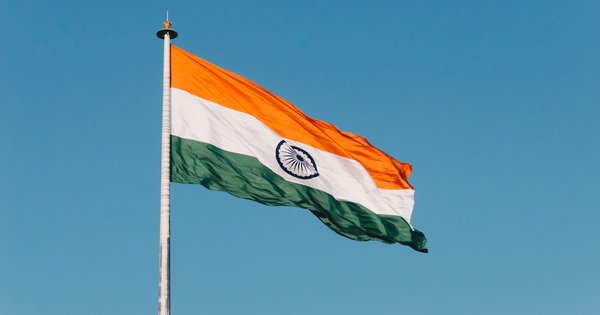
On March 30, India’s President Droupadi Murmu signed the Transgender Persons (Protection of Rights) Amendment Bill, 2026, into law. The bill had been pushed through both houses of parliament in a matter of days — clearing the Lok Sabha on March 24 and the Rajya Sabha on March 25 — despite protests from transgender communities and condemnation from international human rights organizations.
The new law fundamentally rewrites who India recognizes as transgender, and how they can prove it. In a country of nearly 1.5 billion people, with close to half a million transgender individuals recorded in the last census, this isn’t an abstract policy shift. It is a direct attack on the principle that people should be able to define their own identity.
What the Law Changes
The 2026 amendment overhauls the Transgender Persons (Protection of Rights) Act of 2019 in several critical ways.
First, it narrows the definition of who qualifies as transgender. The revised law recognizes specific socio-cultural identities — hijra, kinner, aravani, and jogta — along with individuals with intersex variations determined by biological characteristics. That sounds inclusive until you realize what it excludes: anyone who identifies as a trans man, a trans woman, or a gender non-binary person outside those traditional categories is no longer covered.
Second, the law replaces self-identification with medical certification. Under the previous framework, a person could apply for legal recognition of their gender identity through a relatively straightforward process. Now, the District Magistrate will issue identity certificates only after reviewing the recommendation of a designated medical board. The government, in other words, has inserted itself — and a panel of doctors — between transgender individuals and their own identities.
Third, the law introduces harsh new criminal penalties. Kidnapping or causing grievous injury to force someone to assume a transgender identity now carries ten years to life imprisonment for adult victims, and a mandatory life sentence if the victim is a child. While preventing coercion sounds reasonable in isolation, activists warn the vague language around “coercing or alluring” could be weaponized against the very support systems that help transgender people come into their identities. The People’s Union for Civil Liberties has flagged this provision as particularly dangerous.
Rolling Back NALSA
To understand why this matters, you need to know about NALSA v. Union of India, the 2014 Supreme Court decision that established self-declared gender identity as a fundamental right. That ruling was a watershed moment. It recognized that forcing transgender people to undergo medical examination or surgery as a condition of legal recognition violated their dignity and autonomy. It directed the government to treat self-identification as the basis for accessing social security, healthcare, and other benefits.
The 2026 amendment effectively reverses that precedent. By mandating medical board review, it reimposes exactly the kind of gatekeeping the Supreme Court found unconstitutional twelve years ago. The Rajasthan High Court has already raised concerns, noting that the amendment risks reducing the “inviolable aspect of personhood” to a “state-mediated entitlement.”
Human Rights Watch called the law “a huge setback,” noting that it “strips transgender persons of their right to self-identification” and contradicts both the NALSA ruling and international human rights standards. Amnesty International described the presidential approval as “a major step backward for human rights.”
The Numbers Tell the Story
India’s 2011 census recorded 487,803 transgender individuals, though community organizations estimate the true number is significantly higher. Of those recorded, only about 32,500 — roughly 6.7 percent — currently hold the identity cards necessary to access government benefits and protections.
The previous legal framework was already failing most transgender Indians. The new one promises to make an already difficult process harder, adding medical bureaucracy to an application system that many transgender people, particularly those in rural areas or from marginalized communities, already struggle to navigate.
A Familiar Pattern
The speed with which the BJP-led government pushed this legislation through parliament reflects a pattern that queer communities worldwide have learned to recognize: laws that fundamentally reshape rights being fast-tracked with minimal debate and over the objections of the people most affected.
Trans rights activist Akkai Padmashali put it plainly: “These politicians are making laws for us when they don’t even have basic concepts of gender, sex, and sexuality. This new bill criminalizes us.”
The bill passed both chambers by voice vote — a procedure that records no individual votes, making it impossible to hold specific legislators accountable. In a parliament with over 700 members, not one was required to publicly stand behind a decision that affects hundreds of thousands of lives.
What Comes Next
Legal challenges are expected. The contradiction between the new law and the NALSA precedent gives advocates a clear basis for constitutional litigation, and courts have already signaled skepticism about the amendment’s compatibility with fundamental rights. The Rajasthan High Court’s early intervention suggests the judiciary may not simply defer to parliamentary authority on this one.
But court battles take time, and in the interim, the law is in effect. For transgender Indians who don’t fit the government’s narrow categories — trans men, trans women, and non-binary individuals who fall outside the recognized socio-cultural identities — legal recognition just got much harder to obtain. And for a community already facing extraordinary barriers to employment, housing, healthcare, and basic dignity, losing legal recognition means losing access to the few protections that existed.
India’s transgender community has survived centuries of marginalization. They will survive this too. But surviving and thriving are not the same thing, and this law pushes the gap between them wider.