India's Transgender Rights Amendment Draws Sharp Criticism for Replacing Self-Identification with Government Certification
President Murmu signed the Transgender Persons Amendment Bill 2026, which introduces medical board approval requirements and criminalizes 'compelling' someone to present as transgender — drawing condemnation from Amnesty International and India's own courts.
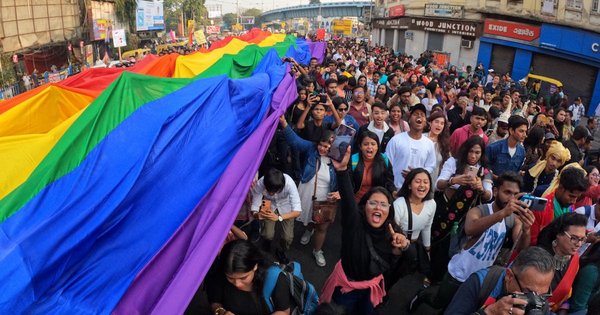
India’s President Droupadi Murmu granted assent on April 1 to the Transgender Persons (Protection of Rights) Amendment Bill, 2026, a law that fundamentally restructures how transgender and gender-diverse people can access legal recognition of their identity. The bill, passed by voice vote in both parliamentary houses on March 25, has drawn immediate and forceful criticism from human rights organizations, legal experts, and India’s own judiciary.
At the heart of the controversy is a shift away from self-identification — a principle established by India’s Supreme Court in its landmark 2014 NALSA v. Union of India decision — toward a system requiring government approval mediated by medical boards and district magistrates.
What the Law Does
The amendment introduces several significant changes to India’s legal framework for transgender recognition.
First, it replaces self-identification with a medical certification system. Under the new law, transgender individuals must obtain approval from a medical board and a District Magistrate before their gender identity can be legally recognized. This represents a reversal from the self-identification principle that the Supreme Court established as a matter of constitutional right in the NALSA decision.
Second, the law narrows the definition of “transgender” to specified socio-cultural categories and biological variations. It also eliminates separate intersex definitions, grouping intersex persons within the broader transgender category — a move that conflates two distinct communities with different needs and experiences.
Perhaps most alarming, the amendment creates criminal penalties for “compelling,” “forcing,” or “alluring” anyone to present as transgender, with sentences reaching up to life imprisonment. Critics warn that this provision is vaguely worded and could be used to criminalize support networks, advocacy organizations, or even family members who affirm a transgender person’s identity.
The Pushback
The response from civil society and legal institutions has been swift and unequivocal.
Amnesty International stated that the law “restricts the ability of transgender and gender-diverse individuals to self-identify,” calling it a step backward for human rights in India. The organization noted that requiring medical certification reintroduces gatekeeping mechanisms that the NALSA decision explicitly sought to dismantle.
A Supreme Court-appointed expert committee took the extraordinary step of recommending that the bill be withdrawn entirely, demanding “meaningful consultation with transgender communities” before any legislative action. The committee’s recommendation underscores how far the government moved without input from the people most affected by the law.
The Rajasthan High Court has also weighed in, cautioning that legislative changes “cannot dilute constitutional protections” — a pointed reference to the tension between the new law and the Supreme Court’s NALSA precedent.
The NALSA Precedent
To understand why this amendment is so controversial, it helps to revisit what it’s dismantling. The 2014 NALSA v. Union of India decision was a watershed moment for transgender rights in India and was celebrated globally. The Supreme Court unanimously held that gender identity constitutes a fundamental aspect of personal autonomy, protected under the Indian Constitution.
Crucially, the Court affirmed the right to self-identification — meaning a person’s gender identity should be recognized as they declare it, without mandatory medical intervention, surgery, or external approval. The decision recognized transgender people as a “third gender” and directed the government to treat them as socially and educationally disadvantaged, entitling them to affirmative action in education and employment.
The 2026 amendment effectively reverses the self-identification principle by inserting a bureaucratic and medical gatekeeping process between transgender individuals and legal recognition of their identity.
What Comes Next
Legal challenges are widely expected. The tension between the amendment and the NALSA decision creates a clear constitutional question: can Parliament legislate away a right that the Supreme Court declared fundamental?
Indian constitutional law generally holds that fundamental rights cannot be abrogated by ordinary legislation, which suggests the amendment may face a difficult path in court. However, the political dynamics around transgender rights in India have shifted considerably since 2014, and the outcome of any challenge is far from certain.
For India’s transgender community — estimated at approximately 4.9 million people according to census data, though advocacy organizations put the number significantly higher — the practical impact is already being felt. The medical certification requirement creates new barriers for people seeking identity documents, which in turn affects access to employment, education, healthcare, and housing.
The international community is watching closely. India’s 2014 NALSA decision was cited as a model by courts and legislatures in several other countries. The 2026 amendment sends a very different signal about the direction of transgender rights in the world’s most populous democracy.
Sources: JURIST, One World News