Federal Court Vacates Kennedy's Declaration, Clearing the Way for Trans Youth Care to Resume at 40 Hospitals
A federal judge in Oregon permanently blocked the December 2025 HHS declaration that shut down gender-affirming care programs nationwide, ruling that Secretary Robert F. Kennedy Jr. had no authority to unilaterally rewrite medical standards of care.
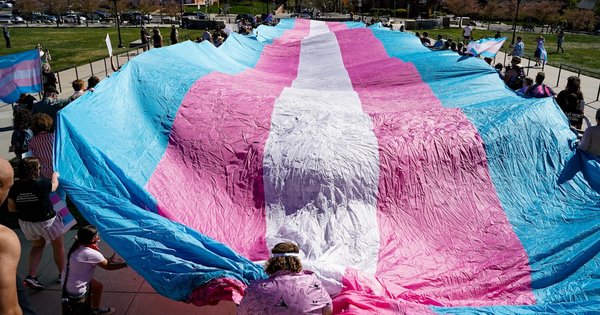
A federal judge in Oregon has permanently blocked the Trump administration’s sweeping attempt to shut down gender-affirming care for transgender youth across the United States, ruling in a 49-page opinion that Health and Human Services Secretary Robert F. Kennedy Jr. acted without any legal authority when he issued a December 2025 declaration threatening hospitals with the loss of all federal funding if they continued to treat trans minors.
The ruling from U.S. District Judge Mustafa T. Kasubhai, signed on April 18 and taking full effect this week, vacates the so-called “Kennedy Declaration” nationwide. It eliminates the legal basis that roughly 40 hospitals cited when they quietly shuttered their adolescent gender programs over the winter, and it permanently enjoins any federal agency from enforcing the declaration or any materially similar policy.
What the declaration tried to do
The Kennedy Declaration, issued on 22 December 2025, ran a little over 12 pages. In it, the HHS secretary asserted that gender-affirming care for minors does not meet “standards of care,” declared the use of puberty blockers and hormone therapy in adolescents “experimental,” and announced that any hospital, clinic, or provider that continued to offer such care would be disqualified from Medicare and Medicaid, and from any other federally funded health program.
For large academic medical centres, loss of federal funding is not a survivable outcome. Within weeks of the declaration, adolescent gender programs at institutions including Children’s Hospital of Philadelphia, Lurie Children’s in Chicago, Seattle Children’s, Stanford, Oregon Health & Science University, and roughly three dozen others announced they were pausing or permanently closing their services. Families with existing treatment plans were abruptly cut loose, often with referrals to providers in states with equally uncertain legal environments.
The declaration had never been issued through the formal rulemaking process required by the Administrative Procedure Act. There was no notice-and-comment period, no medical review, no findings of fact, and no agency action that could be challenged through the ordinary administrative process. It was, in effect, a threat issued under a secretary’s signature — and it worked, because hospitals could not afford to find out whether the threat would hold up in court.
The ruling
That is the threat Judge Kasubhai dismantled. His opinion, which begins with the line “Unserious leaders are unsafe,” is blistering in its assessment of Kennedy’s authority and the process by which the declaration was issued.
The court found that the HHS secretary “lacks the authority to unilaterally establish standards of care” for any medical treatment, that setting such standards is the work of medical professional bodies and, where federally regulated, requires formal rulemaking. The declaration also violated the Administrative Procedure Act by skipping notice-and-comment entirely. And it conflicted with existing federal law — including the Medicaid statute, which requires coverage of medically necessary care consistent with accepted medical guidelines, and Section 1557 of the Affordable Care Act, which prohibits discrimination on the basis of sex in federally funded health programs.
The ruling vacates the declaration, permanently enjoins enforcement in all plaintiff states, and orders HHS to notify the roughly 40 hospitals that cited the declaration in their closure announcements that the legal basis for those closures no longer exists.
“This case highlights a leader’s unserious regard for the rule of law,” Kasubhai wrote, “which does not merely result in an abstract infraction of administrative procedure, but rather causes very real harm to very real people.”
What happens now
The practical question is how quickly care can resume. Hospitals that shuttered programs did not simply pause them — they laid off or reassigned clinical staff, closed referral pipelines, and in some cases dismantled the multidisciplinary teams that adolescent gender care requires. Rebuilding those teams takes months. Several of the affected hospitals told local reporters this week that they are reviewing the ruling before announcing whether and when services will return.
There is also the question of what the administration does next. HHS has the option to appeal to the Ninth Circuit, and legal observers expect it to try. But the Ninth Circuit has repeatedly ruled against the administration’s trans-rights executive orders, and Kasubhai’s opinion is carefully drafted to survive appellate review — it rests on statutory authority, procedural grounds, and settled APA doctrine, not on any novel constitutional theory.
The administration could also attempt a second-generation version of the declaration, this time going through formal rulemaking. That process takes a minimum of 18 months in any contested area, and any resulting rule would face immediate litigation, likely with even stronger standing from the hospitals and families that have now been directly injured by the original declaration.
For trans youth and their families, the ruling is the first piece of unambiguously good news from the federal courts in more than a year. It does not restore state-level bans on gender-affirming care, twenty-seven of which remain in effect. It does not prevent future administrative attacks. But it establishes, clearly, that a cabinet secretary cannot simply pick up a pen and end a category of medical care by threat — and that the hospitals that treated children last year can treat them again.
For those reading from outside the US, the lesson is familiar: the damage done in the interim is not repaired by the ruling. Families who uprooted their lives, clinicians who left the field, teenagers whose treatment was interrupted — the law can undo the declaration, but it cannot undo the winter.