The Netherlands Just Swore In the World's Most Prominent Openly Gay Head of State
Rob Jetten, 38, became the Netherlands' first openly gay prime minister in February — a milestone that felt less like a revolution and more like an inevitability.
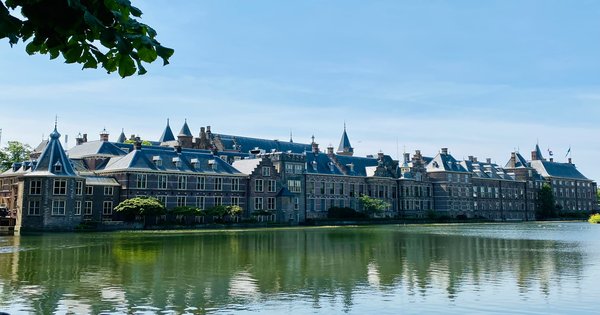
On February 23, Rob Jetten stood inside the Royal Palace in Amsterdam and took the oath of office as Prime Minister of the Netherlands. At 38, he became the youngest person to ever hold the job. He’s also the first openly gay man to lead the country — and, arguably, the most prominent openly LGBTQ+ head of state in the world right now.
What made the moment remarkable wasn’t the fanfare. It was the lack of it. Jetten’s sexuality barely registered as a campaign issue during the bruising 2025 general election, in which his center-left Democrats 66 (D66) party clawed its way to a joint-largest position in parliament, dethroning Geert Wilders’ far-right Freedom Party by a razor-thin margin. The Dutch press covered his policy positions on climate, housing, and immigration. His being gay was, for most voters, simply a fact — not a qualification, not a liability.
That’s what progress looks like when it’s had 25 years to settle in. The Netherlands legalized same-sex marriage in 2001, the first country in the world to do so. A quarter-century later, the normalization is deep enough that a gay man can lead the country without it becoming the story.
From climate minister to PM
Jetten’s political rise has been fast. Born in 1987 in Veghel, a small town in the southern province of North Brabant, he studied public administration at Radboud University before entering politics. He served as Minister for Climate and Energy Policy in the fourth Rutte cabinet from 2022 to 2024, and became D66’s leader in August 2023.
His path to the premiership wasn’t smooth. D66 had been trailing in polls for most of 2025, and Wilders’ PVV looked poised to form a government. But Jetten ran a disciplined campaign focused on climate policy, housing affordability, and defending democratic institutions — and it paid off in October’s election, where D66 surged to its best-ever result.
A grueling four-month coalition negotiation followed. Jetten eventually formed a minority government with the center-right Christian Democratic Appeal (CDA) and the liberal People’s Party for Freedom and Democracy (VVD). With only 66 seats — nine short of a majority — it’s a fragile coalition that will need to negotiate support from opposition parties on every major vote.
The Rainbow Agreement
While Jetten didn’t campaign on identity, he didn’t shy away from LGBTQ+ commitments either. D66 signed a “Rainbow Agreement” with COC Netherlands, the country’s main LGBTQ+ advocacy organization, committing to several concrete policy goals. Among them: reintroducing the transgender law that had been withdrawn under the previous government, strengthening anti-discrimination enforcement, and expanding support for LGBTQ+ asylum seekers.
For a country that’s often held up as a model of LGBTQ+ equality, the Netherlands still has gaps. Hate crimes against queer people have been rising — particularly against trans individuals — and the previous Wilders-influenced government had quietly shelved several LGBTQ+ policy initiatives. Jetten’s Rainbow Agreement signals a course correction.
A personal life in public view
Jetten is engaged to Nicolás Keenan, a 28-year-old Argentine field hockey player who has competed in two Olympic Games. The couple started dating in 2022 after meeting in The Hague, and announced their engagement in November 2024. Keenan’s Instagram posts from the inauguration — beaming in the Royal Palace — went mildly viral, though more for the couple’s evident happiness than for any political statement.
It’s a small thing, maybe. But in a world where Hungary’s government used facial recognition technology to identify Pride marchers and Belarus criminalized “LGBTQ propaganda” just last year, a head of state’s fiancé posting joyful photos from an inauguration is not nothing.
What it means — and what it doesn’t
Let’s be clear about what Jetten’s premiership is and isn’t. It’s not a sign that homophobia is over in the Netherlands. Anti-LGBTQ+ sentiment has been rising across Western Europe, fueled by the same far-right movements that nearly put Wilders in power. D66’s coalition partners — particularly the VVD — have not always been reliable allies on queer rights.
And Jetten leads a minority government with a packed agenda: climate targets, a housing crisis, immigration reform, and the ongoing question of Dutch support for Ukraine. LGBTQ+ policy will compete for bandwidth.
But representation matters, even when — especially when — it’s unremarkable. The fact that the Netherlands can elect an openly gay prime minister and have it be the fourth or fifth most interesting thing about his government is a testament to decades of activism, legal reform, and cultural change. It didn’t happen by accident.
For LGBTQ+ people in countries where that kind of normalcy feels impossibly distant — in the Balkans, in Africa, across much of Asia — Jetten’s quiet ascent is a data point. Not a silver bullet, but proof that the arc can bend. And that when it does, the result isn’t fireworks. It’s a Monday morning cabinet meeting where the prime minister happens to be gay, and nobody thinks twice about it.
Rob Jetten’s minority cabinet is expected to face its first major parliamentary test in May, when D66 will introduce a revised climate package requiring cross-aisle support.