Federal Judge Orders Oregon to House Trans Women in Women's Prisons
A preliminary injunction from a federal magistrate in Oregon directly conflicts with Trump's Day One executive order on prison housing — and could become a blueprint for state-level challenges.
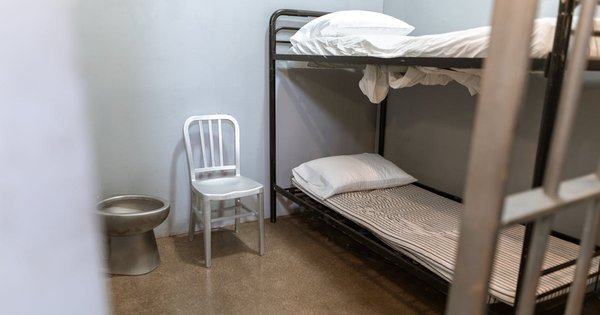
A federal judge in Oregon has ordered the state’s Department of Corrections to stop automatically placing transgender women in men’s prisons, issuing a preliminary injunction that directly conflicts with the Trump administration’s first-day executive order on prison housing.
The ruling, issued by U.S. Magistrate Judge Mark D. Clarke at the end of last month, requires Oregon to conduct individualized assessments for every transgender woman in its custody and establishes a presumption that trans women should be housed according to their gender identity unless a specific review concludes otherwise. The decision lands just two weeks after the D.C. Circuit went the other way at the federal level — and it sets up a confrontation between state corrections systems and the White House.
What the ruling says
Clarke’s injunction was issued in a class-action lawsuit brought by two transgender women incarcerated in Oregon men’s facilities, who alleged the state had failed to protect them from sexual abuse and violence. The class includes all transgender women currently in Oregon Department of Corrections custody.
The factual record before the court was stark. Roughly 90 percent of trans women in Oregon’s state prisons are housed in men’s facilities. The judge found that this default placement, applied with little individualized review, has exposed transgender women in custody to a high risk of physical and sexual violence — risks the state is constitutionally required to mitigate under the Eighth Amendment.
Clarke ordered the state to change what he called the “fundamental calibration” of its housing assessments. Instead of treating men’s prisons as the default and requiring trans women to prove they should be moved, Oregon must now treat housing by gender identity as the starting point and conduct a documented review before deviating from it.
How this collides with federal policy
On his first day in office, President Trump signed Executive Order 14168, directing the federal government to recognize only two sexes — male and female, as assigned at birth — across every agency. The Bureau of Prisons interpreted the order as requiring transgender women in federal custody to be housed in men’s facilities, and the D.C. Circuit recently vacated a preliminary injunction that had blocked those transfers, sending the case back to the district court for individualized fact-finding on each of the 18 federal plaintiffs.
Oregon’s prisons are run by the state, not the federal government, so EO 14168 does not directly bind them. But the executive order has functioned as political cover for state corrections departments that wanted to move in the same direction. Oregon’s policies had quietly drifted toward defaulting trans women into men’s facilities even before Trump took office; the federal order accelerated the trend.
Clarke’s ruling cuts against that drift. It does not address the federal executive order directly, but its reasoning — that constitutional protections against cruel and unusual punishment require individualized risk assessments rather than blanket sex-at-birth rules — is portable. State plaintiffs in other jurisdictions are likely to cite it.
The settlement that preceded the ruling
The injunction follows a $295,000 settlement Oregon agreed to in late April with a transgender woman who alleged she had been repeatedly assaulted while housed in men’s facilities. That woman, who is serving a sentence until 2049, reported sexual abuse, harassment, and inadequate medical care during her time in men’s units.
Settlements like that one — paid by taxpayers, in cases the state declines to take to trial — tend to be quiet evidence of how indefensible the underlying conduct is. Class-action plaintiffs and their lawyers were watching. The injunction came two weeks later.
What happens next
Oregon now has to do the work. Each transgender woman currently housed in a men’s facility is entitled to an individualized review under the new presumption, and the Department of Corrections must document the basis for any decision to keep someone in a men’s unit. The state has signaled it will comply rather than appeal.
The bigger question is whether other state corrections departments — particularly in states whose governors have aligned themselves with EO 14168 — will face similar suits. The legal architecture Clarke applied is familiar: an Eighth Amendment claim, a documented risk of serious harm, a class of plaintiffs, and a request for individualized review rather than a categorical rule. That template travels well.
For trans women currently incarcerated in states where housing-by-birth-sex has become the default, the Oregon ruling is the first concrete win at the state level since Trump took office. It does not undo EO 14168. It does not bind any state outside Oregon. But it establishes that the constitutional floor — the protection against being housed in a facility where the state has reason to know you will be assaulted — does not move just because a federal executive order says it should.
A note on language
This story is reported with care because the people at the center of it are among the most vulnerable in the country. Transgender women in men’s prisons face violence and sexual assault at rates that are difficult to overstate. Coverage that treats their housing as a political abstraction misses what is actually happening to them. The Oregon ruling is significant because it forces the state to look at each woman as an individual rather than as a category — which is, in the end, what every legal protection for trans people ultimately demands.