Pentagon Begins Active Separations of Trans Service Members After Supreme Court Greenlights Ban
Two days after the Supreme Court lifted the injunction blocking Trump's transgender military ban in Shilling v. Trump, the Pentagon has begun moving roughly 1,000 service members toward immediate separation under Hegseth's 30/60-day self-separation deadlines.
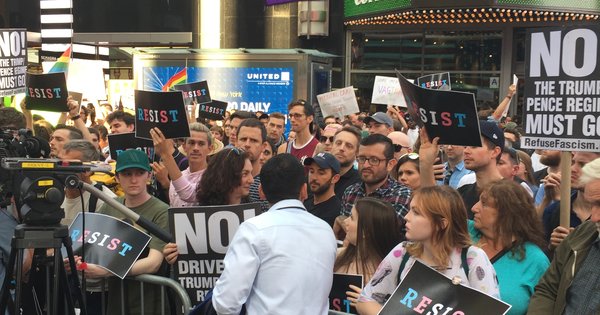
The Pentagon is now actively processing the separation of transgender service members from the U.S. military. The shift from policy to implementation came two days after the U.S. Supreme Court, on May 6, lifted the nationwide preliminary injunction that had been blocking enforcement of President Trump’s executive order barring trans people from serving openly.
The case is Shilling v. Trump, named for lead plaintiff Emily Shilling, a Navy commander and naval aviator with nearly two decades of service. She and six other transgender service members had won a preliminary injunction from U.S. District Judge Benjamin Settle, who agreed the ban functioned as “a de facto blanket ban on transgender service” and likely violated the Constitution’s equal protection guarantee. The Supreme Court issued no opinion explaining its decision to stay that injunction. The three liberal justices — Sotomayor, Kagan, and Jackson — dissented.
What the order does
Executive Order 14183, “Prioritizing Military Excellence and Readiness,” directs the Department of Defense to bar trans, nonbinary, and gender-nonconforming people from enlisting and to separate currently serving trans members. Defense Secretary Pete Hegseth’s implementing memo gives active-component trans service members 30 days and reservists and National Guard members 60 days to “voluntarily self-separate,” after which separation boards have been ordered to find them unfit and remove them based on a current or past diagnosis of gender dysphoria.
Lambda Legal and GLAD Law, which represent the Shilling plaintiffs, said the May 6 ruling allows separations to proceed even as the underlying constitutional challenge moves through the lower courts. Roughly 1,000 service members have been identified for immediate separation under the new orders, according to Pentagon and outside accounts. The Department of Defense has previously estimated several thousand troops are affected overall.
Who is being pushed out
The most prominent face of the policy has been Colonel Bree Fram, an astronautical engineer and U.S. Space Force officer who, before the second-term ban, was the highest-ranking openly transgender member of the U.S. armed forces. Fram retired earlier this year as part of a ceremony hosted by the Human Rights Campaign Foundation in January for five forcibly separated trans service members. She is now running for Congress.
That picture — decorated, deployed, expensively trained personnel being shown the door — is what makes the math of the policy so strange. Critics, including former senior officers, have pointed out that the military spent millions training people like Fram and Shilling, and that gender-affirming care for service members has historically represented a tiny fraction of the Defense Health Agency budget.
What’s still in court
The Supreme Court’s stay does not end the case. The merits of the ban — whether it violates equal protection — are still being litigated in the lower courts in Shilling v. Trump and in the parallel Talbott v. United States case in D.C. Several pieces of the wider executive-order package have been blocked by other federal courts, including provisions targeting LGBTQ+ and HIV-serving nonprofits. But the Court’s signal in Shilling, combined with its recent willingness to greenlight other administration immigration and personnel policies through emergency orders, suggests trans service members will face a difficult road on appeal.
For now, the practical reality is that thousands of people who passed every standard the military set for them — fitness, conduct, training, deployment, security clearance — are being separated specifically because they are trans. Some will be discharged honorably and pensioned; others, depending on time in service and circumstances, may lose access to benefits they spent careers earning.
What it signals beyond the military
Read together with the past two weeks of federal action — the proposed DOJ rule requiring trans gun buyers to declare “biological sex” under penalty of perjury, the proposed HUD rollback of trans protections in federally funded shelters, and the new DOJ civil rights probes into school districts with LGBTQ+-inclusive curricula — Shilling is part of a single, coordinated push to reduce the legal recognition of trans people across federal life.
The military piece matters in part because it removes one of the strongest historical counter-arguments to the claim that trans Americans cannot be trusted with civic responsibility. For decades, advocates pointed to trans service members as living proof of competence under conditions most civilians never face. That proof is now being administratively erased — service member by service member — on a 30-day clock.
Sources
This article draws on the Supreme Court order in Shilling v. Trump, statements from Lambda Legal and GLAD Law, and reporting from NPR, NBC News, SCOTUSblog, The Hill, Military.com, and the Washington Blade. Public comment on the related DOJ firearms rule remains open until August 4, 2026.