Portugal's Parliament Advances Sweeping Anti-Trans Bills, Borrowing from the Far-Right Playbook
Three bills that would dismantle Portugal's pioneering trans rights protections passed a first parliamentary reading in March 2026, backed by the ruling coalition and far-right Chega party.
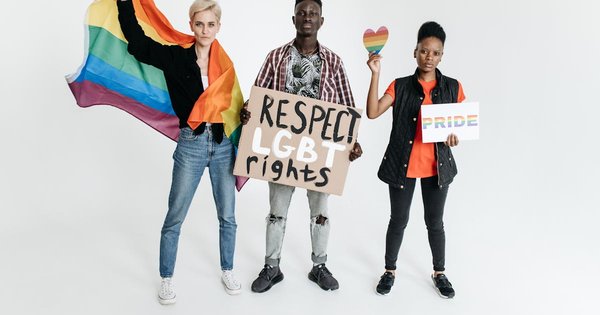
Portugal was once a beacon of progressive trans rights in Europe. The country’s 2018 self-identification law — which allowed trans people to legally change their name and gender marker without any medical gatekeeping — was seen as a model for the continent. Eight years later, that progress is under serious threat.
On March 20, 2026, the Portuguese Assembly passed the first reading of three sweeping anti-trans bills by a vote of 151 to 79. The legislation, backed by the center-right governing PSD coalition and the far-right Chega party, would fundamentally roll back the rights that Portugal’s trans community has built over the past decade.
What the Bills Would Actually Do
The three bills target Portugal’s progressive 2018 law (Act No. 38/2018) from multiple directions. Together, they would:
- Repeal self-identification: Trans people would no longer be able to change their legal name or gender marker without first obtaining a medical diagnosis — reverting Portugal to a 2011 framework that treated being transgender as a pathological disorder requiring clinical “treatment.”
- Ban gender-affirming care for minors: Young trans people would be prohibited from accessing puberty blockers or hormone therapy, regardless of parental consent or medical recommendation.
- Re-legalize intersex surgeries on infants: Portugal currently prohibits non-consensual “normalizing” surgery on intersex children. One of the bills would undo that protection.
- Block trans and nonbinary minors from changing their name or gender marker on any official document.
- Introduce a “gender ideology” ban in schools: Discussion of trans and nonbinary identities in classrooms would be prohibited for students under 18, echoing the Florida “Don’t Say Gay” law that has spread across American statehouses.
This isn’t a single bill with narrow scope. It’s a coordinated dismantling of protections that took years to build.
Who Voted For This — And Why
The 151 votes in favor came from PSD (the center-right governing party), its coalition partners, and the far-right Chega. All other parties — the Socialist Party (PS), Liberal Initiative, LIVRE, the Communist Party (PCP), the Left Bloc, PAN, and JPP — voted against.
The rhetoric from the bill’s supporters has been telling. A CDS-PP representative called gender-affirming care “the greatest delusion of wokism against” minors. Chega’s parliamentary leader told the chamber that “a man will always be a man and a woman will always be one.” This is language pulled directly from the American far-right playbook — the same framing used by Republican legislators across the US who have passed hundreds of anti-trans bills since 2021.
Portugal isn’t the only European country where this is happening. The same populist right-wing movements that have gained ground across Hungary, Italy, and Georgia are now exporting their anti-LGBTQ+ agenda westward. What was once primarily an Eastern European trend is now landing in countries that have historically championed LGBTQ+ rights.
What Happens Next
The bills now move to the Committee on Rights, Freedoms and Guarantees, where they’ll face further debate and potential amendments before a final parliamentary vote. If they pass, they go to President António José Seguro, who has the power to veto the legislation or refer it to the Constitutional Court.
The bills face several more procedural hurdles before becoming law. But with the governing coalition and Chega commanding a commanding parliamentary majority, the path forward is real and alarming.
Six major European LGBTQ+ organizations have already issued warnings: if passed, the bills would drop Portugal at least four places on the ILGA-Europe Rainbow Map, which ranks countries by their legal protections for LGBTQ+ people. Portugal, which was once near the top of that map, could fall into the company of countries where trans people face institutional hostility rather than protection.
Why This Matters Beyond Portugal
Portugal’s 2018 law was watched and celebrated across Europe as an example of what was possible. The backlash against it is being watched just as closely — by activists who fear it could embolden similar campaigns elsewhere, and by trans people in Portugal who now face an uncertain future.
“We are deeply concerned,” reads a joint statement from six European LGBTQ+ organizations, who called the bills “a serious attack on the rights of trans and intersex people.”
Outright International, the international LGBTQ+ human rights organization, has called on the Portuguese parliament to reject all three bills. “These proposals would cause serious harm to transgender and intersex people in Portugal,” the group said, “and contradict Portugal’s obligations under international human rights law.”
For trans people already living in Portugal — and for those who have moved there specifically because of its protections — the uncertainty is immediate and real. The 2018 law remains in effect while this process unfolds. But in a parliament where the far-right now holds decisive sway, that may not last long.
What You Can Do
If you want to support the campaign against these bills, Outright International and ILGA-Europe are coordinating advocacy efforts and have resources for contacting Portuguese lawmakers and EU representatives. The European Parliament has already been asked to weigh in — a parliamentary question was submitted in early 2026 asking the European Commission to assess whether the proposed legislation is compatible with EU law and the EU’s LGBTIQ+ Equality Strategy 2026–2030.
The EU strategy, launched just months ago, commits the bloc to advancing trans rights across member states. Whether that commitment has teeth when it matters is a question Portugal is about to answer.
Sources: Forbidden Colours, GCN Magazine, Erin in the Morning, Outright International, ILGA-Europe, European Parliament