A Russian News Site Got Fined $6,600 for Reviewing a Hockey Romance
A regional Russian outlet was hit with an 'LGBT propaganda' fine over a review of the hockey drama Heated Rivalry — the clearest sign yet that Russia is policing cultural criticism, not just content.
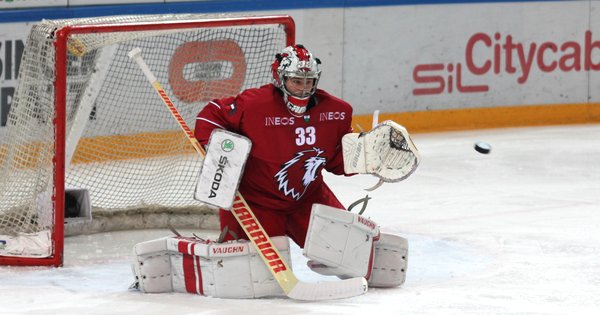
A regional Russian news outlet has been fined 500,000 rubles — about $6,600 — not for publishing the gay romance drama Heated Rivalry, but for writing about why it became popular. A court in Saratov handed down the penalty against Saratov Business Consulting (SarBC) earlier this month, ruling that its review of the Canadian hockey series qualified as “LGBT propaganda” under Russia’s sweeping 2022 law.
The ruling is small in ruble terms but significant in what it signals: Russian prosecutors are now targeting the conversation around queer stories, not just the stories themselves.
What happened
The Oktyabrsky District Court in Saratov, a city about 480 miles southeast of Moscow, ruled on April 14 that SarBC violated the country’s ban on so-called “LGBT propaganda” online. The fine was tied to an article headlined “Why Did ‘Heated Rivalry’ Become Popular?”, which the outlet published on February 6 and has since scrubbed from its site.
A week earlier, on April 7, a magistrate in the same district fined the outlet’s IT director, Andrei Bashkaikin, an additional 50,000 rubles over a second, related article. According to the independent outlet Novaya Gazeta Europe, which covered the ruling from exile, the court treated the review itself — not distribution of the show — as the offense.
Heated Rivalry premiered on Crave and HBO Max in November 2025. Adapted from Rachel Reed’s novel, it follows a secret romance between two professional hockey players — one Canadian, one Russian — and became an unexpected streaming hit, particularly among queer audiences in Europe. It has never been licensed in Russia.
The law being used
Russia’s 2013 “gay propaganda” law was originally framed as protecting minors. In December 2022, the Duma expanded it dramatically: any “propaganda of non-traditional sexual relations” aimed at anyone, of any age, became a finable offense. The 2023 Supreme Court ruling declaring the “international LGBT movement” an “extremist organization” added criminal liability on top.
In practice, that meant the law could be triggered by almost anything: a film review, a rainbow flag in a photo, a social-media post about a same-sex couple. Enforcement has been uneven but escalating. Human rights monitors have documented hundreds of administrative cases since 2023, and a growing number of prosecutions under the extremism statute — which carries prison time.
The Heated Rivalry case is unusual because the target is journalism. SarBC is not an LGBTQ+ organization. It is a regional business wire that wrote, in essentially cultural-criticism terms, about why a show was popular. That was enough.
Why this matters beyond Russia
This ruling lands in the middle of a bad month for the region. On April 15, Belarus’s Alexander Lukashenko signed that country’s own propaganda law, modeled directly on Russia’s, which explicitly groups homosexuality and gender transition with pedophilia. TGEU (Trans Europe and Central Asia) called it “a dangerous escalation” and warned that it will push the region’s remaining trans and queer activists into deeper exile.
The pattern is consistent: laws written to punish public expression are being used to punish private expression, and then cultural expression, and eventually the act of simply talking about queer people in any positive frame. Russia’s enforcement arc has become the template. Belarus is following it. Kyrgyzstan and Georgia have looked at copying it.
For queer people still inside Russia, the practical implications are grim. Cultural figures — authors, journalists, filmmakers, booksellers — now face real financial risk for writing about queer topics even in neutral or academic terms. Self-censorship is the obvious downstream effect, and it was almost certainly the point.
What to watch
A few things are worth keeping an eye on in the coming weeks:
The appeals process. SarBC has not publicly said whether it will appeal, and Russian administrative courts rarely reverse these rulings, but the legal reasoning in any appeal would clarify how prosecutors plan to use cultural reviews going forward.
Parallel prosecutions. Russian outlets tend to move in patterns. If other regional news sites that reviewed Heated Rivalry — or other queer-themed Western shows — start seeing similar fines, this ruling will have become precedent in everything but name.
Diaspora journalism. Outlets like Novaya Gazeta Europe, Meduza, and Zona.Media, which have moved operations outside Russia, continue to cover cases like this in detail. They are increasingly the only place these stories get published at all.
The $6,600 fine is survivable for SarBC. The message is the point: writing about queer culture — even critically, even commercially — is now legally risky inside Russia. That is a new line, and it matters that we saw it crossed.