After the ECJ's Hungary Ruling, Slovakia Is the Next Constitutional Test for EU LGBTQ+ Law
Slovakia's 2025 constitutional amendment locking in two-sex recognition and banning same-sex adoption is now exposed in a way it wasn't a week ago. The EU's Hungary ruling didn't just hit Budapest.
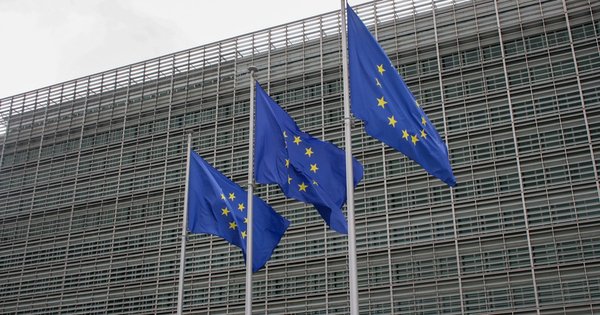
The European Court of Justice’s April 21 ruling against Hungary’s 2021 anti-LGBTQ+ propaganda law landed on every front page in Brussels and Budapest, and rightly so — it was the largest single LGBTQ+ rights decision the EU’s top court has ever issued. But the ruling’s most consequential second-order effect may not be in Hungary, where Viktor Orbán’s government has already announced it intends to ignore the decision. It may be in Slovakia, where Robert Fico’s government spent most of 2025 building its own constitutional architecture aimed at the same population, and where that architecture is now exposed in a way it was not seven days ago.
The Slovak amendment, briefly
In September 2025, the Slovak parliament passed — by a 90-7 vote — a constitutional amendment that does several things simultaneously. It defines sex as binary and “biologically determined at birth.” It permits gender change only for “serious reasons” defined by future legislation. It bans adoption by same-sex couples (technically by writing the ban as one against “unmarried couples,” but the practical effect is the same since Slovakia does not recognize same-sex marriage). It outlaws surrogacy. And, most ambitiously, it asserts Slovak “national sovereignty in cultural and ethical matters” — language designed to pre-empt EU law on exactly the kinds of questions the ECJ just ruled on.
Fico, who returned to power in 2023, framed the amendment as a bulwark against what he repeatedly called liberal ideology “spreading like cancer.” The Council of Europe’s Venice Commission warned, before passage, that the amendment’s broad national-identity carve-outs should not be used to justify discrimination, and that the binary-sex definition should not bar legal gender recognition. Slovakia passed the amendment anyway.
Why the Hungary ruling changes Slovakia’s calculus
The ECJ’s reasoning in the Hungary case is the part that should worry Bratislava. The court did not rule narrowly on whether Hungary’s specific 2021 law violated specific EU directives. It ruled, more broadly, that Hungary’s law breached EU law “on a number of separate levels” — including equal treatment in audiovisual services, freedom of movement of services, the EU Charter of Fundamental Rights’ protections of human dignity and private life, and the broader EU obligation of mutual trust between member states.
That kind of multi-pronged ruling is portable. It was joined by the European Commission, France, Germany, Spain, Portugal, the Netherlands, Belgium, Luxembourg, Ireland, Denmark, Sweden, Finland, Austria, Slovenia, and Greece — fifteen member states, plus the Commission itself, lined up against one. The political infrastructure for an analogous case against Slovakia is therefore already in place. The legal infrastructure is being assembled now.
ILGA-Europe, in its 2026 Annual Review, flagged Slovakia as one of three EU member states (alongside Hungary and Bulgaria) where the legal framework has actively regressed in the last 24 months. The European Commission’s first-stage infringement letter to Slovakia over the constitutional amendment was sent in January 2026. The Commission has not yet escalated. After April 21, the path to escalation is shorter than it was.
What an EU case against Slovakia would look like
Three lines of attack are already visible.
The first is the November 2025 ECJ ruling on cross-border same-sex marriage recognition. That case held that EU member states must recognize same-sex marriages validly performed within the EU, at least for purposes of free movement of persons. Slovakia, along with Romania, Poland, Hungary, and Bulgaria, has not complied. The constitutional amendment makes future compliance harder, not easier — which is itself an enforcement vulnerability.
The second is the binary-sex provision. The Hungary ruling cited the EU Charter’s protection of private life and human dignity in striking down restrictions on LGBTQ+ visibility. A constitutional rule that legally erases trans, intersex, and nonbinary Slovaks from formal recognition is — under that reasoning — a stronger Charter problem than what Hungary did, not a weaker one.
The third is the “national sovereignty in cultural and ethical matters” clause. This is the part Fico’s government clearly considers the cleverest piece of the amendment, because it tries to pre-empt the very kind of EU intervention the Hungary ruling represents. But the Venice Commission has already characterized this language as legally suspect, and the ECJ’s Hungary ruling is, in effect, a direct rebuttal: the court treated equal treatment, dignity, and free movement as core EU competencies, not areas where member states can carve themselves out. A Slovak invocation of cultural sovereignty would be exactly the argument the court has just declined to accept.
What Bratislava is signaling
Slovak government communications in the days since April 21 have been pointedly defensive. Justice Minister Boris Susko told Slovak media that the Hungary ruling “applies to Hungary” and that Slovakia’s amendment is “constitutionally protected.” That is not a legal argument so much as a political stance. Fico’s coalition partner Andrej Danko of the SNS suggested Slovakia might consider following Hungary’s path of disregarding ECJ rulings entirely — language that, if acted on, would itself trigger Article 7 procedures against Slovakia.
Domestic LGBTQ+ organizations, particularly Iniciatíva Inakosť, have welcomed the ruling against Hungary and used it to renew calls for Slovakia’s Constitutional Court to take up the still-pending 2023 case challenging Slovakia’s failure to recognize same-sex partnerships. That case has been frozen for over two years. The April 21 ruling provides cover for the court to move it forward — if it wants to.
Why this matters across the region
The EU does not have many enforcement tools that work against a determined member state. Article 7 is politically near-impossible without unanimous consent. Infringement proceedings move slowly. Withholding EU funds requires the right legal trigger. The April 21 ruling is the most muscular of the available tools — a direct, court-issued declaration that a member state’s domestic law violates EU law, with direct effect in national courts and immediate exposure to private lawsuits.
If the Commission opens a similar case against Slovakia, the message to Poland, Bulgaria, and Romania will be unmistakable: the cost of constitutional or statutory regression on LGBTQ+ rights is no longer abstract. The cost is a ruling that lets every Slovak same-sex couple, every trans Slovak, every adoption-seeking partner sue under EU law in their local court the day the decision lands.
That is why the most important question after April 21 is not what Hungary does. Hungary will do what Hungary does. The question is what the Commission does about Bratislava — and how quickly.