Texas Supreme Court Tosses PFLAG Suit Protecting Families of Trans Kids — On a Procedural Off-Ramp
The Texas Supreme Court dismissed the temporary injunctions that had blocked the state from investigating families of transgender minors as child abusers. The ruling is procedural — but it leaves the underlying policy intact and the next case wide open.
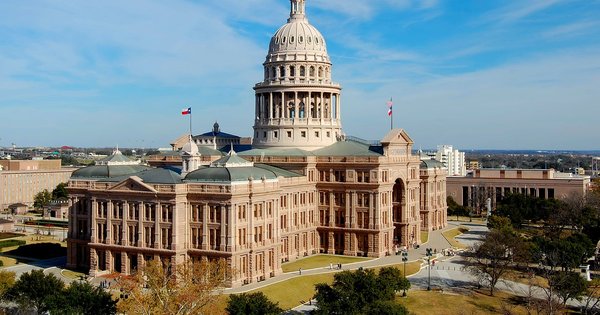
The Texas Supreme Court on Friday dismissed the temporary injunctions that had been protecting four families and the national LGBTQ+ family organization PFLAG from being investigated by the Texas Department of Family and Protective Services for allowing their children to receive gender-affirming care. It is the kind of ruling that looks like a loss in a headline and turns out to be more complicated when you read the opinion.
The court’s reasoning was almost entirely procedural. DFPS, the state’s child welfare agency, had already permanently closed the investigations into the four named families. Three of the children involved have aged into adulthood; a fourth turned 18 while the appeal was pending. There was, the justices reasoned, no live controversy left to enjoin. The temporary protections came off because the underlying threat — at least to these specific plaintiffs — had already evaporated.
What did not come off was the rule itself.
What started in 2022
The lawsuits go back to February 2022, when Texas Attorney General Ken Paxton issued a formal opinion declaring that providing gender-affirming care to a minor — puberty blockers, hormone therapy, or surgery — could constitute child abuse under state law. Governor Greg Abbott followed within days with a directive to DFPS to investigate any reports of such care as potential abuse, and to “follow the law as explained” in Paxton’s opinion.
DFPS investigators began showing up at homes. Caseworkers questioned children, demanded medical records, interviewed teachers and neighbors. PFLAG, working with Lambda Legal, the ACLU, and the ACLU of Texas, sued on behalf of three families and an unnamed PFLAG member family. Travis County district courts granted temporary injunctions in each case, halting the investigations against the named plaintiffs while the litigation worked its way through the appellate system.
Three years later, those injunctions are gone — not because the state convinced anyone the investigations were lawful, but because the families who were being investigated either reached a settlement that ended their cases or had children old enough that gender-affirming care for minors was no longer legally relevant to them.
What the joint statement said, and didn’t say
In a joint statement issued Friday afternoon, Lambda Legal, the ACLU, the ACLU of Texas, and PFLAG called the ruling “purely procedural” and emphasized that the court did not bless the policy. “Nothing in today’s decision validates DFPS’s rule requiring child welfare investigations of families because their children received medically necessary gender-affirming care,” the statement read. The groups noted that the underlying constitutional challenges — to the rule itself, to Abbott’s directive, to Paxton’s opinion — remain alive in other forums.
What the statement did not say, but is worth saying plainly: a future Texas family that receives a knock at the door from a DFPS investigator over their child’s gender-affirming care will not have the protection that the PFLAG injunctions provided. They will need to file their own lawsuit, seek their own injunction, and argue their own facts. In the meantime, the rule sits on the books.
Where the policy actually stands now
Texas’s Senate Bill 14, which took effect in September 2023, banned gender-affirming medical care for minors outright. The state Supreme Court upheld it in 2024. Most Texas families with trans children who want to continue care have already either traveled out of state, gone underground, or stopped care altogether.
So the population at immediate risk from a DFPS investigation has narrowed considerably from the 2022 universe. But the rule remains a tool the state can deploy against families who travel for care, who use telehealth from neighboring states, or who have older transition documentation in their kids’ medical histories. Friday’s ruling leaves that tool fully intact.
Why this matters beyond Texas
The Texas pattern — investigate first, lose in court eventually, declare victory because the kids aged out before the case resolved — is becoming a recognizable template. It works because litigation moves slowly and adolescence does not. By the time a constitutional challenge to a child welfare investigation reaches a state supreme court, the child in question is often no longer a minor.
Other states paying attention to this template include Florida, Tennessee, Idaho, Missouri, and Ohio, all of which have either passed restrictions on gender-affirming care or floated DFPS-style investigations of families. The Texas model offers them a blueprint: pass an aggressive policy, defend it through years of appeals, and rely on the calendar to render the strongest plaintiffs moot before any court can rule on the merits.
For trans kids and their families, the practical lesson from Friday’s ruling is older than the lawsuit: in the United States right now, the only reliable protection is geography. A Texas family with a trans child still has the option of moving — to Illinois, to Minnesota, to New Mexico, to Colorado, to one of about seventeen states that have passed shield laws explicitly protecting families who travel for care. That is not a legal solution. It is a survival one.
The PFLAG litigation will continue in other forms. The constitutional questions about DFPS’s authority to investigate parents for following established medical guidance are not going away. But Friday’s ruling is a reminder that procedural off-ramps are also outcomes — and that for families on the wrong end of a state policy designed to outlast its own legal challenges, the off-ramp can feel a lot like a wall.