One Day From Tirana Pride: The Embassy Reception, and What an Empty Chair Says
Tirana Pride marches Saturday. On Friday we went to the diplomatic reception that traditionally opens Pride week here, and the most telling thing in the room was who was no longer at the front of it.
One day. Tirana Pride 2026 marches tomorrow, Saturday, May 23, and tonight we are writing earlier than usual, because Friday is the reception evening and we wanted to get our thoughts down while the room was still fresh.
As Thursday’s dispatch flagged, Friday in Pride week here has, for several years running, included a reception hosted on the diplomatic circuit — the kind of evening where ambassadors and embassy staff, Albanian activists, and a rotating cast of EU delegation people stand around with small glasses of Albanian wine and say supportive things into a microphone. We have been to a few of these now, in a few countries. They are not where the real work happens. But they are a surprisingly accurate barometer, and this year the barometer read differently.
What used to be at the front of the room
For most of the years we have been doing this, the United States was visibly, deliberately at the front of these rooms. American embassies in the Balkans made a point of it: a flag on the building in June, an ambassador or a chargé saying the words out loud, funding lines that quietly underwrote a good deal of regional LGBTQ+ organizing. You could disagree with plenty about American foreign policy and still notice that, on this specific question, the U.S. presence in a place like Tirana was loud and was meant to be.
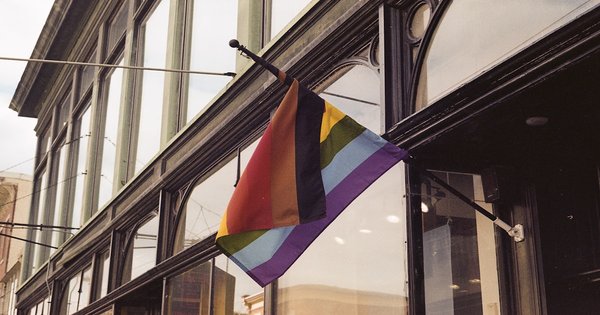
That is not where things stand in 2026. We are going to be careful and factual here, because the people most affected by it are not us. Over the past year the U.S. government has stepped back, sharply and on the record, from this kind of visible support — at home through executive action, and abroad through the posture of its missions and the programs they fund. We are not going to narrate a guest list. We will only say that the American presence at the reception this year was thinner and quieter than the version we remember, and that several Albanian organizers we spoke with had already adjusted to it. They were not shocked. They had simply re-planned.
Who filled the space
Here is the part worth reporting carefully, because it is the part that gives us something other than dismay.
The space did not stay empty. The EU delegation was prominent — and in Albania, in 2026, the EU is not a symbolic actor. The country is in active accession negotiations, and the human-rights chapter of that process is not decorative. When an EU representative stands in a Tirana room and ties LGBTQ+ dignity to the accession path, that is leverage with a deadline attached, and Albanian officials know it. Canada has kept up a delegation here for several Prides running. Several European embassies — we will let them name themselves — were present and unambiguous.
And the Albanian organizers themselves were, frankly, the center of gravity in a way they were not always allowed to be when a superpower was performing the role. One activist we have quoted before this week — carefully, without a name — put it to us as something close to: it is not a bad thing to find out your movement was load-bearing on its own.
Why we are not writing this as a tragedy
It would be easy, and not entirely wrong, to write tonight’s dispatch as a loss. A door that used to be held open is not being held open the same way. For LGBTQ+ people in countries where U.S. support was genuinely protective, that is a real cost, and we are not going to pretend the math comes out even.
But the view from a Tirana reception the night before a Pride march is more specific than the headline. What we saw was a regional movement that has spent twenty years building its own institutions — Aleanca and the organizations around it, the legal-aid networks, the cross-Balkan ties that send activists to each other’s Prides every summer — absorbing a withdrawal and continuing to function. The civil-partnership fight here is still unfinished, still parked in that maddening “within the current parliamentary term” language. The EU accession lever is real but slow. None of that is solved.
What is true is that tomorrow’s march does not depend on whose flag is on whose embassy. It never really did. It depends on the few hundred to few thousand people who will actually stand at Reja and walk.
Tomorrow
The march. Saturday, May 23, gathering late morning in the center. The meet-up plan stands exactly as it has all week: second-to-third row, behind the organizing coalition’s banner, in front of the trans-rights bloc. If you have been reading these dispatches and you are in Tirana, come find us. We will be the two writing it all down.
One day.