Lawyers Move to Block Trump's Trans Passport Policy Outright, Asking Court for Preliminary Injunction
On May 15, plaintiffs in the long-running passport case filed a motion asking the court to halt enforcement of the State Department's policy denying transgender Americans accurate sex markers. A ruling could come within weeks.
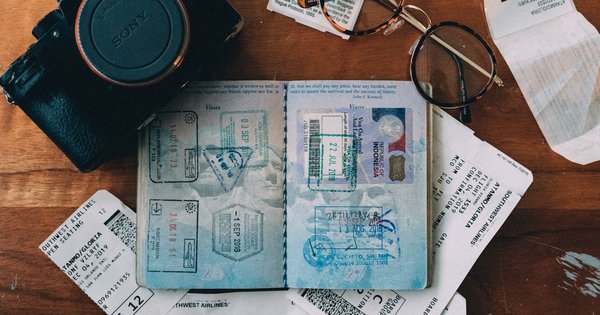
Plaintiffs in the federal lawsuit challenging the Trump administration’s transgender passport policy filed a motion for a preliminary injunction on Friday, May 15, asking the court to immediately halt enforcement while the case continues. If granted, the order would force the State Department to stop denying transgender, nonbinary, and intersex Americans passports with sex markers that reflect their gender identity — at least temporarily — and would mark the most significant legal setback yet for one of the first executive orders the administration issued in 2025.
The motion is the next procedural step in a case that has been moving through the courts since shortly after Executive Order 14168 — the order proclaiming that having a gender identity “incongruent with a person’s sex assigned at birth” is a “false claim” — was signed in January 2025. The State Department implemented the order by reversing the previous policy, which had allowed applicants to self-select male or female and, briefly, an X marker, and now requires sex markers to match what was recorded at birth on a birth certificate.
What the motion asks for
A preliminary injunction is a court order that pauses a challenged policy while the underlying lawsuit is decided. It is not a final ruling. To win one, plaintiffs typically need to show four things: that they are likely to succeed on the merits of their case, that they will suffer irreparable harm without the injunction, that the balance of harms favors granting it, and that the public interest supports it.
The motion filed Friday argues all four. On the merits, plaintiffs argue the policy violates the Administrative Procedure Act, the Equal Protection Clause, and the constitutional right to international travel. On harm, they point to plaintiffs who have been unable to travel for work, family emergencies, and medical care because their passports now show a sex marker that does not match their everyday identification documents — including, in many cases, their state driver’s licenses. On balance and public interest, they argue the State Department has not articulated any legitimate operational reason for the policy and that the previous self-select system functioned without issue for years.
The case is being argued by attorneys from the ACLU and Lambda Legal alongside several private firms. The named plaintiffs include transgender Americans who applied for passports under the new policy and either received documents with incorrect sex markers, were denied new passports, or had pending applications frozen for months.
How we got here
The original lawsuit was filed in early 2025, days after the State Department began implementing the policy. The court allowed the case to proceed but, in an initial ruling, declined to issue an immediate emergency block, instead allowing the policy to remain in effect while plaintiffs developed the factual record. That record now includes more than a year of declarations from affected travelers, internal State Department documents obtained through discovery and FOIA, and analysis showing that the new policy has resulted in the denial of accurate documents to thousands of applicants.
The motion filed Friday is the natural pre-trial step now that the record is substantial enough to argue the four-part injunction test on something other than emergency grounds.
What happens next
The State Department will have a chance to respond in writing, typically within 21 to 28 days depending on the local rules of the district hearing the case. Plaintiffs will file a reply. The court will then either rule on the briefs or hold oral argument. A decision is likely within four to eight weeks, though courts in similar cases have moved faster when the harms are urgent.
If the injunction is granted, the State Department would be required to issue accurate passports to transgender applicants — either by reverting to the pre-2025 self-select policy or under a court-supervised process. The administration would almost certainly appeal, which means the policy could continue in some form pending appellate review.
If the injunction is denied, the underlying case continues to a final judgment, which is months or years away. Plaintiffs would have the option of seeking emergency review from a higher court.
The bigger picture
The passport policy is one of the most-litigated of the Trump administration’s anti-LGBTQ+ executive orders. The National LGBTQ+ Bar Association’s executive order litigation tracker currently lists dozens of active cases challenging various provisions of Executive Order 14168 and its companion orders, ranging from Bureau of Prisons housing policy to military service to passport issuance to federal funding restrictions. Outcomes have been mixed. The Supreme Court’s June 2025 decision in U.S. v. Skrmetti, upholding Tennessee’s restrictions on transgender medical care for minors, set a difficult precedent for trans rights cases on heightened-scrutiny questions. The conversion therapy ruling earlier this year in Chiles v. Salazar created another setback.
But the passport case raises different legal questions than Skrmetti — international travel rights, administrative law, and the State Department’s authority to override its own long-standing regulations — and a number of federal judges have signaled in related rulings that this particular policy is on weaker ground than the medical-care restrictions the Supreme Court has so far blessed.
For trans Americans who need to travel — for work, to visit family abroad, to leave the country at all — Friday’s motion is the closest thing to a near-term remedy that the legal system has produced in 16 months. A ruling, whichever direction it goes, will be one of the most consequential trans rights decisions of the year.