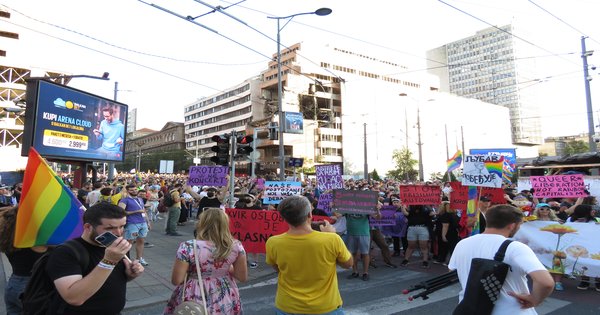
Turkey Puts 11 LGBTI+ Leaders on Trial for 'Obscenity' as Crackdown Escalates
The board members of Genç LGBTİ+, a youth rights organization in İzmir, face up to three years in prison for posting illustrations during online Pride events. The first hearing was held on April 8.
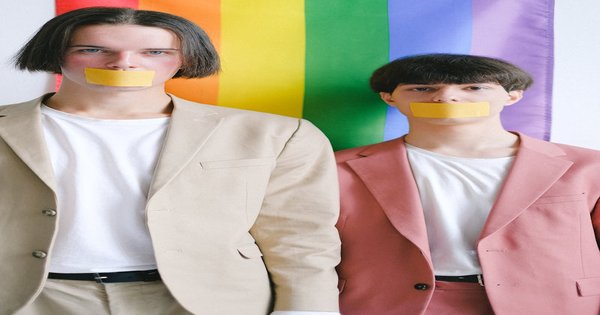
Eleven leaders of Genç LGBTİ+ — Turkey’s youth LGBTI+ rights organization based in İzmir — appeared in court on April 8, facing criminal charges of “obscenity” for illustrations posted on social media during online Pride events between 2019 and 2022.
If convicted, the defendants face up to three years in prison and the suspension of their civil rights. The charges stem from the same reasoning a court used in December to order the organization’s dissolution: that images of same-sex couples kissing “violate public morality” and Article 41 of the Turkish Constitution, which enshrines the “protection of the family.”
The next hearing is scheduled for October 14.
What Actually Happened
The illustrations in question were posted during virtual Pride celebrations — events that moved online because Turkish authorities have systematically banned in-person Pride marches since 2015. The artwork depicted same-sex couples and was created by LGBTI+ artists as part of community programming.
In 2024, Turkish authorities conducted a series of audits targeting LGBTI+ organizations. Those audits led to the December 2025 court order dissolving Genç LGBTİ+ and, separately, to criminal charges against 11 of its board and supervisory board members.
“This trial arises from a policy of excluding LGBT+ people from the public sphere,” said Kerem Dikmen, the association’s lawyer. “It is an attack on freedom of expression and freedom of association. Activities that are perfectly legitimate, legal and in line with the constitution are being criminalised.”
Genç LGBTİ+ has announced it will appeal the closure order.
A Pattern, Not an Incident
This is not an isolated case. In February, a separate lawsuit was filed against Defne Güzel, chair of the May 17 Association — another LGBTI+ rights organization — accusing her of publishing “immoral” materials, specifically a book and an exhibition catalogue.
The pattern is clear: Turkish authorities are using obscenity and public morality laws as tools to dismantle LGBTI+ civil society, organization by organization.
Homosexuality has never been illegal in Turkey. But under President Erdoğan’s AK Party, the gap between legal status and lived reality has widened dramatically. Pride marches in Istanbul — once among the largest in the Muslim-majority world, drawing over 100,000 people in 2014 — have been banned every year since 2015. Police have used tear gas and rubber bullets against people who tried to march anyway.
Government officials have increasingly blamed LGBTQ+ advocacy for Turkey’s declining birth rate, framing queer visibility as a demographic threat. A proposed penal code amendment that would have explicitly targeted LGBTQ+ individuals was withdrawn in November after international pressure — but the underlying political dynamics that produced it haven’t changed.
International Response
Human rights organizations have characterized the trial as part of an “alarming escalation” in the repression of LGBTI+ activists in Turkey. Amnesty International called the charges “absurd” in a statement released on April 7 and demanded they be dropped.
ILGA-Europe, the International Federation for Human Rights (FIDH), and Front Line Defenders issued a joint statement expressing concern about both the speed of the proceedings and the prosecutor’s willingness to indict on charges that, in most European countries, would never reach a courtroom.
Turkey remains a candidate for EU membership, though accession talks have been frozen for years. The EU’s new LGBTIQ+ Equality Strategy for 2026–2030 explicitly calls on candidate countries to protect the rights of LGBTI+ people — a standard Turkey is moving further from, not closer to.
What Comes Next
The October hearing will determine whether the case proceeds to a full trial or is dismissed. In the meantime, the 11 defendants live under the weight of criminal charges for the act of posting artwork celebrating queer love during a Pride event.
For Turkey’s LGBTI+ community, the message from the state is not subtle: organizing is dangerous, visibility is prosecutable, and the legal space for queer life is shrinking.
For the rest of us watching from outside Turkey’s borders, the question is whether international pressure — from the EU, from human rights bodies, from the global queer community — can make any difference at all. The track record is not encouraging. But the alternative to pressure is silence, and silence has never protected anyone.