Balkans Pride Season 2026: A City-by-City Preview
From Tirana in late May to Sarajevo in mid-June, eight Balkan capitals will host Pride marches this spring and summer — each with its own political weather. Here is what to expect, and where.
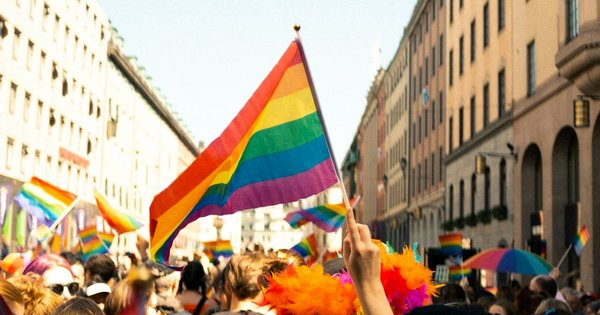
Pride season in the Balkans is never quite the same event twice. In some capitals it is an ordinary city-centre march, escorted by municipal police and attended by foreign ambassadors. In others it is still a security operation first and a parade second — sealed perimeters, counter-protests at a remove, sometimes a last-minute municipal attempt to block the route. Rarely does an entire season pass without at least one attempted ban, one uncertain announcement, one city where the march happens anyway.
This year’s calendar is shaping up to be one of the fullest in years, with eight Balkan capitals confirmed or likely to host Pride events between late May and mid-September. Here is what we know so far, walking roughly in calendar order.
Tirana, Albania — Saturday 23 May
The earliest confirmed event of the Balkan season. Organised by Pink Embassy and Pro LGBT Albania, Tirana Pride has been held annually since 2012 and in recent years has walked a compact route through the central Blloku district. Albanian government ministers, EU and Canadian diplomats, and the mayor’s office have attended in recent years, and the march typically draws several hundred participants along with a peaceful, contained counter-presence.
The 2026 edition lands a week after IDAHOT on May 17 and arrives in an Albania deep in EU accession negotiations. Expect explicit framing around the government’s stalled commitments on a civil-union law and an anti-LGBTQ hate-crime law — both pledged for 2026 as part of the broader accession agenda. Tirana is one of the safest Pride events in the region for visitors, and the city’s general queer-friendliness in the Blloku area extends before and after the march.
Ljubljana, Slovenia — Saturday 6 June (expected)
Ljubljana Pride is typically held on the first Saturday of June and in 2026 is expected to fall on June 6. Slovenia remains the most legally advanced country in the region — same-sex marriage and adoption have been recognised since 2023 — and Ljubljana Pride accordingly feels more like a Western European Pride than a Balkan one. Route, programming, and security are all treated as routine.
Zagreb, Croatia — Saturday 13 June (expected)
The Zagreb march, organised by Zagreb Pride, is usually held on the second Saturday of June and is expected on June 13. In 2025 the march marked its 25th year — a milestone that, as we covered at the time, made Zagreb one of the longest-running Pride events in post-socialist Europe. The 2026 edition arrives amid a Croatian national conversation about trans healthcare access and the continued absence of a marriage-equality framework (Croatia has life partnerships only). Zagreb has been a reliably safe and well-attended Pride in recent years.
Sarajevo, Bosnia and Herzegovina — Saturday 20 June (expected)
Bosnian-Herzegovinian Pride, usually called Sarajevo Pride, will hold its seventh march. It remains the Balkan event most heavily dependent on security cooperation with the state. Previous editions have required sealed perimeters, anti-sniper units on rooftops, and large police deployments — conditions produced by attacks on LGBTQ+ events in Sarajevo in 2008 and 2014. Organisers have nonetheless kept the event going every year since 2019. The 2026 march is expected on June 20 and comes months after a Bosnian court’s hate-speech conviction in the Dodik discrimination case, which we covered earlier this month.
Visitors should expect unambiguous support from the organisers and unusually tight operational controls — bag checks, fixed entry points, a clear message to arrive well before the stated start time.
Podgorica, Montenegro — Saturday 27 June (likely)
Montenegro Pride is typically held in late June and is likely to fall on June 27 in 2026. Montenegro is the only Western Balkan country with same-sex civil partnerships (since 2020) and in 2025 lifted its discriminatory restriction on medically-assisted insemination for LBTQ+ women. The march itself has been walking Podgorica’s city centre, mostly uneventfully, for several years.
Belgrade, Serbia — Saturday 12 September (expected)
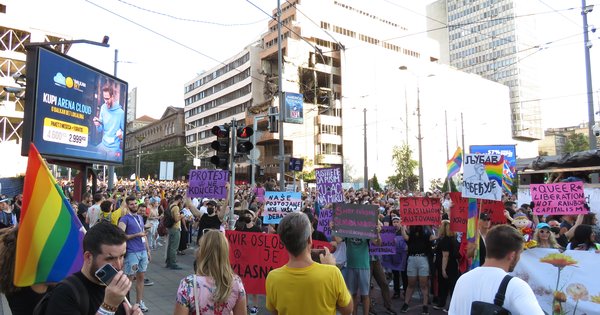
Belgrade Pride is the largest march in the Western Balkans and among the most politically charged. It is usually held on a Saturday in early-to-mid September; 2026 is expected to fall around September 12. As we covered in our Belgrade Pride 2026 preview, the event this year sits inside Serbia’s ongoing student-led protest movement and the wider political crisis around the SNS government. Pride in Belgrade is fully policed, widely attended, and has not been physically attacked since 2010 — but it remains the event in the region with the largest counter-mobilisation and the highest operational complexity.
Pristina, Kosovo — Saturday 19 September (expected)
Pristina’s march, organised by CEL Kosova and the Center for Social Group Development, has taken place annually since 2017. It has been one of the safest Pride marches in the Western Balkans by attendance size, benefiting from strong diplomatic presence and relatively consistent government support. The 2026 edition arrives, as we covered earlier this month, after the Kosovo government’s broken promise to pass civil-union legislation — making the march’s political framing sharper than usual.
Skopje, North Macedonia — date TBC
Skopje Pride has been held each June since 2019 but the 2026 date has not yet been publicly announced. It remains the smallest of the regional marches in attendance, still heavily reliant on international-diplomatic presence and embassy support, and is held with a substantial police presence. Our recent travel guide to Skopje has more on the city’s slowly growing queer scene.
Practical notes for travellers
A few things to keep in mind if you are planning to attend one or more of these events:
Security approaches differ sharply between cities. In Tirana, Zagreb, Ljubljana, Podgorica, and Pristina, Pride looks like Pride in most European capitals. In Sarajevo, Belgrade, and Skopje, expect bag checks, staged entry into secured zones, and clear organiser instructions about arrival times and identifying clothing. Follow the organisers’ guidance to the letter.
Regional flights are thin on weekends, and intercity buses remain the more reliable way to string multiple marches together. If you are trying to catch two or more events in the same weekend, check that you are not relying on a single overnight ferry or a single early-morning flight.
Finally: as in every year, dates and details can change. Confirm via the organisers’ social media in the week before the event.