Madrid Pride 2026 Is Seven Weeks Out — Here's Why MADO Is Still the Biggest Pride in Europe
MADO 2026 runs June 25 to July 5 in Chueca, with two million expected and the largest Pride parade on the continent. Spain has used the year to expand workplace protections and trans healthcare. The festival arrives at a confident moment.
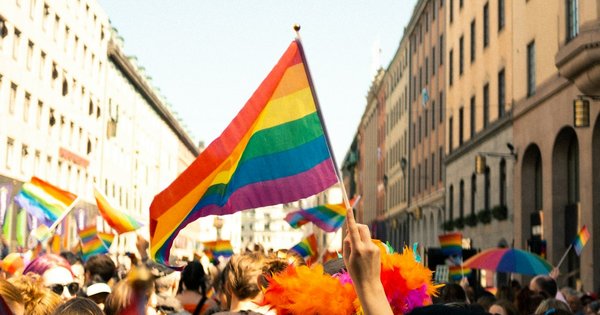
Madrid Pride — known locally as MADO, short for Madrid Orgullo — is seven weeks away. The festival runs from June 25 to July 5, 2026, anchored in the Chueca neighborhood and spilling out across central Madrid for eleven days of parties, concerts, and the biggest Pride parade in Europe. Two million attendees are expected, the same scale that has made MADO the largest single LGBT gathering on the continent for more than a decade.
The 2026 edition arrives in a country that has spent the last twelve months consolidating a quietly remarkable LGBT-rights position. Spain ranked fourth on ILGA-Europe’s 2025 Rainbow Map. Trans healthcare is being standardized across the seventeen autonomous communities. Workplace protections have been expanded. Hate-crime data has worsened, but reporting infrastructure has improved alongside it. By the time MADO opens its main stage on June 25, Spain will be hosting Europe’s biggest Pride from a position of unusual policy strength.
The basics for anyone planning to come
The parade — the Manifestación Estatal del Orgullo LGTBI, to use its formal name — takes place on Saturday, July 4, 2026, beginning at Atocha and ending at Plaza de Colón. Roughly 1.6 million people lined the route in 2025; organizers expect a comparable number this year. The parade typically starts in the late afternoon and runs into the evening, with floats from political parties, unions, embassies, NGOs, and a long list of corporate sponsors.
The festival days surrounding the parade are concentrated in Chueca, the historically queer neighborhood centered on Plaza de Chueca and bounded roughly by Gran Vía, Calle de Hortaleza, Calle de Augusto Figueroa, and Calle de Fuencarral. During MADO, the entire neighborhood becomes a pedestrian zone with multiple outdoor stages, and central squares — Plaza de Pedro Zerolo, Plaza del Rey, Plaza de Vázquez de Mella — host headline concerts every night.
Key dates inside the festival:
- June 25 — opening ceremony, traditionally featuring a famous LGBT-friendly Spanish artist on the Plaza de Pedro Zerolo main stage
- June 27 — the high heels race down Calle Pelayo, MADO’s most photographed informal tradition
- July 1 — pregón inaugural, the official festival proclamation
- July 4 — main parade
- July 5 — closing concert
Most events are free. The few ticketed events tend to be circuit-style parties at the larger venues, which sell out months in advance.
What is different about MADO 2026
Three things, by way of context.
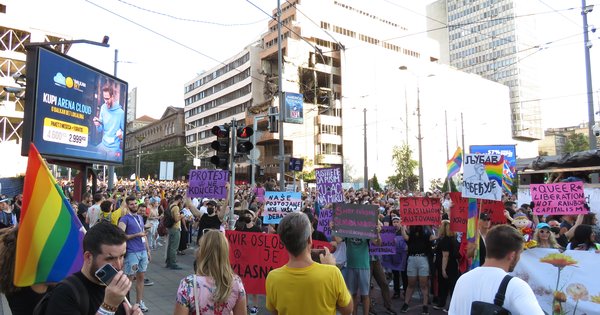
The festival’s policy backdrop is stronger than it was last year. In April, Spain’s Ministry of Equality issued the draft trans-healthcare decree we wrote about earlier this spring; if implemented as published, it will require every autonomous community to fund gender-affirming surgery, voice therapy, and mental-health support to a single national standard. The Madrid regional government, controlled by the conservative Partido Popular, has signaled that it will challenge the decree in court. That fight is likely to be a visible thread through the parade — expect placards.
The Madrid municipal government has shifted. José Luis Martínez-Almeida, the PP mayor of Madrid since 2019, did not publicly attend MADO in 2024 or 2025 — a notable break from his Socialist predecessor — and used the festival to criticize what he described as “ideological excess” in the city’s Pride contracts. In 2026, with municipal elections under a year away, the mayor’s office has indicated a softer posture: city resources for the parade have been re-funded at 2023 levels, and Almeida will attend at least one official event. Activists in Chueca are taking the shift cautiously.
Hate-crime statistics are part of the conversation. Spain’s Interior Ministry reported a 13 percent year-on-year rise in registered LGBT hate crimes in 2025, the third consecutive annual increase. Spanish LGBT organizations have argued that the rise reflects both better reporting and a real worsening of street-level safety; they point to the Mallorca beach hate-crime trial, which we covered in early May, as a case study. MADO 2026 organizers have built a more visible safety-and-solidarity programming track into the festival.
Why MADO is still — by some distance — the biggest Pride in Europe
A few numbers. WorldPride Madrid 2017 drew 3.5 million attendees and is still the largest Pride event ever held. MADO in non-WorldPride years averages around 2 million. Brussels Pride, the second-largest annual event in Europe, draws roughly 200,000. Cologne, Berlin, and Amsterdam all draw under one million in typical years. WorldPride Amsterdam 2026 — which we have previewed separately — is expected to surpass MADO this year only because of its global scale; in normal years, MADO is in a class of its own.
The size has practical consequences for visitors. Hotels in central Madrid sell out months in advance, and prices in the week of the parade run roughly two to three times normal. The neighborhoods adjacent to Chueca — Malasaña and Justicia — fill up next. Travelers booking in May for the first weekend of July should expect limited availability and significant price premiums even outside the immediate festival zone.
Practical notes for visitors
The Madrid Metro runs late on parade night; expect crowding rather than service issues. Ride-hailing apps are reliable in Chueca but can struggle to navigate the pedestrianized streets during festival days, so pickup points are usually a few blocks out. The high-speed rail network connects Madrid to Barcelona, Seville, Valencia, and Málaga in three hours or less, which makes a Pride-week trip viable from anywhere on the Iberian peninsula.
For first-time visitors, the most useful piece of advice we can offer is to plan for the festival to last longer than your stamina. Eleven days is a real eleven days. The locals pace themselves; visitors who try to attend everything tend to flame out by July 1 and miss the parade. The most memorable Pride moments in Chueca are usually not the headline concerts but the late-evening overflow — the streets full of people sitting on stoops, the impromptu drag shows in Plaza del Rey, the mid-festival lull after the high heels race when the neighborhood briefly empties before the weekend crowd arrives.
The bigger picture
Madrid Pride is one of the few annual LGBT events anywhere in the world that draws genuine international audiences from outside the LGBT community. It is, for many Spaniards, simply a major civic festival — like Sanfermines in Pamplona, or La Mercè in Barcelona — that happens to be queer in origin and remains queer in spirit but has long since outgrown that frame. Latin American visitors are an enormous part of the crowd. The European LGBT travel industry treats the first weekend of July as its anchor date for the entire continental calendar.
For the LGBT community, that ubiquity is a complicated kind of victory. The festival has corporate sponsors that not every Pride should welcome, the floats include political parties whose policies do not always match their parade banners, and the streets of Chueca are commercialized in a way that the smaller, scrappier Prides of the Balkans are not.
But two million people walking down the Castellana for visibility, joy, and policy demands is — by any honest measure — what the movement has always been working toward. MADO is what it looks like when a country with a working LGBT-rights framework celebrates loudly. We will see you there.