LGBTQ+ Travel Guide to Zagreb, Croatia: Small Scene, Real Welcome
Zagreb has the most established LGBTQ+ scene in the former Yugoslavia — and unlike most of the region, the legal framework actually has your back. Here's what to know before you go.
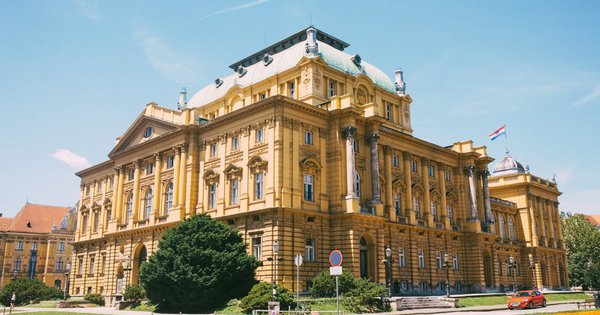
Zagreb is on our list. We have been through Croatia on the coast — Rijeka in 2015, plus the usual Dalmatian weekends — but we have not yet spent meaningful time in the capital. After four years living across the Balkans and talking with queer friends and travelers who have, we have a clear-enough picture of what Zagreb is, what it is not, and how to think about a trip.
The short version: Zagreb has the most established LGBTQ+ scene of any city in the former Yugoslavia. The legal framework is genuinely strong by regional standards. The vibe in the centre is relaxed. And the scene itself is small enough that you can map it in a long weekend and warm enough that the people running it will remember you.
The legal landscape
Croatia is an EU member state and a Schengen Area country (since January 2023). Same-sex life partnerships have been legal since 2014, giving registered couples most of the rights of marriage — joint property, inheritance, hospital visitation, immigration, partner-employment benefits. Stepchild and joint adoption by same-sex couples was upheld by the High Administrative Court in 2022. The Constitutional Court ruled in 2023 that anti-discrimination protections in the Constitution explicitly cover sexual orientation.
What Croatia does not have is full marriage equality. A 2013 referendum, organised by the conservative “In the Name of the Family” campaign, amended the constitution to define marriage as between a man and a woman. That amendment has not been undone. Life partnerships remain the legal vehicle, with marriage off the table absent a constitutional change.
Legal gender recognition exists. The current framework requires medical evaluation but not surgery or sterilisation. ILGA-Europe’s 2026 Rainbow Map ranks Croatia in the middle of the European pack — well ahead of most Balkan neighbours, well behind Spain or Malta.
For visitors, the practical takeaway is that you have actual legal recourse. Discrimination in services, employment, and housing is prohibited. Hate-motivated violence carries enhanced penalties. The Croatian Ombudsman handles equality complaints and has, in past years, used that authority on LGBTQ+ cases.
The vibe on the ground
Zagreb is the most relaxed city in Croatia for queer travelers, full stop. You will see same-sex couples holding hands in the central neighbourhoods. You will not see rainbow flags hanging from balconies the way you might in Madrid or Berlin, but the social atmosphere in Donji Grad and the Upper Town is generally easy.
The country splits, as it usually does, between the cities and everywhere else. Zagreb and the coastal cities of Split and Rijeka are the most comfortable. Smaller inland towns are more conservative. The Catholic Church remains influential socially even where its legal weight has declined.
From what queer travelers we know report, the experience as a visible couple is closer to Sofia or Belgrade than to Vienna or Berlin — generally uneventful, occasionally a look, almost never anything worse. Read the room and you are fine.
Where to go
The queer-friendly scene clusters in two areas of central Zagreb.
Tkalčićeva Street and the surrounding lanes — This is the main nightlife spine and the heart of the gay-friendly scene. Cafes, wine bars, and small clubs run almost continuously along this pedestrian street. It is not a “gay street” in the Soho sense, but several of the most popular queer-welcoming venues are on or just off it.
Donji Grad (Lower Town) — The grid of late-19th-century blocks south of Ban Jelačić Square holds most of the city’s daytime queer-friendly cafe culture, plus a few bars that lean specifically gay-friendly in the evenings.
Specific venues worth knowing:
Hotpot — Currently the closest thing Zagreb has to a default queer bar. Small, packed after midnight, music-led, mixed crowd that skews gay. The reliable Friday-Saturday option.
Taboo Club — A larger club that has been hosting explicitly LGBTQ+ nights for several years. Three floors, themed parties, the place to go when you want an actual dance floor rather than a bar with music.
Caffe Bar Kolaž — Smaller, friendlier, good for a daytime drink or a low-key early evening. Mixed crowd, openly welcoming.
Pink Flamingo Bar — Smaller bar that has held a queer audience for years. Worth a stop on a Tkalčićeva crawl.
Dezman mini bar — Tiny, idiosyncratic, the kind of place a queer friend brings you to once and you never forget the bartender.
For coffee, the area around Cvjetni Trg (Flower Square) and the cafes along Ilica are reliably comfortable. For food, the markets at Dolac are unmissable for any visit — go in the morning, eat outside, watch the city wake up.
When to go
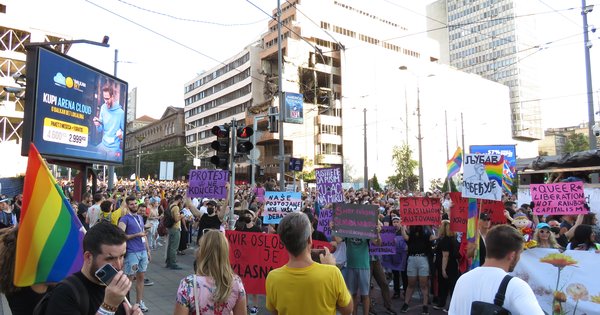
The headline weekend is Zagreb Pride, usually held in early June. The 2026 edition marks the 25th anniversary of the city’s first pride march in 2002, which makes this year’s parade a bigger deal than usual — expect larger crowds, more visiting groups from across the Balkans, and a longer week of events around the parade itself. We have written a separate piece on the 25th anniversary; check that for dates and event details.
Outside Pride week, late spring through early autumn is the easy travel window. Zagreb winters are real Central European winters — grey, cold, often snowy — and the queer scene contracts accordingly. The Christmas market in December is genuinely lovely and probably the best off-season reason to visit.
Where to stay
The two pragmatic neighbourhoods are Donji Grad (central, walkable, near everything, hotel-heavy) and the Upper Town / Tkalčićeva area (more atmospheric, closer to the nightlife, mostly apartment rentals and boutique hotels). Both are safe and comfortable for visibly queer guests.
Specific properties to consider: Hotel Esplanade Zagreb (grand old-world, central, very queer-friendly in our experience second-hand), Canopy by Hilton Zagreb (modern, central, used to international LGBTQ+ guests), and a wide range of well-reviewed apartments through the usual platforms in the Tkalčićeva blocks.
Getting there and around
Zagreb Franjo Tuđman Airport is well-connected within Europe — direct flights from most major Western European hubs, plus regional connections through Vienna, Frankfurt, and Munich. The airport bus into the centre takes about 30 minutes.
Once you are in the centre, you do not need a car. Zagreb is walkable from one end of the central queer-friendly zone to the other in 20 minutes. Trams cover the rest. Uber and Bolt both operate.
What to know about Pride and protest dynamics
Croatia has had moments of organised anti-LGBTQ+ pushback — the 2013 referendum being the most consequential. Anti-Pride counter-demonstrations have happened, but Zagreb Pride has had reliable police protection for over a decade and has been peaceful since the early years. You will not need to plan around safety the way you might in Belgrade or Istanbul. Standard urban awareness is enough.
If you are travelling during Pride week, expect heavy police presence around the parade route. That is normal and protective, not a sign of trouble.
How Zagreb compares to its neighbours
For a Balkan queer trip, Zagreb pairs naturally with Ljubljana (smaller, even more relaxed, two hours by train) or Belgrade (larger scene, much more conservative legal framework, very different vibe). Zagreb sits between them — more developed than Belgrade, less polished than Vienna, more comfortable than either Sarajevo or Skopje on first arrival.
If you are doing a longer Balkans loop, our suggested order is Ljubljana, Zagreb, then south toward the coast (Split, Dubrovnik) before crossing into Montenegro and Albania. Zagreb is the easiest entry point in the region for queer travelers who have not done the Balkans before.
The takeaway
Zagreb is not a “destination” LGBTQ+ city in the way Madrid or Berlin or Amsterdam is. The scene is small and the legal framework, while strong by Balkan standards, falls short of marriage equality. But Zagreb is also where the former Yugoslavia is most comfortable being itself in public, and the city is unusually warm to visitors who show up with the right kind of curiosity.
We will get there. When we do, this guide is our starting point too.