'Queers in the Garden' Opens Vienna's Volksgarten Tuesday: The Official Eurovision Side Hub Goes Live
Vienna's official Eurovision side-event zone for queer fans runs May 13–16 at the Volksgarten Pavillon and Säulenhalle. Four days of public viewings, queer clubbing, and panel programming wrap around the contest's two semi-finals and Saturday-night Grand Final.
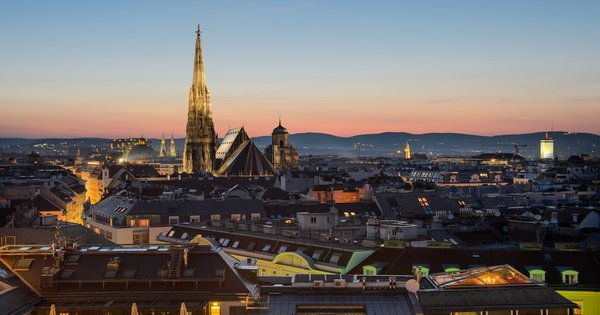
The 70th Eurovision Song Contest opens at the Wiener Stadthalle on Tuesday, May 12, with the first semi-final. By that point, Vienna’s official queer side-event hub will already be running. Queers in the Garden — the Eurovision-sanctioned queer programming zone at the Volksgarten Pavillon and the Säulenhalle — opens Wednesday, May 13, and runs through the Grand Final on Saturday, May 16.
For anyone flying into Vienna for Eurovision Week and wondering where the queer crowd actually goes between viewings, this is the answer the host broadcaster ORF has structurally given them.
What’s actually happening in the Volksgarten
The Volksgarten — Vienna’s public garden tucked between the Hofburg and the Burgtheater on the Ringstrasse — is one of the city’s prettiest 19th-century green spaces. The Volksgarten Pavillon and the Säulenhalle building inside the park have been hosting club nights and concerts for years; turning them into a four-day queer Eurovision hub is less a new venue and more a familiar venue putting on its summer dress.
Programming runs across four days, with three threads: public viewing of the contest semi-finals on Tuesday and Thursday and the Grand Final on Saturday; queer club nights running late on Wednesday, Friday, and Saturday; and a daytime cultural program of panels, drag performances, and DJ sets.
The public viewings are free. The club nights are ticketed. The cultural program is mostly free with limited paid-ticket evening events. ORF and the City of Vienna’s tourism arm are subsidizing the bones of the operation, which is why this exists as an official offering at all rather than as a pure commercial event.
The queer Eurovision crowd that has historically filled the Spielboden in past host cities (Liverpool, Malmö, Basel) has, in Vienna, a more centrally located equivalent five minutes’ walk from the Hofburg.
The contest itself, in brief
Two semi-finals: Tuesday, May 12, and Thursday, May 14. Grand Final: Saturday, May 16. All from the Wiener Stadthalle in Vienna’s 15th district, hosted by Austrian broadcaster ORF after Austria’s win in Basel last year.
The European Broadcasting Union’s contested 2025 ban on Pride flags carried by performers and delegations is in effect, as we covered earlier this month. Spectators in the arena can bring Pride flags, including Progress Pride and trans flags, but with a fire-safety asterisk: flags must come with manufacturer fire-rating certification, and most retail flags don’t qualify. The official Eurovision merchandise store sells compliant Pride and Progress Pride flags inside the arena. (This is, unsurprisingly, controversial; the EBU’s framing is “safety,” and the queer fanbase’s reading is “rules written to make it harder for fans to bring our own.”)
Inside the Volksgarten queer hub, none of those restrictions apply. It’s not an EBU venue.
The Vienna context, briefly
Austria recognized civil partnerships in 2010, full marriage equality in 2019, and dropped surgery and court requirements for legal gender recognition in 2018. The administrative baseline is solid by Western European standards. Vienna itself is one of Europe’s better-organized queer cities — well-served by the U-Bahn, with a dense cluster of bars, cafés, and venues across the 6th, 7th, and 8th districts and a steady year-round LGBTQ+ infrastructure.
Eurovision week is the warm-up. The 30th Regenbogenparade — Vienna Pride’s main parade along the Ringstrasse — falls on June 13, four weeks after the Eurovision final, and Vienna Pride proper opens May 29. The city is in the middle of its biggest queer programming run since hosting Eurovision in 2015.
Practical notes if you’re going
The Volksgarten is in Vienna’s 1st district, a five-minute walk from Volkstheater U-Bahn (lines U2, U3) and seven minutes from Herrengasse (line U3). The Wiener Stadthalle is in the 15th district, ten stops out on the U6.
For the public viewings: arrive early. Vienna’s queer crowd is famously large and disciplined about getting good positions for the broadcast, and the Volksgarten Pavillon’s capacity is in the low thousands rather than the tens of thousands. The Final on Saturday will be the most crowded; if you have a ticket to the Grand Final at the Stadthalle itself, the Volksgarten viewing isn’t the play, but the after-party there is.
For the club nights: tickets are available through the Queer-ESC website. Wednesday and Friday nights have been described as the “regulars” nights, oriented toward the Vienna queer community itself; Saturday is the Eurovision-fan crowd.
The free daytime programming — panels, DJ sets, drag — is where most of the friendliest people are if you’re flying in solo and looking to find a crowd.
Why an official side hub matters
The Eurovision-host-broadcaster relationship to its queer fanbase has, over the past three years, become more institutionally complicated. The flag ban for performers, the ongoing arguments over Israel’s participation, the question of whether the contest’s queer mythology survives its expanding political constraints — none of that goes away in Vienna.
What ORF and the City of Vienna have done with Queers in the Garden is a small but real gesture: an officially sanctioned space, in a public park, four blocks from the seat of Austrian government, where the queer crowd Eurovision was built on can show up without negotiating with the EBU’s rulebook. It is not a substitute for the changes the fanbase wants out of the EBU itself. It is an acknowledgment that the queer Eurovision crowd is the contest’s anchor, and that anchor needs somewhere to drop in the host city.
If you’re in Vienna for the week, Queers in the Garden is where to start.
Sources: Queers in the Garden — Official ESC 2026 Side Event Zone; The best events in Vienna in May 2026 — The Local; Eurovision Song Contest 2026 in Vienna travel guide — Muvamo; New flag rules released for Eurovision 2026 amid safety crackdown — Aussievision.