Belgrade Pride 2026: September Dates Set, Call for Proposals Open Now
Serbia's largest LGBTQ+ event will run September 1-7 with the parade on September 5. Organizers are accepting community proposals for Pride Week programming through the spring.
Belgrade Pride has set its 2026 dates and opened a public call for community proposals to fill the week’s programming. Pride Week runs August 31 through September 6, with the parade itself on Saturday, September 5. Submissions for panels, exhibitions, performances, sports events, film screenings, and community gatherings are open through the spring.
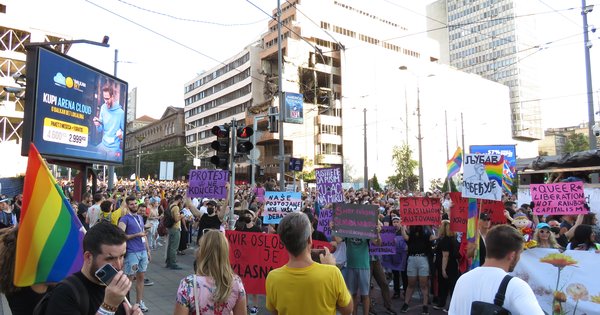
For anyone tracking the Western Balkans Pride calendar, Belgrade is one of the anchors. The march has happened every year since 2014, after a decade of cancellations and violent attacks made earlier attempts in 2001 and 2010 effectively impossible. The 2014 return — held under heavy police presence — was the inflection point. A decade later, the event regularly draws 8,000 to 10,000 participants, attendance from international embassies, and visible if reluctant cooperation from the Serbian government.
What’s different about 2026
This year’s Pride lands in a Serbia where the political ground is shifting. Student-led protests across 2025 reshaped public discourse on government accountability and pulled younger voters into civic life in ways that crossed traditional left-right lines. Belgrade Pride organizers explicitly tied last year’s march to that broader movement — a framing that brought new allies and a noticeably younger crowd to Manjež Park.
The September 2026 march comes against the backdrop of Serbia’s own EU accession trajectory. Serbia opened Cluster 1 negotiations earlier than Albania but has moved more slowly on the rule of law and fundamental rights benchmarks that determine LGBTQ+ rights treatment. The lack of any legal recognition of same-sex partnerships remains one of the most visible gaps. The Constitutional Court ruled in 2021 against requiring legal recognition; legislative options have stalled since. Pride 2026 will, predictably, ask again.
How the call for proposals works
Belgrade Pride opens the program to community submissions every year, and the window for 2026 is now active through prajd.rs, the official organization site. Proposed events can fall into any of the established Pride Week tracks: panel discussions and lectures, exhibitions, artistic and theatrical performances, sports events, film screenings, and informal community gatherings. Proposals from regional partners — particularly from elsewhere in the Western Balkans — have historically been welcomed, and the network of collaboration with Pride organizers in Tirana, Skopje, Pristina, and Sarajevo is a significant part of what makes Belgrade Pride feel like a regional event rather than just a Serbian one.
The practical advantage of submitting early is logistical. Belgrade venue capacity gets tight as the program firms up, and visa or travel funding requests for participants from outside Serbia move faster when there is documentation in hand.
What attendees should know
Belgrade Pride is, by Western European standards, still a heavily policed event. The march route is fenced. Security checkpoints are real. This is a function of past violence, not of current welcome — the city itself is far more comfortable with LGBTQ+ visibility than it was a decade ago, but the parade itself remains a target of organized opposition. Plan accordingly: arrive early, follow organizer instructions, and recognize that the police presence is protecting the march even when the experience feels unusual.
The wider city is its own draw. Belgrade has a well-developed gay nightlife scene concentrated around the Vračar and Dorćol neighborhoods, queer-friendly cafes that operate year-round, and a cultural infrastructure — galleries, alternative cinema, live music — that does not turn off when Pride Week ends. For travelers planning around the September dates, the city is comfortable to visit on its own terms.
The regional context
The Western Balkans Pride season runs roughly May through September. Tirana’s date will be confirmed in coming weeks; Skopje and Sarajevo typically run in late spring or summer; Podgorica and Pristina hold their marches in autumn. Belgrade is the largest by attendance and the one most often used as the regional anchor for visiting press and observers.
For anyone making travel plans, attending more than one Western Balkans Pride in a single trip is increasingly common. The intercity train and bus network across the region is functional — if not always fast — and rotating through Belgrade, Pristina, and Tirana over a single Pride season is a real option for travelers with flexible schedules.
If you want to participate beyond attending: the call for proposals is open. If you want to support: organizations like Da se zna! and Geten provide the year-round community infrastructure that makes Pride possible. And if you simply want to visit: book accommodation soon. Belgrade fills up.