Three Days Out From IDAHOBIT: What May 17 Looks Like From Tirana
May 17 lands on Sunday — the International Day Against Homophobia, Biphobia, and Transphobia. From where we're sitting in Tirana, it feels less like a campaign moment and more like a stocktake. Some notes on what's planned across the Balkans.

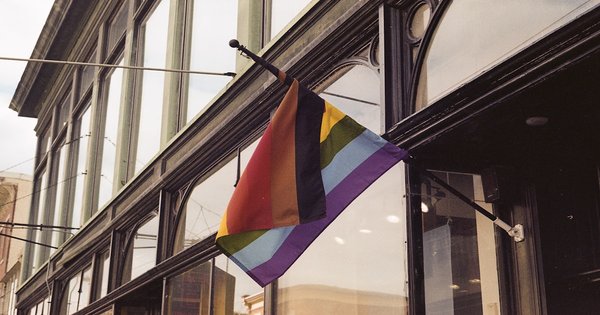
We’ve been in Tirana long enough now that May 17 has stopped being an abstract calendar entry. It shows up. The streetlight banners near the Pyramid get rainbow-edged. A few of the embassies fly the flag — the Dutch always, the Germans almost always, the EU mission yes, the Americans this year unclear. Activists drape Skanderbeg Square. There’s usually a small public moment somewhere downtown. It is not a parade. It is a marker.
This Sunday, May 17, is IDAHOBIT — the International Day Against Homophobia, Biphobia, and Transphobia. The 2026 global theme is “At the Heart of Democracy.” We wrote a preview two weeks ago about what the day is and where it came from. This is a different kind of note, written closer to the day from inside the Balkans, about what we’re seeing locally and across the region.
The thing that has shifted, for us, is that the day reads differently than it did even three years ago. In 2023, May 17 in this region felt like a fragile, brave gesture. In 2026, with Albania having passed a real gender equality law, with Croatia climbing the trans rights index, with the CJEU repeatedly ruling against Hungary, the day has more political weight behind it — but the backlash also has more organisation behind it.
What’s planned in Albania
The community in Tirana traditionally marks May 17 with a small downtown gathering organised jointly by Streha and the broader coalition that runs Tirana Pride a few weeks later. The format has been steady for a few years: a press conference and call-to-action at a public venue, followed by a smaller community event in the evening. This year the messaging is heavier on the gender equality law referendum push — the conservative coalition collecting signatures to repeal the protections the country just passed.
We talked to a friend who works with one of the partner organisations and asked what tone they were planning to take this year. “We’re not pretending the law is safe,” they said. “We’re showing what it actually changed.” That sounds right to us. The referendum threat is real, the political damage is happening even before any vote, and the people most exposed are exactly the people IDAHOBIT was created to be visible for.
If you’re in Tirana on Sunday and want to show up, the main public moment will be downtown — check Streha’s social channels for the time and place. Sarande and Durrës are not expected to have public events this year, but informal community gatherings happen in both cities and the local crowds are warmer than people sometimes assume.
What we’re hearing from elsewhere in the Balkans
We don’t speak with authority on cities we haven’t lived in, but our network across the region has been comparing notes. Here’s what people are planning, as best we can piece it together.
Belgrade will have a public action led by Da se zna! and the Belgrade Pride office — focused this year on hate crime documentation rather than legal reform. Serbia’s same-sex union legislation has sat unmoved for years and the activists we talk to have stopped expecting anything from the legislature. The 2026 work is about getting cases prosecuted and survivors supported.
Pristina is the one we have the most uncertainty about. Civil unions remained pending again last week, the political path is blocked, and most of the activist energy is being spent on the question of whether the new civil code can be brought back without the unions clause being stripped out. Some kind of public gathering is likely, but the format we keep hearing is “a quiet one.”
Sarajevo’s mark on May 17 has traditionally been a panel discussion plus a media campaign — quieter than Belgrade, more institutional than Tirana. Skopje similarly. Sofia is doing a film screening that ties into the run-up to Sofia Pride on June 13, which we previewed last week.
Zagreb has a public event organised around the 25th anniversary of Zagreb Pride, which falls this year. We’re going to be honest: of all the cities on this list, Zagreb is the one with the most public confidence right now.
Why the day still matters in this region
There’s a reasonable question that comes up every year: in a country where things are mostly moving in the right direction, is May 17 still important? The answer from the Balkans, this year, is yes — and it has a clearer shape than usual.
Three things make it useful. First, the day forces public visibility in countries where the law has changed but the social temperature has not. The Albanian gender equality law is on the books; that doesn’t change what happens to a trans teenager whose parents kick them out. May 17 is one of the few days in the year where institutions are publicly on the record about what they’re going to do about that.
Second, the day creates protective cover for smaller cities. Tirana, Belgrade, Zagreb, and Sarajevo all have functioning Pride. Most of the region does not. May 17 is sometimes the only day of the year a community organisation in a smaller city can put up a public statement without it being a full-on confrontation.
Third — and this is the 2026 theme talking — the day links queer rights to democratic backsliding. The countries in this region where things are getting worse for LGBTQ+ people are mostly the countries where things are also getting worse for the press, the courts, and political opposition. The two are not separate stories. “At the Heart of Democracy” is not a slogan. It’s a description.
How we’re planning to spend the day
Honestly? Probably the same way most of you will. We’ll show up to whatever the community is doing in the afternoon. We’ll buy too much coffee at Mulliri and write about it. We’ll text our straight family in the US to remind them what day it is. And then on Monday, the work continues — because if there’s one thing we’ve learned living in the Balkans, it’s that the visible days are important but they’re not the days that move the law.