LGBTQ+ Travel Guide to Podgorica, Montenegro: The Balkans' Most Underrated Capital
Montenegro has the most progressive LGBTQ+ legal framework in the Western Balkans — civil partnerships since 2020, comprehensive anti-discrimination law, and an annual Pride march. Its sleepy capital, Podgorica, is the strange, low-key place where all of that lives.
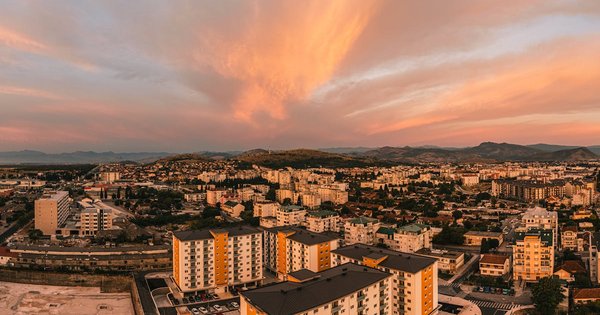
Podgorica is one of the most underrated capital cities in Europe, and one of the strangest entries in any Balkans LGBTQ+ travel guide. It is small. It is hot. It does not look like its postcards. Its tourist board has, for years, struggled to convince foreign visitors that the city is worth more than a one-night layover on the way to the coast. And yet, on the question that this guide cares about most — what it is like to be queer here — Podgorica quietly outperforms every other Western Balkan capital.
We passed through Podgorica years ago on a much earlier Balkans trip. We have not been back since the country adopted its civil partnership law, and the legal landscape has shifted significantly since then. Consider this a researched guide informed by current reporting from Queer Montenegro, the Council of Europe, and travelers who have spent more time in the city recently than we have.
The legal landscape
Montenegro is, on paper, the most LGBTQ+-friendly country in the Western Balkans. Same-sex civil partnerships have been legal and operational since July 2020, when the Law on Life Partnerships of Same-Sex Persons came into force. That law confers most of the substantive rights of marriage — inheritance, property, hospital visitation, mutual support — but stops short of allowing joint adoption. It was the first such framework anywhere in the Western Balkans, and it remains the only one.
Anti-discrimination protections covering sexual orientation have been on the books since 2010 and were strengthened in 2014 to explicitly cover gender identity. Trans people can update legal documents without surgical requirements, though the process in practice can still be bureaucratically painful. Hate-crime provisions in the criminal code cover bias-motivated offenses against LGBTQ+ people, and the police have, in the last several years, actually used them — the conviction rate is low, but the willingness to investigate is meaningfully better than in Albania, Serbia, or North Macedonia.
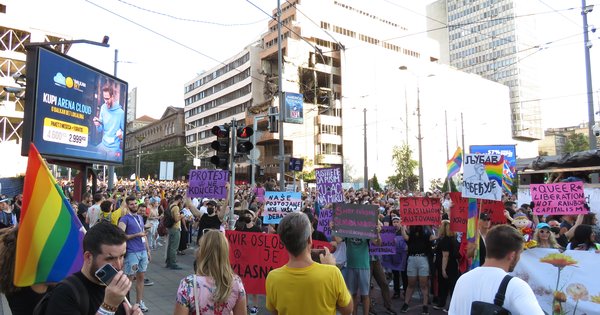
The country has held an annual Pride march in Podgorica every year since 2013, almost always under heavy police protection. There has been no march cancelled since 2015. The political class has made supporting Pride part of the country’s broader EU-accession choreography — Montenegro is the most advanced of the Western Balkan candidate countries, with EU membership now plausibly possible by 2028.
What the city is actually like
Podgorica is small. The population sits around 180,000, and the central core is walkable end to end in about half an hour. The city was substantially rebuilt after World War II and again after the breakup of Yugoslavia, which means most of what you see is functional Yugoslav modernism rather than old-town charm. People who have spent time in Tirana will find Podgorica recognizable — same Balkan summer rhythm, same café culture, smaller and quieter.
The two areas a queer visitor will spend most time in are the central pedestrian zone around Hercegovačka Street, and the riverside neighborhoods along the Morača. The Hercegovačka strip is where the cafés and bars cluster. There are no openly gay bars in Podgorica — that has not changed in years — but there is a small handful of mixed venues that are reliably welcoming and where same-sex couples are unlikely to attract attention. Ask Queer Montenegro directly for current recommendations; the venue picture shifts.
Apps, dating, social life
Grindr and Hornet both work in Podgorica, with active grids — much smaller than Belgrade or Tirana, but functional. The unwritten rule that travelers everywhere in the Western Balkans should pay attention to applies here: a meaningful share of profiles are not out to family, friends, or coworkers, and discretion is the cultural default. If someone asks to meet at your accommodation rather than a public place, that is usually about visibility risk rather than anything sinister. If someone declines to meet at all, that is also usually about visibility.
The city has no LGBTQ+ community center in the way that Tirana has Streha and Sarajevo has Okvir. Queer Montenegro and LGBT Forum Progres are the two main organizations and both are responsive to outside inquiries — if you are spending more than a few days in the country and want to make queer connections, they are the right place to start.
Practical: getting in, getting around, where to stay
Podgorica Airport (TGD) is small but well-connected to Western Europe via Belgrade, Vienna, Frankfurt, and Istanbul. Direct flights from London and Paris run seasonally. If you are already in the region, the bus from Tirana is roughly five hours and scenic. From Belgrade it is closer to eight.
Inside the city, walking covers most of what you need. Taxis are cheap and metered if you insist on the meter. The main accommodation options are clustered in the central zone; we would skip the larger chain hotels and look at the small contemporary apartments on Airbnb in the Preko Morače neighborhood, which is quiet, safe, and walkable to everything.
Podgorica is hot in summer — frequently above 35°C/95°F in July and August. If you are coming for Pride, which usually falls in summer, plan around the heat.
Why it’s worth your time
Podgorica is not a city that announces itself. There is no old-town charm, no skyline, no instantly memorable monument. What it has, for queer travelers, is a quiet seriousness about LGBTQ+ rights that is rare in this region — a country whose government has chosen, repeatedly and against domestic resistance, to side with its queer citizens. That is worth seeing. And the rest of Montenegro — Kotor, Lovćen, the Tara canyon — is right there.
If you are rotating through the Western Balkans and have already done Tirana, Belgrade, and Sarajevo, put Podgorica next.