LGBTQ+ Travel Guide to Sarajevo: Bosnia's Queer Capital, Honestly Assessed
A practical, honest guide to Sarajevo for queer travelers — what's improved since the first Pride in 2019, where the bars actually are, and what to know about safety in a city still building its queer infrastructure.
We haven’t made it to Sarajevo yet ourselves — it’s high on the list for the next Balkans rotation, sitting alongside the cities we know well like Tirana, Sofia, and Skopje. But friends and fellow queer travelers have been spending more time in the Bosnian capital over the last two years, and the picture they describe is different enough from what older guidebooks suggest that it’s worth writing down.
This is a researched guide, not a personal one. The headline: Sarajevo is more navigable for queer visitors than it was even five years ago, but it remains a city where discretion is the local norm and where most of the queer scene operates without big rainbow signage. Going in with realistic expectations, you’ll have a better time.
The legal lay of the land
Bosnia and Herzegovina has a comprehensive anti-discrimination law — passed in 2009 and amended in 2016 — that explicitly covers sexual orientation, gender identity, and sex characteristics. That puts the country ahead of several EU member states on paper. There is no recognition of same-sex partnerships, no recognized framework for trans legal gender recognition without surgical requirements, and no joint adoption rights for same-sex couples. The country’s legal trajectory has been split between progress at the federal level and resistance from the Republika Srpska entity, where political leadership has been openly hostile to LGBTQ+ visibility.
The Sarajevo Open Centre (Sarajevski otvoreni centar), which has been the lead LGBTQ+ rights organization in the country since 2007, publishes annual reports on hate crime, discrimination, and policy that are the best English-language sources for what’s actually changing year-to-year.
Pride and visibility
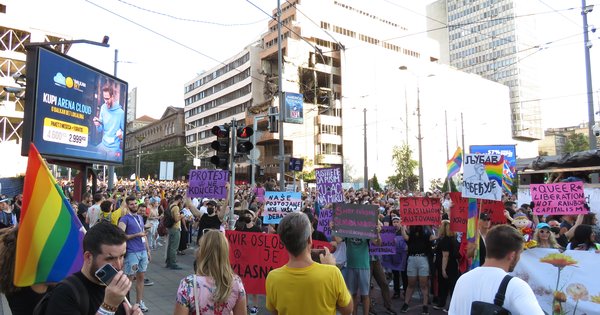
Sarajevo held its first Pride parade in September 2019 — a significantly bigger deal than the date alone suggests. Organizers had been working toward it for years against substantial political and social resistance. The march drew thousands, was protected by a heavy police presence, and went off without major incident. Pride has continued in subsequent years, with steadily improving police protection and steadily decreasing — though not eliminated — counter-protest activity. If you’re traveling in Pride season (typically late June or early July; check the Sarajevo Open Centre or Bosnia Herzegovina Pride channels for current dates), expect the city to feel different than the rest of the year. Pride days are the only days of the year when overt queer visibility is broadly normalized in public space.
The scene, what there is of it
Sarajevo does not have a dedicated gay bar in the way Tirana has Hangar or Sofia has Sin City. What it has is a small ecosystem of LGBTQ+-friendly venues that are queer-welcoming without being queer-exclusive. The names that come up consistently in 2025-2026 traveler reports are Kriterion (a cultural center and bar that’s been a community space for years), Cotton Club, and a handful of bars in the Bosna and Skenderija areas that quietly host queer-leaning nights without advertising them on Google. Things change. By the time you read this, at least one of those venues may have closed or repositioned, and another may have opened. The Sarajevo Open Centre’s social channels are the most reliable real-time source.
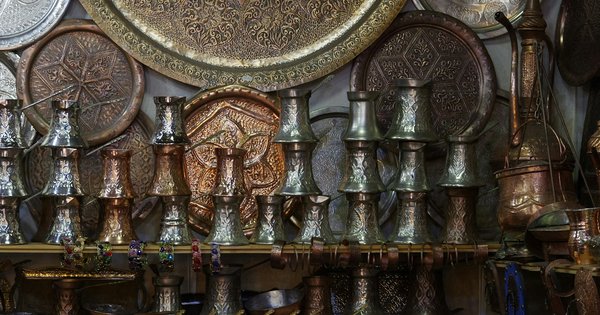
The Ottoman old town (Baščaršija) is beautiful and absolutely worth multiple visits, but it is not where the queer scene lives. Save your evening drinks for the more contemporary parts of the city.
Safety, honestly
The candid assessment from queer visitors who’ve spent time in Sarajevo recently is consistent: the city is safer than its reputation suggests, but discretion remains the default. Public displays of affection — including straight ones — are uncommon and stand out. Walking hand-in-hand as a same-sex couple through Baščaršija will not generally result in violence, but it will draw attention, and in some neighborhoods the attention can include hostile comments. Inside queer-friendly venues, the energy is genuinely warm. The transition between “in the bar” and “on the street” is the moment when most travelers say they recalibrate.
This is the same calibration we’ve made ourselves in Tirana, Sofia, and other Balkan cities. Sarajevo is on the more conservative end of that spectrum, similar to Skopje. It’s not Belgrade, which has more visible queer nightlife. It’s not Pristina, which is smaller but has surprisingly developed organizing infrastructure. Sarajevo sits where it sits: a Balkan capital where the queer community is real, organized, and present, but where the broader social context still pushes most of that life indoors.
Practical notes
Getting there. Sarajevo Airport (SJJ) has direct flights to most major European hubs. Trains and buses connect to Mostar, Belgrade, Zagreb, and Dubrovnik; the train to Mostar is one of the most beautiful rides in the Balkans.
Where to stay. The most queer-comfortable areas are around the city center between Marijin Dvor and the river — close enough to walk to old town, close enough to walk to the contemporary nightlife. Avoid putting yourself far out in residential neighborhoods if you don’t know the city.
Money and language. The currency is the convertible mark (BAM), pegged to the euro. English is widely spoken in younger demographics and in hospitality. Bosnian is the working language and any Croatian or Serbian you have will land fine.
When to go. Late spring and early autumn are best for weather. July and August are hot. Pride season (typically late June) is when the city is most visibly queer; everything else is more discreet.
What to read first. The Sarajevo Open Centre’s annual “Pink Report” on the human rights situation of LGBTI persons in Bosnia and Herzegovina is dry but thorough, and it’s the best snapshot of the country’s actual legal and social trajectory.
We’ll write a real first-person Sarajevo guide once we’ve spent time there ourselves. Until then, treat this one as the briefing we’d want before our own first visit — honest about both the progress and the limits.