LGBTQ+ Travel Guide to Sofia, Bulgaria: What We Wish We'd Known Before We Went
Sofia is one of the most underrated capitals in Eastern Europe — and one of the more complicated places to be visibly queer in the Balkans. Here's what we learned from living there.
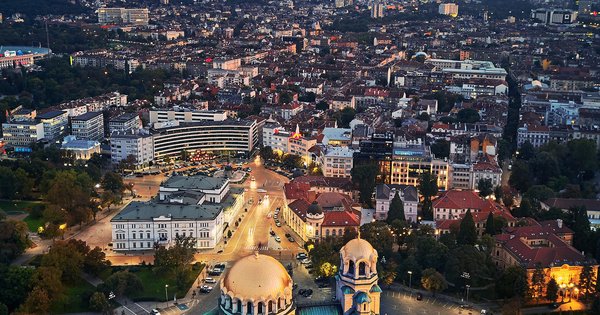
We spent a stretch of 2023 in Sofia, and we go back in our heads to it more often than we expected to. Bulgaria’s capital is one of those places that does not sell itself well in photos. The skyline is functional rather than postcard-pretty. The Cyrillic signage and Soviet-era apartment blocks read as forbidding to a lot of Western European visitors. The tourism marketing leans hard on rose festivals and Black Sea beaches, neither of which are in Sofia.
But Sofia is a working European capital with a real LGBTQ+ scene, a small but tenacious activist community, and one of the cheapest costs of living in any EU member state. If you go in with the right expectations, it rewards you. Here is what we tell people now when they ask.
The legal-and-social baseline
Bulgaria is technically more conservative than its EU membership might suggest. Same-sex partnerships are not recognized in any form. Marriage equality is not on the legislative horizon, and a 2024 constitutional amendment defined marriage explicitly as between a man and a woman. Adoption rights are restricted to opposite-sex couples and singles only. Gender recognition for trans people is currently in legal limbo following a 2023 Supreme Court of Cassation ruling that effectively halted legal gender changes — a situation that ILGA-Europe and the Council of Europe have flagged repeatedly.
That is the law on paper. The reality on the ground in Sofia, in our experience, was substantially better than the legal scorecard suggested — but only in specific neighborhoods, and only at specific kinds of venues. We held hands walking through Vitosha Boulevard at dusk and got no second looks. We held hands walking through the open-air market at Zhenski Pazar at midday and got several. The geography matters.
Where to stay
The two neighborhoods that consistently felt comfortable to us were Oborishte and Doctor’s Garden (Doktorska Gradina), both in central Sofia, both walkable to the parliament district and to the cluster of bars that constitutes the city’s queer scene. Oborishte has the older apartment buildings, leafy streets, and a stronger café culture. Doctor’s Garden is closer to the bars, slightly more student-flavored, and noticeably more relaxed about visible queerness.
If you are coming for a long stay (we were there for about six weeks), look in the streets bounded by Oborishte, Slaveykov Square, and the Doctor’s Garden park itself. Apartment rentals in this corridor were running roughly €700–€1,100 per month for a renovated one-bedroom when we were there in 2023; we expect that has crept up since but Sofia is still substantially cheaper than Belgrade or Athens.
The bars and where the community gathers
The two anchors of Sofia’s gay scene have been around for years. Spartacus is the older, divier of the two — a multi-room basement bar near the Russian Embassy that runs late and skews male and cruisy on weekends. Boom! Burger during the day is just a burger spot; on certain nights the upstairs becomes a queer-friendly party space. Cu29 has been the closest thing Sofia has to a gay-coded café-bar, with weekend events, a small dance floor, and the most consistently mixed crowd in the city.
Bilitis, the lesbian-feminist organization, runs occasional events that are worth seeking out if you are in town for a while — they often happen in collaboration with Sofia Pride or one of the smaller queer cultural venues. The Sofia Pride office itself sits in the city center and is genuinely welcoming to visitors who want to ask questions or volunteer; we stopped in once and ended up chatting with the staff for an hour.
For a quieter evening, the wine bars around Krakra Street and the speakeasies around Slaveykov Square are not gay bars, but they are the kind of places where holding hands across a small candle-lit table did not raise eyebrows. We had some of our best meals in Sofia at the Bulgarian-Mediterranean spots in this corridor.
Sofia Pride
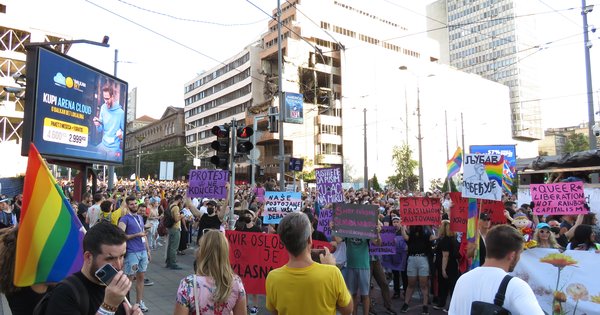
Sofia Pride takes place in mid-June and is the largest LGBTQ+ public event in Bulgaria. It is also the one day of the year when the city’s queer community is unmistakably visible in public space. The march is reliably counter-protested by far-right groups, including some with explicit ties to football ultras, and the police presence is heavy. We attended in 2023 and the event itself felt safe — the route is short, the crowd is dense, and the security perimeter is real — but the atmosphere is closer to a protest march than to a festival in the way that, say, Madrid or Amsterdam Pride feel like festivals. That is not a complaint. It is a reflection of where Bulgaria is right now.
If you are planning a trip around Pride, book accommodation early. Mid-June fills up.
What to be careful about
A few honest cautions, none of them dealbreakers:
We would not recommend visible PDA in outer neighborhoods of Sofia (Lyulin, Druzhba, Mladost) or in smaller cities outside the capital — Plovdiv is somewhat liberal but not Sofia-liberal; Varna and Burgas on the coast skew more conservative than their tourism marketing implies. The countryside is, frankly, a different country.
Trans travelers should be aware that legal gender markers on Bulgarian-issued documents are currently very difficult to change, and that police and bureaucratic interactions can be rough. If your passport gender marker matches your presentation, you are fine; if it does not, build in extra time and patience for any official interaction.
The far-right party Vazrazhdane has been growing in parliamentary representation and is openly hostile to LGBTQ+ rights. This affects political discourse and occasionally street safety on specific days (counter-protests, election nights). Check the news before you book Pride weekend.
Why we keep recommending Sofia anyway
Because the value-to-friction ratio is unusual. Sofia gives you a real European capital, with an opera and a national gallery and 24-hour transit, a serious food scene that is finally getting written up internationally, mountains visible from your apartment window, and a queer community that is small enough to feel like a community when you find it. The cost of living is among the lowest in the EU, the wifi is fast, the visa rules for digital nomads work cleanly, and the time zone aligns with the rest of Europe.
We are not going to pretend Sofia is Berlin or Madrid. It is not. It is its own thing — and for travelers who like the parts of European cities that are still being rediscovered, it is one of the more rewarding places we have lived.