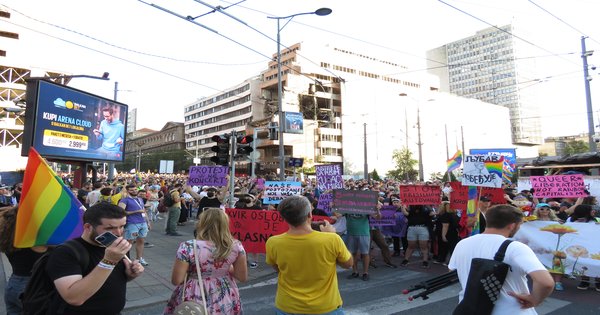
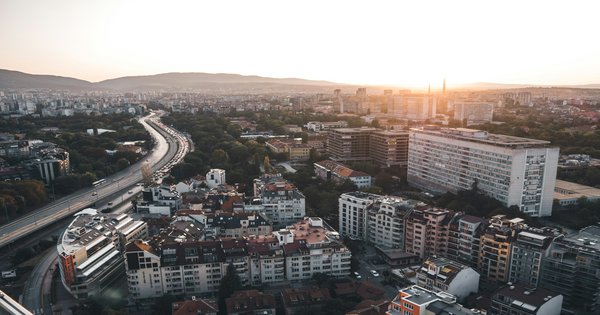
Six Years In, Montenegro's Same-Sex Partnership Law Has Registered Fewer Than 100 Couples. Here's Why That's Still a Big Deal.
Montenegro remains the only Western Balkans country to legally recognize same-sex couples. Six years after the law passed, the low number of registrations says more about safety than about demand.
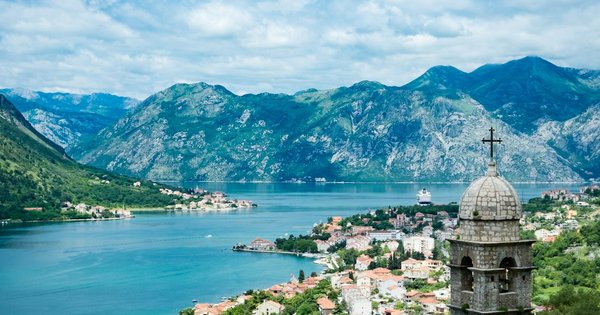
In July 2020, Montenegro became the first country in the Western Balkans to pass a same-sex partnership law. Six years on, it is still the only one. And the number of couples who have actually registered under it remains startlingly small — by the most recent count from Queer Montenegro, the country’s leading LGBTQ+ organization, fewer than 100 partnerships have been formalized since the law took effect in 2021.
That number is often seized on by people who want the law to disappear. It is, they argue, proof that there was never demand for it. The truth is more uncomfortable, more familiar, and more important to understand: what the number actually measures is how safe it feels to be publicly, legally queer in a country of 620,000 people where everyone eventually knows everyone.
What the law does (and doesn’t do)
The Law on Life Partnerships of Persons of the Same Sex, passed in July 2020 and operational from July 2021, grants same-sex couples a bundle of rights that meaningfully approximates civil marriage. Registered partners acquire rights to maintenance and spousal support, inheritance of joint property, survivor pensions, partner visits in hospitals and prisons, inclusion in social protection and health insurance schemes, and residency sponsorship.
The law stops short of two things. It does not recognize joint adoption — partners cannot jointly adopt a child, even the biological child of one partner. And it does not grant automatic parental rights to the non-biological parent of a child born during the partnership. For same-sex couples raising children together in Montenegro, the family is recognized for every purpose except the one that matters most in an emergency.
This is the same limitation that every civil-partnership-but-not-marriage regime in Europe has had to grapple with, from the Netherlands in 1998 through the Czech Republic’s “enhanced partnerships” reform last year. Montenegro’s version is, for its region, generous — but the parenting gap is real and is where Montenegrin families continue to be pushed into legal precarity.
Why the registration number is low
Seventy-five registered partnerships through late 2023, and probably fewer than 100 today, in a country where rough estimates put the adult LGBTQ+ population in the tens of thousands. That is not a measure of demand. It is a measure of what people feel they can afford to do.
Montenegrin activists point to several overlapping factors. The first is simply that registering a same-sex partnership creates a permanent, searchable public record in a country where civil registries are small, municipal, and not always staffed by sympathetic officials. In Podgorica or Budva you might get a registrar who treats the appointment as routine. In a smaller municipality, you might not. Queer Montenegro has documented enough friction at individual registry offices to discourage couples from trying outside a handful of cities.
The second is professional and family risk. Most Montenegrin LGBTQ+ people have at least one relative who does not know, one employer who does not need to, and one landlord who would rather not. A registered partnership is a document that can be disclosed — by a petty bureaucrat, a curious colleague, a leaked database — in a way that ends careers and fractures families. For couples who are not already fully out, the calculation often lands on “wait.”
The third is that, for younger Montenegrin queer people especially, the assumption is increasingly that they will leave. Partnership registration is useful in Montenegro. It is meaningless the moment you cross into Serbia, Bosnia, or Kosovo, all of which are still where much of the extended family and professional network tends to live.
Why the law still matters
If the practical uptake is small, the symbolic and legal importance has been enormous. Montenegro’s partnership law did three things that no other Balkan country has managed:
It established that a Western Balkans parliament can pass LGBTQ+ recognition legislation and survive. The predicted collapse of the government, the predicted backlash, the predicted religious mobilization — none of it happened on the scale that was feared. That changed the political calculus in Kosovo, where Prime Minister Albin Kurti publicly committed to following suit in 2024 (a promise still unfulfilled), and it has kept pressure on Serbia, where a partnership bill has been sitting in drawer since 2021.
It created a body of administrative practice — registrars, court procedures, social insurance coding — that advocacy groups in neighboring countries can point to when conservatives claim implementation is impossible. Montenegrin civil servants are now the region’s de facto subject-matter experts on how to run a partnership registry, and that expertise has been generously shared across borders.
And it put Montenegro ahead of its neighbors on EU accession. Montenegro is the frontrunner for the next round of EU enlargement, and its human rights chapter is, in part, defensible because of this law. The Western Balkans accession process has become one of the few places where LGBTQ+ rights improvements have a direct, material incentive attached to them.
What the low number really tells us
Six years and fewer than 100 partnerships is not a story about demand. It is a story about what full, public queerness still costs in a small, closely-networked country with mixed attitudes and a small capital. For the couples who have registered — and a number of them have become, publicly, the faces of the law — the legal protection is real and the community pride is earned.
For the much larger number who have chosen not to, the law is still doing something important: it exists. It can be used when life forces the choice — a hospital visit, an inheritance, a residency application for a foreign partner. And it means that when a future Balkan government, somewhere, finally passes a similar law, the blueprint already exists, tested, in the country next door.