Dispatch from Porto: What It Feels Like to Be Here While Portugal Debates Rolling Back Trans Rights
We're back in Porto for our third stint in Portugal. The anti-trans bills that passed their first parliamentary reading last month are the background hum of every conversation right now.
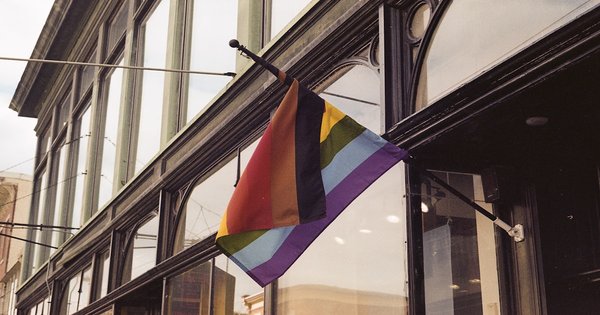
We’re writing this from an apartment in Vila Nova de Gaia, looking across the Douro at the tile-covered hillside of central Porto. We’ve been here about six weeks this time — our third stretch in Portugal since we started this nomad life in 2022. The first time we came, in summer 2022, Portugal felt like the easiest place in Europe to be a gay couple. Legal for everything. Nobody cared. The rainbow flags outside Café Majestic felt like a statement of the obvious, not a fight.
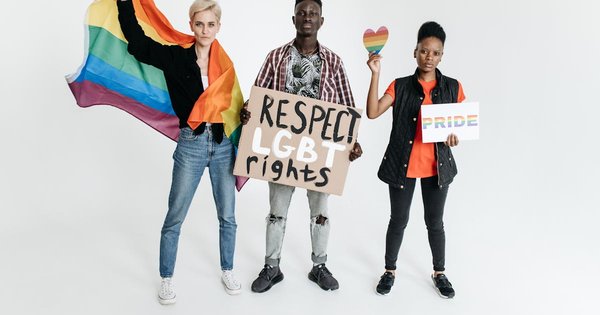
Four years later, we’re reading about our host country considering bills that would repeal trans self-identification, ban gender-affirming care for minors, re-legalize non-consensual surgery on intersex children, and remove what Portuguese lawmakers are calling “gender ideology” from schools.
We’re not trans. We want to be careful about that up front — our skin is not in this particular game the way it is for trans Portuguese people and trans travelers here. But the shift in tone is real, and we’re trying to be honest about what it feels like on the ground.
How we got here
Portugal’s 2018 self-identification law (Act 38/2018) was one of the most progressive in Europe. Trans people could change their legal name and gender marker without medical gatekeeping. No diagnosis. No surgery requirement. No court. It was the kind of policy the rest of the continent measured itself against.
On March 20, 2026, the Portuguese Assembly passed the first preliminary reading of three bills that would dismantle most of that framework. The vote was 151 to 79. The ruling center-right PSD coalition, the Christian democrats of CDS-PP, and the far-right Chega party all voted in favor. Everyone else voted against.
The bills now go to committee for testimony and possible amendments, then back to the full Assembly for a final vote. If they pass again, they go to President Marcelo Rebelo de Sousa for signature or veto. There is still time to stop this. But the machinery is moving.
What we’ve actually heard here
The first thing to say is that most Portuguese people we’ve talked to about this — baristas, our Portuguese-language tutor, a Lisbon-based developer friend, a lesbian couple who run a guesthouse in Gaia — are against the bills. Strongly. Chega is not representative of the country, and most of our neighbors will tell you so in the first ninety seconds of any political conversation.
The second thing is that the anger is mixed with genuine bewilderment. One friend put it this way: “We were the country the others pointed to. How did this happen?” We don’t think he expected us to answer. He was working through it out loud.
The third thing is that the worry is specific, not abstract. Parents of trans kids in Porto and Lisbon have told us they’re already talking to lawyers about which other EU countries might give them faster access to care if the bills pass. Trans adults we’ve met here — a handful, not a representative sample — are divided between staying to fight and leaving preemptively. Neither answer feels good.
The far-right context
The bills didn’t appear out of nowhere. Chega is now the third-largest party in the Portuguese parliament after its rise in the January 2024 and later elections. The bill language pulls directly from American far-right playbooks — “gender ideology,” “protect the children,” “biological sex” — translated into Portuguese. This is a pattern we’re seeing all over Europe. The specific words change; the structure doesn’t.
What’s distinct about Portugal is that the previous benchmark was so high. Hungary and Italy are restrictive starting from lower baselines. Portugal is being pushed backward from a position of real legal progress. Watching that happen in real time from a street-level view is different from reading about it.
What it’s like being a gay couple in Porto right now
Practically? Still very safe. Porto is warm. We hold hands in public. We’ve had zero issues in restaurants, taxis, apartment viewings, anywhere. The grandfather at our local pastelaria noticed we come in together every morning and started giving us extra pastéis de nata “for the gentlemen.” Nobody has been anything but kind.
That’s the thing about rights rollbacks that we keep coming back to: the street feels the same. The laws change underneath the street. For us, personally, nothing is different between our 2022 stay and our 2026 stay. But the legal floor under trans Portuguese people is noticeably lower than it was in January.
Jeff has been working through a mental exercise we started running after the US rollbacks: how quickly could we leave if we had to? Portugal is not at that point for us, not close. Our Schengen days are the usual constraint. But for a trans Portuguese family right now, the calculation is sharper: how quickly could we get our kid to Spain or France if gender-affirming care becomes illegal here?
What readers can do
If you’re European: the committee phase of the Portuguese bills is the pressure point. Portuguese LGBTQ+ organizations — ILGA Portugal, rede ex aequo, ATP (Associação de Transexuais de Portugal) — are coordinating the opposition. Signal boosting their calls to Portuguese MPs matters.
If you’re American and reading this from what we’re now calling the “main event” side of the anti-trans wave: Portugal is how these bills travel. Language, framing, strategy — all of it ported across the Atlantic. The Portuguese defeat or passage of these bills will feed back into your fights too.
If you’re a traveler: Porto is still a wonderful city. Lisbon is still a wonderful city. Coming here and supporting LGBTQ+-owned businesses, Pride events (Porto Pride is in July, Lisbon Pride in June), and local organizations is a real and tangible thing you can do. We’d happily give recommendations to anyone who emails us.
If the bills pass, we’ll write about it again. If they fail, even better — we’ll write about that. In the meantime, we’re going to go walk along the river and try to hold two things at once: gratitude for the country hosting us, and clear-eyed alarm about what a chunk of its parliament is trying to do.