Prishtina Pride 2026 Returns June 9-14 With 'No Step Back' as Kosovo's Civil Code Stalls Again
The 9th edition of Kosovo's Pride lands in a country whose government promised marriage-adjacent civil unions and then watched its own parliament refuse to deliver them. Organizers are framing 2026 as a refusal to retreat.
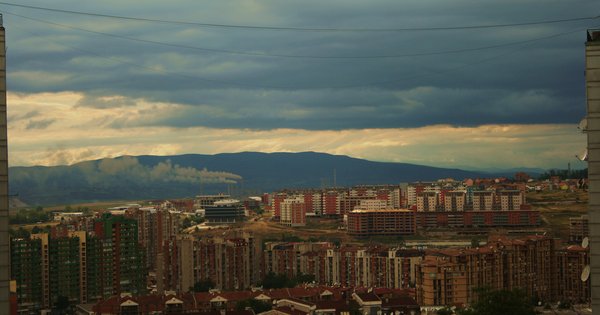
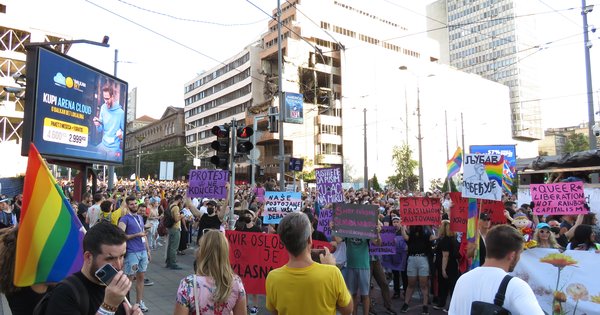
Kosovo’s Pride is back. Prishtina Pride 2026 — the 9th edition since 2017 — runs June 9 through June 14, with the parade itself on Saturday, June 14. The march gathers at 17:30 at Zahir Pajaziti Square, steps off at 18:00 down Bulevardi Nënë Tereza, and ends in the plaza beneath the National Library, where a Pride concert runs from 19:00 to 23:00. The 2026 slogan is Asnjë hap pas — “No Step Back.”
The slogan is doing a lot of work. Kosovo’s last twelve months on LGBTQ+ rights have been a cycle of expectation and disappointment that the Pride organizers are clearly tired of pretending is going somewhere good.
Why “No Step Back”
In April 2024, Prime Minister Albin Kurti announced that the new Civil Code his government was finalizing would, for the first time, allow same-sex couples to register civil unions. Kurti pitched it explicitly as a regional milestone: Kosovo could become “the second country in the Western Balkans, after Montenegro, which guarantees its citizens the right to a same-sex life partnership.”
Two years on, the Civil Code remains unpassed. As of early 2026, parliament has been unable to muster the votes to adopt it, with significant opposition coming from outside Kurti’s party and, by some accounts, from inside it as well. Religious bodies — Muslim and Christian denominations have made joint public statements — campaigned against the bill on the false claim that the code would legalize same-sex marriage, when in fact it only proposes civil unions.
Meanwhile, the constitutional baseline in Kosovo is unusual for the region: Article 24 of the constitution explicitly bans discrimination on the basis of sexual orientation, one of the few states in Europe with such a clause written directly into its founding document. The country has one of the lowest survey-measured public approval rates for same-sex unions in Europe — around 20 percent in a 2023 poll — yet the legal scaffolding for recognition is, in places, more progressive than what voters are ready to support.
That contradiction is the political weather Prishtina Pride walks into every June.
What Pride Week looks like
Prishtina Pride has, since its first march in 2017, been run with heavy police protection — and, year after year, has gone off without major violent incidents. The parade route is short and tightly contained in the central commercial corridor, but the surrounding week has expanded steadily to include film screenings, panels, queer poetry nights, and an after-party concert that draws activists from across the Western Balkans. The 14 June concert at the National Library plaza has, in recent editions, become one of the more visible queer cultural moments in the region.
The 9th edition lands at a particular regional moment. Belgrade Pride is gathering proposals for its September march, framing itself in solidarity with Serbia’s student movement. Skopje Pride is holding its parade in late June. Sarajevo’s BiH Pride March is preparing its eighth edition. And Tirana — where Albania’s parliament recently passed a gender-equality law that does not, by itself, recognize same-sex partnerships — is heading into IDAHOBIT and Pride season under a similar shadow of incomplete promises.
In that context, “No Step Back” is less a slogan than a regional posture. The organizers are essentially saying: the EU accession process keeps suggesting LGBTQ+ rights are coming, the governments keep nodding, and the laws keep failing — and the community is going to march anyway, on the same dates, every year, until that pattern breaks.
Visiting
Prishtina is one of the cheapest and most welcoming Western European-Balkan capitals to visit, and Pride Week is when its small but tightly knit queer scene is most visible. Cafés along Bulevardi Nënë Tereza, bars in the Pejton neighborhood, and venues like Soma Book Station are reliable starting points outside the parade itself. The city is small and walkable. Pristina International Airport (PRN) is about a 25-minute taxi from the center.
For travelers from countries that require visas to visit Kosovo, the visa policy is more accessible than its political contestedness suggests; most EU, US, UK, and Schengen-area travelers do not need one for short stays.
What to watch for
Two things will shape the meaning of this year’s parade. The first is whether the Kosovo Civil Code returns to the Assembly floor before or after Pride; even a failed vote would surface the political alignment more clearly than the current limbo. The second is whether the EU’s own LGBTQ+ pressure on accession candidates — sharpened by April’s CJEU ruling against Hungary — translates into concrete asks of Prishtina in the next round of accession-related dialogue.
For now, the message from the organizers is straightforward, and the slogan is fitting. The march is on June 14. They are not going anywhere.
Sources
Information drawn from Prishtina Pride (prishtinapride.org), the Wikipedia entry on recognition of same-sex unions in Kosovo, Balkan Insight, ERA-LGBTI, Outright International’s Kosovo country page, and earlier coverage from Civil Rights Defenders and Kosovo 2.0.