Queer Vienna Ahead of Eurovision Week: A Field Guide From Two Who've Lived There
Vienna is hosting Eurovision May 12–16 and the 30th Regenbogenparade on June 13. We spent a stretch of 2022 there. Here's what we tell people who are flying in for the queer summer the city is about to have.
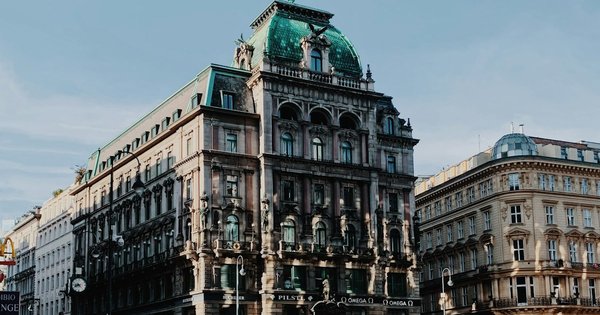
We spent a stretch of 2022 in Vienna, in an apartment near Praterstern, walking the Prater most mornings and eating our weight in lentil curry from a Burmese place we never want to live too far from again. Vienna is, of all the cities we’ve based ourselves out of in Europe, the one that gives away the least on first impression. It is grand, it is correct, it is well-run, it does not need you to like it. The queer city underneath that surface is one of the easier ones in Europe to settle into once you find it — and it’s about to be very visible.
Eurovision opens at the Wiener Stadthalle on May 12. Vienna Pride opens on May 29. The 30th Regenbogenparade walks the Ringstrasse on June 13. From now through the middle of June, Vienna will be hosting more LGBTQ+ visitors per capita than at any point since 2015. So: a few notes from our notebooks for the friends asking us where to stay and what to do.
What it’s like to be queer in Vienna, day to day
Austria recognised same-sex registered partnerships in 2010 and full marriage equality in 2019. Adoption rights are full. Gender-recognition has been administrative-only — no surgery requirement, no court — since 2018. The legal baseline is solid; the social baseline is unfussy. We never once had a hand-holding moment in central Vienna where we second-guessed ourselves. The most queer-visible city districts — the 6th (Mariahilf), 7th (Neubau), and 8th (Josefstadt) — are also the ones with the densest cluster of small shops, cafés, and natural-wine bars, and the line between “gay neighbourhood” and “creative-class neighbourhood” is largely gone.
The 9th (Alsergrund) and parts of the 2nd (Leopoldstadt, where we lived) are quieter and more residential, with a more mixed-age queer presence and the slow slide into being absorbed into the city’s centre of gravity.
What surprised us, coming from Tirana, was how genuinely integrated the queer infrastructure is. Pride flags up year-round at city-funded buildings. Trans-friendly healthcare clinics on the public insurance system. The Türkis Rosa Lila Villa — the historic queer community house in the 6th — running its bar, its café, its trans counselling, and its housing-support work without performing any of it as edgy. Vienna does not seem to find any of this remarkable. After years in countries where it would be remarked on every day, that takes a few weeks to get used to.
Where to stay during Eurovision week
Eurovision takes the Wiener Stadthalle in the 15th district, which is not a part of Vienna we’d recommend staying in unless your priority is two-stop walking distance from the venue. The 6th and 7th districts give you the best balance of proximity to the action — both Eurovision and Pride — and the kind of streets you actually want to be on between events.
If we were booking now, we’d be looking at the area around the Naschmarkt on the southern edge of the 6th, the streets around Spittelberg in the 7th, or Yppenplatz in the 16th (Brunnenmarkt). Praterstern, where we lived, is well-connected by U-Bahn but has a different evening feel — quieter, more local, fewer of the late-night options visitors usually want.
Hotels are likely already a dragon by Eurovision week. We’d look at apartment rentals via the usual platforms, with a strong eye on cancellation policies given the contest’s ticketing volatility, and at the small Austrian-owned hotel groups (Schick Hotels, Falkensteiner) for late availability.
The places we send people
A short list, all places we know well enough to vouch for as of our last visit. Some have changed hands; check before you go.
- Türkis Rosa Lila Villa (6th) — the queer community house. Bar, café, occasional events; the easiest single point of orientation in queer Vienna.
- Felixx (6th, Gumpendorfer Str.) — a cocktail bar that’s existed roughly forever, and is unfussy in the right way for an after-Eurovision night.
- Why Not (1st) — central, dance-focused, fills up fast on parade weekend.
- Café Savoy (6th) — the historical café. Order a Melange. Order a second one.
- Spittelberg (7th) — a pedestrianised lattice of streets, lower-key restaurants, queer-friendly without performing it.
- Café Standard (7th) — late-night food, mixed crowd, a useful third option when nothing else is appealing.
- Naschmarkt (between 6th and 4th) — for breakfast, for the pickled-vegetable stalls, for the Saturday-morning energy.
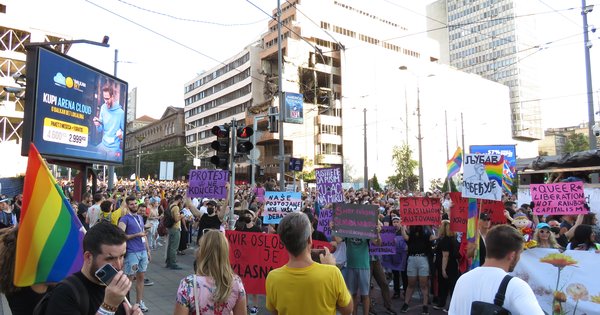
The Pride Village on Rathausplatz, the all-day community festival that runs alongside the Regenbogenparade on June 13, will be the practical centre of the city for visiting LGBTQ+ tourists that day. Get there early.
A few logistical notes
Vienna’s public transport system is one of the easier ones in Europe to use. The €8.20 single-day pass and the €4.10 single-zone ticket cover essentially all of it. The U-Bahn closes at midnight on weekdays but runs all night on Friday and Saturday — which means, conveniently for Eurovision and Pride weekend, you do not need taxis. The Rainbow Parade is on the Ringstrasse, and most stations on the U2 line will get you there.
The Wiener Stadthalle (Eurovision venue) is on U6 at Burggasse-Stadthalle. Allow 90 minutes for the venue’s security check on show nights — the EBU’s tightened flag and bag rules, combined with Austrian fire-safety inspections after the 2025 nightclub fire, have produced longer queues than the usual Eurovision turn-around.
A note on flags, since people keep asking: Pride flags are allowed for spectators, but the Stadthalle requires fire-certified textiles (ÖNORM B 3822 / DIN EN 13501-1). The official Eurovision online shop is selling pre-certified Pride flags that can be picked up inside the venue. If you’re bringing your own, bring proof. We’ve covered the EBU’s separate ban on Pride flags for performers in another piece this week.
Eurovision and Pride together is not coincidence
There’s a habit of treating Vienna’s Eurovision turns as accidents — Conchita Wurst won Eurovision 2014, so 2015 was Vienna; Austria won in 2025, so 2026 is Vienna. But Vienna is also a city that has, for thirty years, treated the Regenbogenparade as a piece of public infrastructure rather than a community event. The Ringstrasse closes for it. Three hundred thousand people are expected on it in June. The contest comes back here because the city already does the work that makes it possible.
For the next six weeks, that is going to be very visible. Come if you can. We will be jealous of everyone who does.