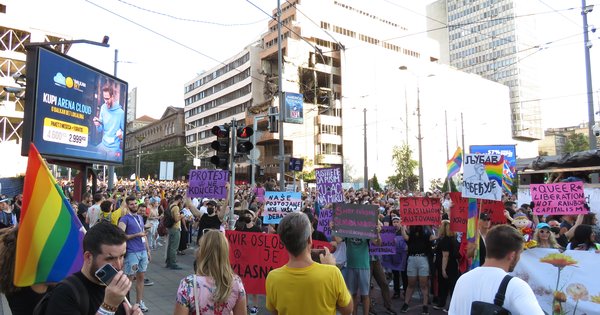
Sofia Pride 2026: Bulgaria's Largest Human-Rights Event Sets June 13 Date
Sofia Pride organisers have confirmed June 13 for the 2026 march, the country's biggest LGBTQ+ event of the year, returning amid an active 'propaganda' law in schools and an ongoing far-right counter-mobilisation. Here's what to expect.
Sofia Pride organisers have confirmed Saturday, June 13 as the date for the 2026 march. Now in its eighteenth edition, Sofia Pride remains the largest annual human-rights demonstration in Bulgaria — a country with one of the most restrictive legal climates for LGBTQ+ people inside the European Union — and the announcement, made on April 9 by the organising coalition, locks the date alongside Vienna’s 30th-anniversary Regenbogenparade and Zagreb Pride, both also on June 13.
The 2025 edition drew an estimated 10,000 participants down Sofia’s central Vasil Levski Boulevard, the largest crowd in the event’s history. 2026’s brief is to hold that line — and to do so under a piece of legislation that has, in the last two years, made Bulgaria a more openly hostile country to be visibly queer in.
The legal backdrop
Bulgaria sits in an unusual middle position on the EU’s LGBTQ+ rights map. Same-sex relations have been legal since 1968. Hate-crime amendments to the Criminal Code in July 2023 finally added sexual orientation as a protected category, with penalties for incitement and media-based hate speech now ranging from one to four years’ imprisonment and fines of €2,500–€5,000. On paper, the framework looks contemporary.
In practice, two things constrain it. First, Bulgaria still has no legal recognition of same-sex relationships in any form — no marriage, no civil partnership, no cohabitation registry. The Constitutional Court ruled in 2018 that the Constitution’s reference to marriage as a union “between a man and a woman” forecloses the question. Second, a 2024 amendment to the Pre-School and School Education Act prohibits the “propaganda, popularisation, or incitement” of “non-traditional sexual orientation and/or gender identity other than the biological one” in schools — language modelled closely on Hungary’s 2021 law and on Russia’s earlier “gay propaganda” framework. The Bulgarian law remains in force despite the European Court of Justice’s April 2026 ruling that the Hungarian original violates EU fundamental rights.
The Bulgarian government has not signalled an intent to repeal the schools amendment in light of the Hungary ruling. ILGA-Europe and Bulgarian organisations Bilitis and GLAS have flagged the law in Brussels filings as inconsistent with the EU treaties; the next likely venue for a direct challenge is the Court of Justice itself, by way of a national referral or an Article 258 infringement procedure from the European Commission.
That is the political weather Sofia Pride will march into.
What the march looks like
Sofia Pride’s structure has stayed remarkably consistent. The day opens with a community-organising fair in front of the National Palace of Culture (NDK), draws together at the southern end of Vasil Levski Boulevard, and walks north through the city’s main artery toward the Eagles’ Bridge. The route is sealed; police presence is heavy; counter-protests are routine but, in recent years, have been kept at a remove sufficient to allow the march to complete without serious incident.
The visible counter-mobilisation has tracked the rise of pro-Russian and Eurosceptic far-right parties in Bulgarian politics. Vazrazhdane (Revival), the third-largest force in the current Bulgarian parliament, has organised a “Family Pride” counter-rally in opposition to the march for the past three years. Public order, not parade integrity, has been the recent question — and the Sofia Municipal Police have, by Bulgarian and international standards, performed competently.
EU member-state ambassadors are reliable participants. The 2025 march drew the explicit support of the U.S., German, French, Dutch, Canadian, and U.K. embassies, and of the EU Delegation to Bulgaria. That diplomatic backstop matters: it is one of the few public counterweights to a media environment in which LGBTQ+ coverage is dominated by the Bulgarian Orthodox Church and a tabloid press.
Why June 13 matters this year
Three things converge to make this edition a marker.
First, the European Court of Justice’s April 21 ruling against the Hungarian “child-protection” law is now a live legal precedent, and Bulgarian advocates will use the march to publicly press the Sofia government and the European Commission to apply that precedent to Bulgaria’s own schools amendment. Expect explicit messaging on the front banners.
Second, Bulgaria’s bid to join the eurozone, scheduled for January 2026 and now in its first months, has tied national prestige to alignment with EU norms more visibly than at any point in the last decade. A loud, well-attended Sofia Pride is, in effect, a visible counter-narrative to the parts of Bulgarian politics still organising against Brussels.
Third, the date — June 13 — falls on the same Saturday as the Vienna Regenbogenparade’s 30th anniversary and Zagreb Pride, and the Sofia organisers have explicitly framed this year’s march as part of a wider European Pride weekend. That framing reflects something genuine about the changing centre of gravity of Pride in Europe: the eastern and southern marches are not auxiliary events anymore. They are core.
For visitors
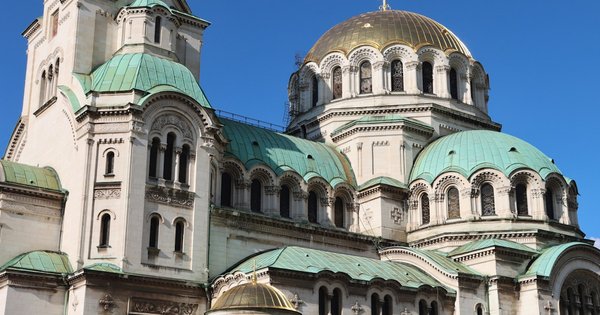
Sofia Pride has, for several years now, been one of the easiest large Balkan Prides to attend as a foreign visitor. The route is short and central, the city is walkable, the public-transport day pass is €1.50, and the cost of a Friday-to-Sunday trip around the march remains among the lowest in the EU. The Pride afterparty traditionally takes place at clubs in the area immediately north of the cathedral; Sofia’s small but real LGBTQ+ nightlife scene clusters near Slaveikov Square and along Pirotska Street.
Sofia Pride 2026 begins at 14:00 on Saturday, June 13. Organisers will publish the final route, accessibility information, and the daytime programme on the official website (sofiapride.org) closer to the date.