Stop Calling Everything 'Brave' — Queer People Deserve Better Than Courage Narratives
When we call every queer act of self-expression 'brave,' we're accidentally reinforcing the idea that being yourself is inherently dangerous. It's time for a language upgrade.

We need to talk about the word “brave.”
Not because bravery doesn’t exist in queer life — it obviously does. The activists in Uganda fighting for their lives are brave. The first person to walk through the doors of a Belgrade Pride march in 2001 was brave. A teenager coming out to hostile parents in a small town where there’s no safety net is performing an act of genuine courage.
But somewhere along the way, “brave” became the default adjective that straight culture applies to any queer person doing anything in public. A celebrity mentions their partner in an interview: brave. An athlete comes out: so brave. A TV show includes a same-sex kiss: what a brave creative choice. A politician acknowledges that trans people exist: incredibly brave.
And we think this language, however well-intentioned, is doing something subtly toxic.
The bravery frame is a danger frame
When you call someone brave for doing something ordinary, you’re implicitly saying that the ordinary thing they did was dangerous. Bravery only makes sense as a concept in the presence of risk. A firefighter is brave because fires can kill you. Calling a gay man brave for holding his partner’s hand at brunch is telling him — and everyone watching — that holding hands is a risk.
For LGBTQ+ people living in countries where it genuinely is a risk, this framing isn’t inaccurate. We’ve lived in places where holding hands would invite harassment or worse. We take that seriously.
But in contexts where queer people have legal protections, social support, and relative safety, the reflexive “brave” label does something strange: it keeps the danger narrative alive even after the danger has receded. It tells queer people that their existence is still extraordinary, still transgressive, still requiring courage — when what many of us actually want is for it to be unremarkable.
Who benefits from the bravery narrative?
Here’s the uncomfortable part: the bravery frame primarily benefits the person saying it, not the person it’s applied to.
Calling something brave is a low-cost way to signal allyship. It positions the speaker as someone who recognizes the difficulty of queer life without requiring them to do anything about it. It’s the verbal equivalent of a rainbow profile picture in June — an expression of solidarity that asks nothing and changes nothing.
Meanwhile, the person being called brave gets trapped in a narrative they didn’t choose. Every interview becomes about courage instead of craft. Every achievement gets filtered through identity rather than evaluated on its own terms. The queer filmmaker isn’t making “a great film” — they’re making “a brave film.” The queer athlete isn’t “dominant” — they’re “an inspiration.”
This isn’t a minor language quibble. It shapes how queer people are understood, how their work is received, and what they’re allowed to be. The bravery narrative flattens complex human beings into symbols of resilience, which is flattering in theory and suffocating in practice.
The Balkans problem
We notice this acutely because we live in a region where the bravery frame has real consequences for how LGBTQ+ progress is perceived.
When Western media covers Pride events in Southeast Europe, the framing is almost always about courage and danger. “Brave marchers defy threats in Belgrade.” “Courageous activists hold Tirana’s first Pride.” And yes, these events often do involve genuine risk. We don’t minimize that.
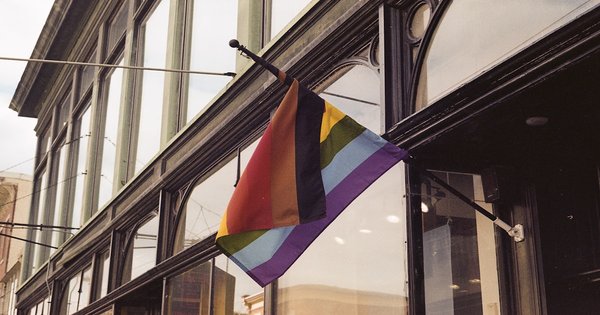
But when the only story told about Balkan LGBTQ+ life is a courage story, it erases everything else that’s happening. The café owner in Tirana who casually flies a rainbow flag. The Serbian therapist who specializes in LGBTQ+ clients. The Croatian couple who just got married and are boring about it. The quiet, unremarkable normalcy that exists alongside the struggle — and that is arguably the real measure of progress.
If every story about queer Balkans life requires a bravery frame to get published, then the only version of our community that exists in the international imagination is one that’s perpetually under siege. That’s not representation — it’s a narrative trap.
What to say instead
This isn’t a policing exercise. We’re not trying to ban a word. But if you’re looking for alternatives:
Name the specific thing. Instead of “It’s so brave that you came out,” try “I’m glad you told me.” Instead of “That was a brave creative choice,” try “That was a great scene.” Let the work or the act speak for itself.
Acknowledge the context without centering it. “That must have been complicated” is more honest than “you’re so brave” because it recognizes difficulty without turning the person into a symbol of it.
Skip the commentary entirely. Sometimes the most affirming response to a queer person being themselves is to treat it as normal. Because that’s what we’re actually fighting for — not the right to be brave, but the right to be ordinary.
The goal isn’t courage
The ultimate success of any civil rights movement is obsolescence — the day when the thing you fought for becomes so normal that fighting for it sounds strange. We’re not there yet, not globally, and maybe not for a long time. But every time we describe basic queer existence as requiring bravery, we push that day further away.
We want a world where a gay couple holding hands isn’t brave. It’s just Tuesday. Where a trans person using a bathroom isn’t courageous. It’s just biology. Where a queer kid telling their parents who they are isn’t an act of valor. It’s just dinner conversation.
The bravery narrative served a purpose. It helped straight audiences understand that queer life involved real stakes. But we’re past the point where understanding is the bottleneck. The bottleneck now is normalization — and normalization requires a language that treats queer life as life, not as an ongoing act of heroism.
So the next time you’re about to call something brave, pause. Ask yourself: would I use this word if the person were straight? If the answer is no, you might be telling on yourself more than complimenting them.