Thessaloniki Pride 2026 Sets June 15-20 Dates With 'Break the Code' as the Year's Theme
Greece's second-largest Pride returns June 15-20 with the parade on Saturday, June 20, walking from the city center to the White Tower. The 14th edition leans into gender diversity and expression in a year when EU and Greek courts continue to expand recognition for queer and trans people.
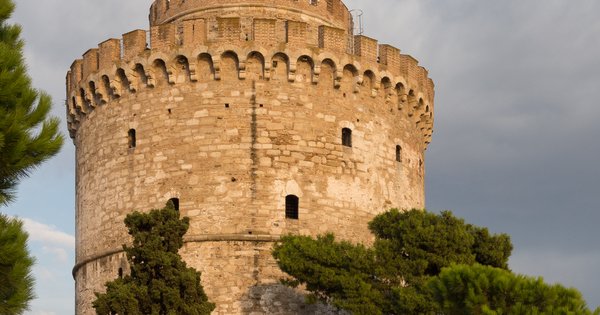
Thessaloniki Pride has confirmed dates and a theme for its 14th edition: a six-day festival running Monday, June 15 through Saturday, June 20, 2026, capped by the parade through the city center and along the seafront promenade to the White Tower. The 2026 theme is “Break the Code” (Σπάσε τον Κώδικα), framed as a call to dismantle the unwritten rules that still constrain gender expression and queer life in northern Greece.
Thessaloniki sits in a quietly important position on Europe’s queer map. It is the second-largest city in a country that became, in February 2024, the first Orthodox-Christian-majority state to legalize same-sex marriage. It is also the de facto cultural capital of the Greek north — closer in many ways to Sofia and Skopje than to Athens, and a regular waypoint for queer travelers moving between the Balkans and the Aegean.
What the week looks like
Past editions have followed a now-familiar shape: a working-week packed with film screenings, panel discussions, drag and queer cabaret nights, exhibitions, and queer city tours, building toward the Saturday parade. Most live-music programming and after-parties cluster on the seafront and in the New Waterfront district, where the White Tower acts as the natural endpoint of the parade route. Organizers say the 2026 program will run shows on multiple outdoor stages alongside the traditional sunset parade.
The “Break the Code” framing is more pointed than it might sound. Greece’s marriage-equality law passed despite open opposition from the Greek Orthodox Church and parts of the conservative governing party, and the law deliberately did not grant joint adoption rights to same-sex female couples or recognize parenthood through assisted reproduction abroad. The 2026 theme picks up that unfinished business — and pushes harder on the gender-identity and gender-expression questions that the marriage debate left unresolved.
A different feel from Athens Pride
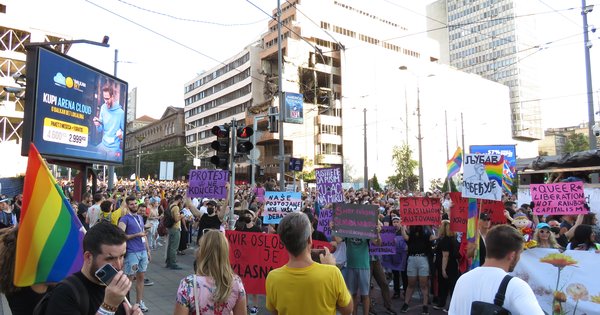
If you’ve been to Athens Pride, expect something with a different texture in Thessaloniki. Athens Pride is bigger, louder, and increasingly polished — last year’s parade pulled an estimated 40,000-plus into Syntagma Square. Thessaloniki Pride is smaller, more local, and historically more activist in tone. Speeches still tend to lean into demands rather than victory laps, and the parade route — through the city’s commercial center and along the harbor — pulls in everyday foot traffic in a way that makes it feel less like a parade and more like a city in conversation with itself.
The local LGBTQ+ scene is small but durable. Bars and queer-friendly venues cluster in Ladadika, Valaoritou, and around Aristotelous Square, with a handful of women-and-nonbinary-led nights that have anchored the lesbian and bi community for years. The Pride week tends to push these spaces to capacity, and out-of-towners should book apartments and hotels in the city center early — June 15-20 overlaps with peak summer travel demand on the Aegean coast.
What’s at stake regionally
Thessaloniki Pride doesn’t make headlines outside Greece the way Athens Pride or Belgrade Pride do, but its regional role is real. Activists from North Macedonia, Bulgaria, and Albania have long traveled north for it, treating the festival as a relatively safe meeting point in a part of the Balkans where their own Pride parades face very different security calculations. Skopje, Sofia, and Tirana Prides all happen later in June and through the summer, and Thessaloniki’s mid-month slot has effectively become the soft launch of the wider Balkan Pride season.
That role takes on extra weight in 2026. The European Court of Justice’s April ruling against Hungary’s anti-LGBT law, the slow rollout of Slovakia’s constitutional fight, the ECHR’s pressure on Romania to recognize same-sex couples, and the upcoming ILGA-Europe Rainbow Map release on May 12 are all converging on the same question: how serious is the European Union about the LGBTQ+ commitments built into its founding treaties? Pride parades in cities like Thessaloniki — pleasant, mid-sized, undramatic — are part of how that answer becomes visible at street level.
Practical notes
The parade gathers in the city center on Saturday, June 20 and moves down through the commercial district to the seafront, ending near the White Tower. The week’s program of films, panels, and parties begins Monday, June 15. Greek public transit is reliable; the city is walkable end-to-end in under an hour. The Macedonia airport (SKG) connects directly to most major European hubs and is a 30–40 minute taxi or bus ride from the city center.
For the most up-to-date schedule, lineup, and accessibility information, the official Thessaloniki Pride website (thessalonikipride.com) is the source organizers update first.
Sources
Reporting and event details draw on Thessaloniki Pride’s official channels, Diversity News, Travelgay, Misterb&b, and earlier Balkan Insight and ILGA-Europe coverage of the 2024 Greek marriage-equality law and its remaining gaps.