Tirana Pride 2026 Is Six Weeks Away — and We'll Be There
Albania's annual Pride parade marches on May 23 in Tirana. As a gay couple living here right now, we're watching the countdown with more than a little personal investment.

Six weeks from today — May 23, 2026 — Tirana will hold its thirteenth annual Pride parade. We’ll be here for it. That’s not a small thing to say.
We’ve been based in Tirana for most of the past four years. Albania has become something like a second home for us: the food, the mountains, the chaotic warmth of Blloku, the sheer improbability of it all. When we moved here the first time, we weren’t sure what to expect as a gay couple. What we found was more complicated — and more hopeful — than we’d anticipated.
So here’s what we know about Tirana Pride 2026, what it means, and what you should know if you’re thinking about coming.
The Basics
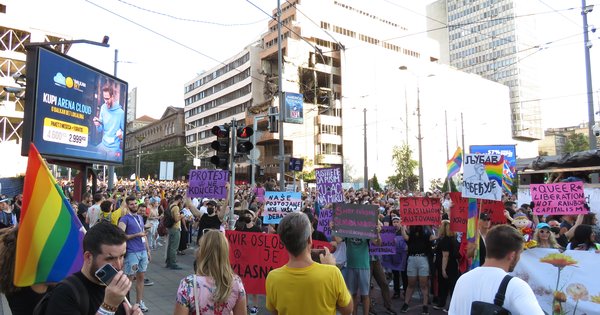
Tirana Pride 2026 takes place on Saturday, May 23, in Albania’s capital. The parade typically begins near Skanderbeg Square and winds through the city center, with speeches, live music, and festivities following at a nearby venue. Exact routes and gathering points will be confirmed by organizers in the weeks ahead — follow Aleanca LGBT Albania and Pink Embassy on social media for the latest.
The event is free and open to all. International visitors are genuinely welcome, and the event has a notably international flavor given Albania’s growing profile as an LGBTQ+-curious travel destination.
Twelve Years and Counting
Albania’s first Pride march happened in 2014. It was small — a few hundred people — and remarkable mostly for the fact that it happened at all in a country that had only decriminalized homosexuality in 1995 after the fall of Enver Hoxha’s communist dictatorship. Hoxha’s regime treated homosexuality as a crime against the state, punishable by imprisonment or labor camps. That history is not distant for many Albanians.
For the past twelve years, police have ensured the safety of the parade, and it has proceeded without major incidents of violence every single time. That’s not nothing. In some Balkan neighbors — Serbia, Bosnia — Pride events have faced significant organized opposition. In Tirana, the march has become, if not entirely mainstream, at least accepted.
Last year’s 2025 Pride was particularly notable: EU Ambassador Silvio Gonzato marched alongside Albania’s Minister of Health and Social Protection. Canadian Ambassador Elissa Golberg led her country’s delegation. International diplomatic visibility has grown each year, and it tracks directly with Albania’s EU accession process — which officially opened in 2022 and remains active.
The Rights Gap
We want to be honest about where things stand, because the parade’s growing visibility can sometimes obscure the legal reality.
Albania does not recognize same-sex partnerships or marriages. There are no legal protections for same-sex couples with children. There is no pathway for legal gender recognition for transgender Albanians. Employment protections against discrimination based on sexual orientation exist on paper, but enforcement is inconsistent.
In 2025, an unofficial blessing ceremony for a lesbian couple was held on the rooftop of the Tirana mayor’s office — a gesture that generated headlines and a lot of complicated conversation. It was symbolic. Symbolism matters, but it isn’t partnership rights.
The EU accession process is the most significant lever for change. As Brussels evaluates Albania’s democratic progress, LGBTQ+ rights are part of the scorecard. Albania has made progress — most recently adopting updates to its Gender Equality Law in 2025 — but advocacy groups including ILGA-Europe and Aleanca LGBT continue to document the gap between rhetoric and legal reality.
Why This Parade Matters Differently in 2026
Globally, 2026 has been a bleak year for LGBTQ+ rights. The US has accelerated an unprecedented rollback of federal protections. India stripped transgender people of self-identification rights. Ghana is moving toward criminalizing LGBTQ+ identity entirely. In that context, watching a small-by-Western-standards parade march through a Balkan capital — with government ministers and EU ambassadors alongside — feels genuinely meaningful.
Albania isn’t a haven. We won’t pretend it is. But it’s a country visibly moving in one direction while a lot of the world moves in another, and we find that worth showing up for.
What to Know If You’re Coming
Tirana in late May is beautiful — warm but not yet punishing, the mountains still visible on clear days, café culture in full swing on Blloku. Here’s some practical guidance for LGBTQ+ visitors coming for Pride:
Getting there: Tirana International Airport (TIA) has expanded connections significantly over the past few years. You can fly direct from most major European hubs, and budget carriers including Wizz Air and easyJet serve the route. From the airport, a taxi to the city center costs around €20-25 and takes 30-40 minutes. Rideshare apps (Bolt) work well in the city.
Where to stay: The Blloku neighborhood is where you want to be — it’s Tirana’s most cosmopolitan area, walkable to most Pride events, and full of restaurants and bars. Options range from boutique hotels to well-reviewed Airbnbs. Book ahead; accommodation fills up around Pride.
Safety: We’ve never felt personally unsafe in Tirana as a gay couple. We’re not ostentatious about PDA in public — it’s a conservative country by Western European standards — but walking together, being clearly a couple at restaurants, staying in the same room: none of this has ever been an issue for us. During Pride weekend especially, the city has a notably open energy.
The community: Aleanca LGBT and Pink Embassy both maintain active social media. The local queer scene is small but warm. The bar scene in Blloku skews inclusive even outside Pride season.
After the parade: Stay a few days. Tirana is a genuinely interesting city — the National History Museum, the BunkArt installations (Hoxha-era bunkers converted into art spaces), the day trip to Dajti mountain, the coastal towns you can reach in an hour. We’ve written more extensively about the city in our Tirana travel guide.
We’ll See You There
We plan to march on May 23. If you’re there, come find us — we’ll be the ones alternating between Albanian coffee and total disbelief that this has become our life.
Pride in Tirana isn’t WorldPride. It’s not Amsterdam. It’s thirteen years of showing up in a country that is, slowly, choosing to be different from what it was. That’s worth something.
For updates on Tirana Pride 2026, follow Aleanca LGBT Albania and Pink Embassy on Instagram and Facebook.